
About George Houser
Lived 1916 – 2015 (aged 99). George Houser was an American christian minister.
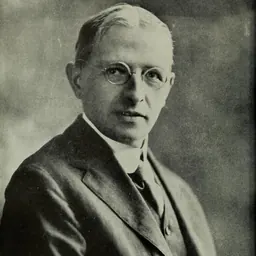
George Mills Houser (June 2, 1916 – August 19, 2015) was an American Methodist minister, civil rights activist, and activist for the independence of African nations. He served on the staff of the Fellowship of Reconciliation (1940s–1950s).
With James Farmer and Bernice Fisher, he co-founded the Congress of Racial Equality (CORE) in 1942 in Chicago. With Bayard Rustin, another FOR staffer, Houser co-led the Journey of Reconciliation, a form of nonviolent direct action, a two-week interracial bus journey challenging segregation. It was a model for the 1961 Freedom Rides that CORE and the Nashville Student Movement later organized through the Deep South.
Early life and education George Houser was born in 1916 in Cleveland, Ohio, to parents who were Methodist missionaries, and as a child, he spent several years with them in the Far East, largely in the Philippines. After studying at what is now the University of the Pacific in Stockton, California, the young Houser completed his undergraduate work at the University of Denver. He then attended Union Theological Seminary, where he served as chairman of the school's social action commission. Houser, along with David Dellinger, was among 20 Union students who announced publicly that they would defy the Selective Training and Service Act of 1940. In November 1940 Houser was arrested for refusing to be drafted. He served a year in jail.
After college, Houser was ordained as a Methodist minister. He soon became involved in movements for social justice and civil rights.
Career Houser joined the Fellowship of Reconciliation in the 1940s and worked with it until the 1950s.
In 1947, after the US Supreme Court's finding (in Morgan v. Commonwealth) that segregation in interstate travel was unconstitutional, Houser helped organize the Journey of Reconciliation. This was a plan to send eight white and eight black men on a journey through Virginia, North Carolina, Tennessee, and Kentucky to test the ruling. The protest brought a great deal of press attention to CORE and to the issue of segregation in interstate travel. In February 1948 George Houser received the Thomas Jefferson Award for his work to bring an end to segregation on interstate buses and in their facilities.
In 1949, Houser moved to Skyview Acres, an intentional community in Pomona, New York. In 2010, he received the Republic of South Africa’s Oliver R. Tambo Award. In the same year he moved to California, where he lived until his death. Houser died on August 19, 2015, at the age of 99 in Santa Rosa, California.
African independence movements Houser left the FOR in the 1950s, when he turned his attention to African liberation struggles. Because of his continuing activities for independence and against apartheid, Houser was not permitted to enter South Africa again until 1991, after the end of the apartheid government.
From 1955 to 1981, Houser served as Executive Director of the ACOA; he also was Executive Director of The Africa Fund from 1966 to 1981. At ACOA, he spearheaded numerous campaigns supporting African struggles for liberation and independence, from Algeria to Zimbabwe. In an interview in 2004, he reflected on his work with ACOA and the transcript was published in the book No Easy Victories.
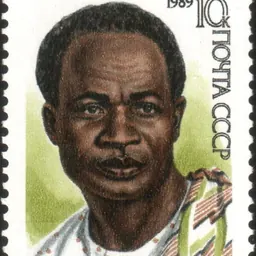
From 1954 to 2015, he made more than 30 trips to Africa. His support of liberation movements led him to develop close ties with many African leaders, including Nelson Mandela, Walter Sisulu, Amílcar Cabral, Julius Nyerere, Eduardo Mondlane, Kwame Nkrumah, and Oliver Tambo.
Houser served on the Advisory Committee of the African Activist Archive Project.
Personal life and death Houser married and raised four children with his wife, Jean. His son, Steven, previously taught history at Horace Greeley High School in Chappaqua, New York, and now teaches World Civilizations at Grand Valley State University. His grandson, Chris, taught at Scarsdale High School. Houser died on August 19, 2015, at the age of 99 in Santa Rosa, California.
Selected works No One Can Stop The Rain: Glimpses of Africa's Liberation Struggle (New York: Pilgrim Press, 1989) With Herbert Shore, I Will Go Singing: Walter Sisulu Speaks of his Life and the Struggle for Freedom in South Africa (Cape Town: Robben Island Museum, 2000). Frazier, Nishani (2017). Harambee City: Congress of Racial Equality in Cleveland and the Rise of Black Power Populism. University of Arkansas Press.
Don’t just read it —
keep it.
Full-length biographies made to live with: read them, listen on the way to work, watch them tonight.
- E-book
- Audio
- Video
Instant download · yours to keep · every purchase keeps this site free
Important facts
People in George Houser's life
Named in this biography and alive at the same time






Related people
Same field, nearest in time




Contemporaries
People whose lives overlapped George Houser's


Frequently asked questions
Who was George Houser?
African Americans' rights activist
When was George Houser born?
George Houser was born on 2 June 1916 in Cleveland.
When did George Houser die?
George Houser died on 19 August 2015 in Santa Rosa.
What was George Houser's occupation?
George Houser was a christian minister.
What nationality was George Houser?
George Houser was American.
Sources & further reading
Cite this page
APA: Biography.guide. (2026). George Houser. https://biography.guide/george-houser/
MLA: "George Houser." Biography.guide, https://biography.guide/george-houser/.
Chicago: "George Houser." Biography.guide. https://biography.guide/george-houser/.
Data last updated: 2026-09-22 · Spot an error? Report a correction.
Page generated 2026-09-27 05:12 UTC