
About George Herbert Hildebrand
Lived 1913 – 2007 (aged 93). George Herbert Hildebrand was an economist.
George Herbert Hildebrand Jr. (July 7, 1913 – May 18, 2007) was an American academic, mediator, and government official who was the Maxwell M. Upson Professor of Economics and Industrial and Labor Relations at Cornell University and served as a Deputy Undersecretary of Labor in the United States Department of Labor in the Nixon administration. Earlier he had been a professor of economics at the University of California, Los Angeles and before that a staff director with the National War Labor Board.
Early life and education Hildebrand was born on July 7, 1913, in Oakland, California, and grew up there. He attended Roosevelt High School in Oakland. By 1939, he was at Cornell University again, working on a doctoral dissertation entitled "Development and present status of wage theory, with application to public policy". He may have gone between the two schools again. Subsequently, the subject of the dissertation was changed to "The theory of markets and the problem of economic crises from Quesnay to Marx: A study in the history of economic thought". In any case, he ended up receiving an M.A. degree in economics from Harvard in 1941 and a Ph.D. in Economics from Cornell in 1942.
Initial academic posts and work for National War Labor Board While waiting for his doctorate to be granted, Hildebrand worked as an instructor of economics, first at Cornell by 1938, then at Princeton University in 1939, then at Wellesley College, and then in 1941 at the University of Texas. With his PhD granted, by 1943 Hildebrand had become an assistant professor of economics at Texas. At first he was in Washington, D.C. In particular, he was a director of the staff that concerned itself with wage stabilization. Around the same time, he was promoted to associate professor at the University of Texas. By 1954 he had risen to become a full professor there.
Hildebrand came to Cornell University in 1960. He was accordingly upset that, as he saw it, the administration had abetted in the "politicization of the campus" and had "refused to protect academic freedom".
Department of Labor official
Hildebrand resigned from the Cornell faculty. He took the position of Deputy Under Secretary of Labor for International Affairs, The appointment was made by President Nixon.
During 1970, the United States withdrew half of its financial support to the ILO following the appointment of an assistant director-general from the Soviet Union, an appointment that drew particular criticism from AFL–CIO president George Meany, who said that the ILO had become a vehicle for Soviet propaganda and that it employed a two-tiered standard for criticisms of Soviet and American labor issues. Hildebrand agreed with many of these criticisms. Hildebrand testified before the U.S. Congress in March 1971 that his delegation had improved the situation measurably, including in "persuading the officials of ILO and the presiding officers at its meeting to rule out of order polemics and political attacks on the United States." In any case, the funds were eventually paid and the United States persisted in the ILO, for a while at least.
Hildebrand was also named as the labor department's representative on the Board of the Foreign Service, a ten-member body whose purpose was to advise the secretary of state on managing the United States Foreign Service and which was headed by Under Secretary of State Elliot L. Richardson.
He was still with the department as of June 1971.
Return to Cornell Hildebrand left government and returned to Cornell later in 1971.
At Cornell, Hildebrand taught courses that were co-listed between the School of Industrial and Labor Relations and the College of Arts and Sciences and that included "Problems in Labor Economics" and "Capitalism and Socialism" .
In 1977, he became the initial director of the university's Center for the Study of the American Political Economy.
Hildebrand retired from Cornell University in 1980.
Selected publications The Pacific Coast Maritime Shipping Industry, 1930–1948: An Economic Profile (University of California Press, 1952) [co-author with Wytze Gorter] Growth and Structure in the Economy of Modern Italy (Harvard University Press, 1965) Manufacturing Production Functions in the United States, 1957: An Interindustry and Interstate Comparison of Productivity (New York State School of Industrial and Labor Relations, Cornell University, 1965) [co-author with Ta-Chung Liu] Poverty, Income Maintenance and the Negative Income Tax (New York State School of Industrial and Labor Relations, Cornell University, 1967) American Unionism: An Historical and Analytical Survey (Addison Wesley, 1979) Borax Pioneer: Francis Marion Smith (Howell-North Books, 1982) Capital and Labor in American Copper, 1845–1990: A Study of the Linkages between Product and Labor Markets (Wertheim Publications in Industrial Relations, 1991) [co-author with Garth L. Mangum]
Don’t just read it —
keep it.
Full-length biographies made to live with: read them, listen on the way to work, watch them tonight.
- E-book
- Audio
- Video
Instant download · yours to keep · every purchase keeps this site free
Important facts
People in George Herbert Hildebrand's life
Named in this biography and alive at the same time



Related people
Same field, nearest in time

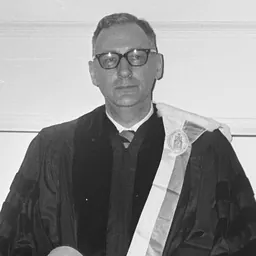


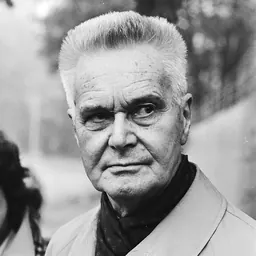
Contemporaries
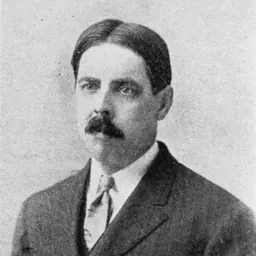
People whose lives overlapped George Herbert Hildebrand's




Frequently asked questions
Who was George Herbert Hildebrand?
economist (1913–2007)
When was George Herbert Hildebrand born?
George Herbert Hildebrand was born on 7 July 1913.
When did George Herbert Hildebrand die?
George Herbert Hildebrand died on 18 May 2007.
What was George Herbert Hildebrand's occupation?
George Herbert Hildebrand was an economist.
Sources & further reading
· Wikipedia: George Herbert Hildebrand
· DBpedia: George H. Hildebrand
Cite this page
APA: Biography.guide. (2026). George Herbert Hildebrand. https://biography.guide/george-herbert-hildebrand/
MLA: "George Herbert Hildebrand." Biography.guide, https://biography.guide/george-herbert-hildebrand/.
Chicago: "George Herbert Hildebrand." Biography.guide. https://biography.guide/george-herbert-hildebrand/.
Data last updated: 2026-09-20 · Spot an error? Report a correction.
Page generated 2026-09-27 05:13 UTC