
About George Green
Lived 1793 – 1841 (aged 47). George Green was a British mathematician and physicist, known for Green measure, Green's function and Green's identities.
George Green (14 July 1793 – 31 May 1841) was a British mathematical physicist born in Sneinton, Nottinghamshire, now part of the city of Nottingham. Despite receiving little recognition during his lifetime, he is best remembered for his Essay on electricity and magnetism published in 1828. In this essay he introduced an early version of Green's theorem in vector calculus, the notion of potential functions as currently used in physics, and a method of solving differential equations called Green's functions. This paper formed the foundation for the work of later scientists such as William Thomson (later Lord Kelvin), among many others. His work on potentials ran parallel to that of Carl Friedrich Gauss.
As a mathematician, he was almost entirely self-taught, receiving only about one year of formal schooling as a child, between the ages of eight and nine. Green then worked his father's bakery from a young age, and later at the mill his father constructed in 1807, now known as Green's Windmill. Whilst working as a miller, he became a member of Nottingham Subscription Library through which he was able to access contemporary mathematical knowledge.
Green formed a relationship with Jane Smith, the daughter of the mill manager William Smith. Although the couple never married, they had seven children together and she later adopted Green's surname.
After the death of his father in 1829, he was left a substantial inheritance, allowing him to give up milling to pursue mathematics. In 1833, Green began a formal education at the University of Cambridge and was elected a fellow at Caius College after his graduation. Throughout his time at the university, he wrote six papers on hydrodynamics, acoustics, and optics.
In 1840, he fell ill and returned to Nottingham where he died of influenza the following year, on 31 May 1841. After his death, his Essay was rediscovered by William Thomson (later Lord Kelvin) who promoted Green's work and used it in his own research on electricity and magnetism. Today, Green's functions remain a standard tool for solving differential equations in modern physics, including in quantum electrodynamics (QED) and condensed-matter physics.
Early life Green was born and lived for most of his life in the English town of Sneinton, Nottinghamshire, now part of the city of Nottingham which then had a population of around 30,000. He was baptized on 14 July 1793.
For these reasons, in 1807, George Green senior bought a plot of land in Sneinton. On this plot of land he built a "brick wind corn mill", now referred to as Green's Windmill.
Nottingham Subscription Library When Green was thirty, he became a member of the Nottingham Subscription Library, then the intellectual heart of the town. This library was likely the main source of Green's advanced mathematical knowledge, giving him access to the Philosophical Transactions of the Royal Society, among other scientific journals. While foreign journals were not available, the Transactions did mention their contents, which allowed Green to obtain reprints directly from their authors. He then served as headmaster of the Nottingham Free Grammar School 1806–1819, and lived in the same neighbourhood as Green and his family. Toplis was an advocate of the continental school of mathematics, and fluent in French, having translated Pierre-Simon Laplace's celebrated work on celestial mechanics (Traité de mécanique céleste). The possibility that Toplis played a role in Green's mathematical education would resolve several long-standing questions about the sources of Green's mathematical knowledge. In the Preface to his 1814 translation of Laplace, Toplis recommended the works of French mathematicians Joseph-Louis Lagrange, Adrien-Marie Legendre, and Sylvestre François Lacroix. When Green published his Essay, it was sold on a subscription basis to 51 people, many of whom were members of the Nottingham Subscription Library, the same one Bromhead went to. The last three were studying the Schrödinger equation in quantum mechanics. However, the Liouville–Green approximation is now commonly known as the WKBJ method. In modern language, this method involves the use of an asymptotic series.
In 1845, four years after Green's death, Green's work was rediscovered by the newly graduated William Thomson (then aged 21), later known as Lord Kelvin. Thomson became aware of Green's Essay after reading the aforementioned paper by Murphy, but to his dismay, could not find any Cambridge booksellers who even remembered it. Richard Feynman's formulation of QED in terms of path integrals and his diagrams also employed Green's functions, which, in the context of particle physics, are known as Feynman propagators. In 1985, Green's Mill, in Sneinton, Nottingham was restored to working order. It now serves both as a working example of a 19th-century windmill and as a museum and science centre dedicated to Green.
His work and influence on 19th-century applied physics had been largely forgotten before H. Gwynedd Green (no relations), a member of the Department of Mathematics at the University of Nottingham, wrote a biography of him in 1945. Mary Cannell published a more substantial account in 1993; the second enlarged edition appeared in 2001. and within proximity to the memorial plaques of Michael Faraday and James Clerk Maxwell. It was unveiled in 1993, on the bicentennial anniversary of his birth, by then president of the Royal Society, Michael Atiyah.
List of publications An Essay on the Application of Mathematical Analysis to the Theories of Electricity and Magnetism. By George Green, Nottingham. Printed for the Author by T. Wheelhouse, Nottingham. 1828. (Quarto, vii + 72 pages.) Presented 12 November 1832. Presented 6 May 1833. Presented 16 December 1833. Presented 11 December 1837. Presented 15 May 1837. Presented 11 December 1837. Presented 18 February 1839. Presented 6 May 1839. Presented 20 May 1839.
Don’t just read it —
keep it.
Full-length biographies made to live with: read them, listen on the way to work, watch them tonight.
- E-book
- Audio
- Video
Instant download · yours to keep · every purchase keeps this site free
Important facts
more
Liouville–Green methodPeople in George Green's life
Named in this biography and alive at the same time


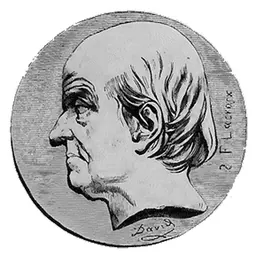
Related people
Same field, nearest in time




Contemporaries
People whose lives overlapped George Green's
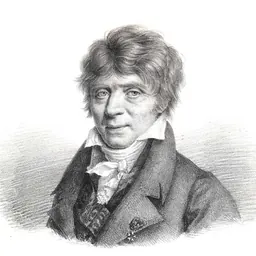




Frequently asked questions
Who was George Green?
British mathematical physicist (*1793 – †1841)
When was George Green born?
George Green was born on 14 July 1793 in Nottingham.
When did George Green die?
George Green died on 31 May 1841 in Nottingham.
What was George Green's occupation?
George Green was a mathematician and physicist.
What was George Green known for?
George Green was known for Green measure, Green's function, Green's identities, Green's law, Green's matrix and Green's theorem.
What nationality was George Green?
George Green was British.
Sources & further reading
· DBpedia: George Green (mathematician)
Cite this page
APA: Biography.guide. (2026). George Green. https://biography.guide/george-green-mathematician/
MLA: "George Green." Biography.guide, https://biography.guide/george-green-mathematician/.
Chicago: "George Green." Biography.guide. https://biography.guide/george-green-mathematician/.
Data last updated: 2026-09-20 · Spot an error? Report a correction.
Page generated 2026-09-27 05:17 UTC