
George Graham
British clockmaker, inventor, and geophysicist
About George Graham
Lived 1673 – 1751 (aged 78). George Graham was a British watchmaker, inventor, geophysicist, astronomer, artisan and mechanic.
George Graham, FRS (7 July 1673, maybe 1675 – 16 November 1751) was an English clockmaker, inventor, and geophysicist, and a Fellow of the Royal Society.
He was born in Kirklinton, Cumberland. A Friend (Quaker), Graham left Cumberland by foot in 1688 for London to become an apprentice clockmaker, after which he worked with Thomas Tompion . He later married Tompion's niece, Elizabeth Tompion.
Career
Graham was partner to the influential English clockmaker Thomas Tompion during the last few years of Tompion's life. Graham is credited with inventing several design improvements to the pendulum clock, inventing the mercury pendulum and also the orrery. He was made Master of the Worshipful Company of Clockmakers in 1722.
Between 1730 and 1738, Graham had as an apprentice Thomas Mudge, who went on to be an eminent watchmaker in his own right, and invented the lever escapement, an important development for pocket watches.
He was widely acquainted with practical astronomy, invented many valuable astronomical instruments, and improved others. Graham made for Edmond Halley the great mural quadrant at Greenwich Observatory, and also the fine transit instrument and the zenith sector used by James Bradley in his discoveries. He supplied the French Academy with the apparatus used for the measurement of a degree of the meridian, and constructed the most complete planetarium known at that time, in which the motions of the celestial bodies were demonstrated with great accuracy. This was made in cabinet form, at the desire of Charles Boyle, 4th Earl of Orrery.
Graham was introduced to John Harrison on the latter's arrival in London, and became a longtime advisor and supporter of Harrison's work on a marine chronometer. Graham and Harrison spent many hours discussing clockwork when first introduced, and Graham gave Harrison an unsecured and interest-free loan to continue his work at this first meeting. Graham later presented Harrison to the Board of Longitude, speaking on his behalf and securing additional funding from the Board.
Deadbeat escapement The deadbeat escapement is often erroneously credited to George Graham who introduced it around 1715 in his precision regulator clocks. However it was actually invented around 1675 by astronomer Richard Towneley, and first used by Graham's mentor Thomas Tompion in a clock built for Sir Jonas Moore, and in the two precision regulators he made for the new Greenwich Observatory in 1676, mentioned in correspondence between Astronomer Royal John Flamsteed and Towneley
Achievements His major contribution to geophysics was the discovery of the diurnal variation of the terrestrial magnetic field in 1722/23. He was also one of the first to notice long-term secular change in the direction of the compass needle. The compass needles he produced as an instrument-maker were used by many contemporary magneticians. Around 1730, George loaned approximately £200 to John Harrison so that he could start work on his marine timekeeper known later as H1. George was commonly known in the trade as 'Honest George Graham'.
Examples of his work A 28-day duration longcase regulator with deadbeat escapement c. 1745 Moyse's Hall Museum Bury St Edmunds UK
Death He died at his home in Fleet Street, London and was buried in the same tomb as his friend and mentor Thomas Tompion in Westminster Abbey.
In popular culture Actor Peter Vaughan was cast as George Graham in the TV series, Longitude in 2000.
Don’t just read it —
keep it.
Full-length biographies made to live with: read them, listen on the way to work, watch them tonight.
- E-book
- Audio
- Video
Instant download · yours to keep · every purchase keeps this site free
Important facts
People in George Graham's life
Named in this biography and alive at the same time


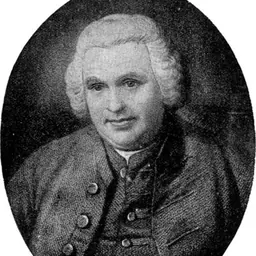
Related people
Same field, nearest in time
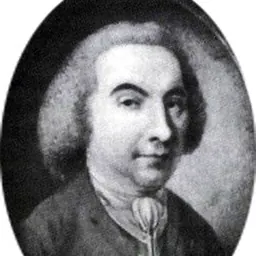


Contemporaries
People whose lives overlapped George Graham's




Frequently asked questions
Who was George Graham?
British clockmaker, inventor, and geophysicist (1673-1751)
When was George Graham born?
George Graham was born on 7 July 1673 in Cumberland.
When did George Graham die?
George Graham died on 20 November 1751 in London.
What was George Graham's occupation?
George Graham was a watchmaker, inventor, geophysicist, astronomer, artisan and mechanic.
What nationality was George Graham?
George Graham was British.
Sources & further reading
· DBpedia: George Graham (clockmaker)
Cite this page
APA: Biography.guide. (2026). George Graham. https://biography.guide/george-graham-watchmaker/
MLA: "George Graham." Biography.guide, https://biography.guide/george-graham-watchmaker/.
Chicago: "George Graham." Biography.guide. https://biography.guide/george-graham-watchmaker/.
Data last updated: 2026-09-26 · Spot an error? Report a correction.
Page generated 2026-09-27 05:15 UTC