
About George Furness
Lived 1820 – 1900 (aged 79). George Furness was an engineer.
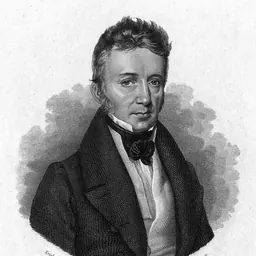
George Furness (31 October 1820 – 9 January 1900) was an English Victorian construction engineer and benefactor. He worked all around the world, on railways, drainage, and brickwork among numerous other things.
Birth Furness was born in Great Longstone, Derbyshire. The old Croft House was part of the Furness' property there.
Career George Furness did a wide variety of jobs and contracts throughout his life, both overseas and local.
alt=Steam locomotive (number 80136) with carriages at station platform.
Railway In the early 19th century, the railway was born in Britain. Furness took advantage of this new type of business; from 1842 onwards, he worked on the construction of major railways in the Midlands, Western and Southern counties of England. Among those he contributed to were: Abingdon Railway, opened in 1856 Redditch Railway, opened in 1859 West Somerset Railway, open in 1862 Isle of Grain to (Kent), opened in 1882
Some of these still exist.
Overseas work When Britain was at the forefront of construction and engineering, specialists where in great demand overseas for their skills. Furness, being one of these skilled workers, was involved in overseas construction works in Brazil and France.
His other specialty was public works. He worked on extensive dredging contracts in Italy (Spezia, Ancona, Livorno and Palermo) for the next 30 years of his life. King Victor Emmanuel III made him a Knight of the Order of the Crown of Italy.
His main work, though, was in Odessa, Russia. After the Crimean War, specialists were needed to renew public works. There, he worked on drainage, paving, and general restorations, along with numerous other works. The overall cost for these labours totalled £750,000.
Soon after, an approximately -high square chimney
His obituary stated: "In public affairs his tenacity of purpose, liberal views, and ready regard for divergent opinions were as noticeable in his private and professional life."
Aftermath In May 1902, Sarah Rebecca, Mary Woodwis, and Matthew Thomas Bladen were all drowned in a boating accident on the Lakes of Killarney, in Ireland. Only the body of Sarah Rebecca was recovered, and her corpse was brought back to Willesden and buried next to her husband.
George James, Furness' eldest son and only surviving heir, carried on the tradition of his father in Willesden. He sat on the Middlesex County Council and was a JP, MP for West Willesden from 1922 to 1923 his family decided to move out of Willesden. He was buried in St Mary's Church, across the path from his father and mother.
Other roads in the immediate vicinity of Furness Road are also named after his key areas of activity: Ancona Road; Spezia Road; Palermo Road and Odessa Road; all adjacent to Furness Road.
Additionally, a block of flats is called George Furness House. They stand on Grange Road.
Don’t just read it —
keep it.
Full-length biographies made to live with: read them, listen on the way to work, watch them tonight.
- E-book
- Audio
- Video
Instant download · yours to keep · every purchase keeps this site free
Important facts
Family & relationships
People in George Furness's life
Named in this biography and alive at the same time

Related people
Same field, nearest in time


Contemporaries
People whose lives overlapped George Furness's




Frequently asked questions
Who was George Furness?
British construction engineer
When was George Furness born?
George Furness was born on 31 October 1820 in Great Longstone.
When did George Furness die?
George Furness died on 9 January 1900 in Willesden.
What was George Furness's occupation?
George Furness was an engineer.
Sources & further reading
Cite this page
APA: Biography.guide. (2026). George Furness. https://biography.guide/george-furness-engineer/
MLA: "George Furness." Biography.guide, https://biography.guide/george-furness-engineer/.
Chicago: "George Furness." Biography.guide. https://biography.guide/george-furness-engineer/.
Data last updated: 2026-09-20 · Spot an error? Report a correction.
Page generated 2026-09-27 05:08 UTC