
About George Fox-Pitt-Rivers
Lived 1890 – 1966 (aged 76). George Fox-Pitt-Rivers was a British anthropologist and ethnologist.
George Henry Lane-Fox Pitt-Rivers (22 May 1890 – 17 June 1966) was a British anthropologist and eugenicist who was a wealthy landowner in England in the interwar period. He embraced anti-Bolshevism and anti-Semitism and became a supporter of Oswald Mosley, which led to his being interned by the British government in the Second World War.
Life Pitt-Rivers was born in London, his birth registered under the surname Fox in Chesterfield. He was a son of Alexander Edward Lane Fox-Pitt-Rivers (2 November 1855 – 19 August 1927) and his wife Alice Ruth Hermione, daughter of Lord Henry Thynne. His father was the eldest son of Augustus Pitt Rivers, ethnologist and anthropologist and founder of the Pitt Rivers Museum, upon whose death in 1900 Alexander inherited the Pitt-Rivers estate. After Alexander died in 1927, the estate was inherited by George and it was so large that "it was said, albeit with exaggeration, that he could ride from coast to coast without leaving his own land".
Army service Pitt-Rivers was an officer in the 1st (Royal) Dragoons. In November 1911, his regiment was sent to South Africa, being stationed in Johannesburg, the centre of the gold-mining industry of the Witwatersrand. In June 1913, the gold miners went on strike, demanding fewer hours and more pay. General Jan Smuts, the South African minister of defence and of finance, decided to use military force to end the strike, and on 4 July 1913 the Dragoons were ordered to break up a pro-strike rally in Market Square, Johannesburg, leading to a bout of extended fighting and rioting that lasted until the following day. Pitt-Rivers' precise role in the action in Johannesburg remains unclear, though as a junior officer he was certainly involved. In the aftermath, he took photographs of the burned-out buildings and the horses of the Dragoon Guards that had been killed during the shooting. The action in Johannesburg left him with a strong dislike of unions and the political left in general.
He took part in the First World War. On 23 August 1914, the Dragoons left South Africa for England and on 7 October 1914 arrived in Belgium. In October and November, the Dragoon Guards were involved in heavy fighting during the First Battle of Ypres. On 17 November 1914, Pitt-Rivers's knee was shattered by a German bullet, and he was sent to England for surgery and recuperation. He was promoted to captain in 1919.
Inter-war With the ending of the war, Pitt-Rivers was in an insecure mood as he noted that the world that existed before 1914 would not return, and that the United Kingdom was entering a new age. In 1920 he published a book, with a preface by Oscar Levy, The World Significance of the Russian Revolution, the first of his anti-Bolshevik and anti-Semitic public activities. In it he wrote "the Jews are the principal agents of economic and political misery in the world, through their dealings in international finance and their actions in promoting democracy and revolution".
From 1922 to 1925, Pitt-Rivers held the position of Principal Secretary and Aide-de-Camp to his father-in-law Lord Forster, the Governor-General of Australia. He disliked Australia, which he found too democratic for his tastes, and spent as much time as possible out of the country on field research in New Zealand, New Guinea, the Bismarck Archipelago and elsewhere in the South Pacific. The focus on his anthropology studies in the Pacific was on "race extinction", "sex-ratio variances" and "culture extinction". His experience with the Māori people led to his lasting interest in anthropology, which he studied at Oxford under Bronisław Malinowski.
Skull cup In 1946 Pitt-Rivers presented a silver-mounted skull cup to Worcester College, Oxford. The chalice was used as a drinking cup in the senior common room of the college. The object, inherited from his grandfather, Augustus Pitt Rivers, was created from a human skull adorned with a silver rim and stand. The silver hallmarks suggest the skull was made into a chalice in London in 1838, the year of the emancipation of the British West Indies. Carbon dating in c.2025 showed the skull was around 225 years old and circumstantial evidence suggest it came from the Caribbean and may have belonged to an enslaved woman, according to Dan Hicks, curator of world archaeology at the Pitt Rivers Museum. Augustus Pitt Rivers bought the skull at a Sotheby's auction in 1884 from the estate of W. J. Bernhard Smith who had collected weaponry and armour. Smith probably received it from his father who served in the Caribbean with the Royal Navy. a biochemist, whose parents were Brigadier-General Anthony Morton Henley (1873–1925), a younger son of the 3rd Baron Henley, and Sylvia Laura Stanley, daughter of the 4th Baron Stanley of Alderley. Their marriage was dissolved in 1937. They had one child together: (George) Anthony (b. 1932); who married, in 1964, Valerie Scott, who was Lord Lieutenant of Dorset between 2006 and 2014.
After the Second World War, Pitt-Rivers met Stella Lonsdale, who had been incarcerated in Paris by the Germans, suspected of being a British spy; when she eventually managed to make her way to England, she was imprisoned under suspicion of being a German spy. She became the mistress of Pitt-Rivers and took his surname, although they never married. Stella inherited substantial property from Pitt-Rivers when he died in 1966. In his will, he left instructions that any properties to be sold must be offered individually, rather than as an estate, in order that tenants might buy the properties they leased from the Pitt-Rivers Estate. Much of the village of Okeford Fitzpaine was thus sold to former tenants. Stella also sold a large proportion of the artefacts held in the Pitt-Rivers Museum at Farnham, Dorset, which she had also inherited from Pitt-Rivers.
Don’t just read it —
keep it.
Full-length biographies made to live with: read them, listen on the way to work, watch them tonight.
- E-book
- Audio
- Video
Instant download · yours to keep · every purchase keeps this site free
Important facts
People in George Fox-Pitt-Rivers's life
Named in this biography and alive at the same time



Related people
Same field, nearest in time
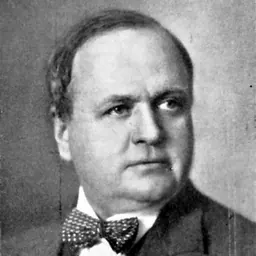
Contemporaries
People whose lives overlapped George Fox-Pitt-Rivers's
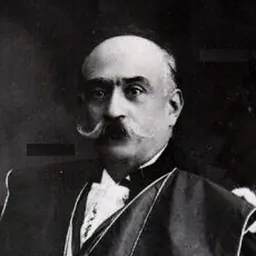
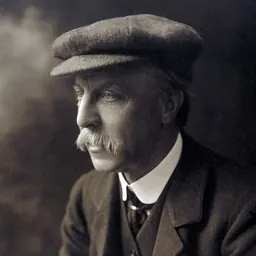



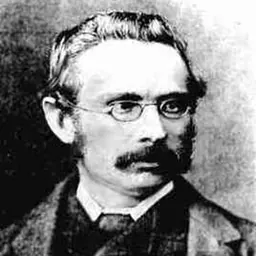
Frequently asked questions
Who was George Fox-Pitt-Rivers?
British anthropologist and eugenicist
When was George Fox-Pitt-Rivers born?
George Fox-Pitt-Rivers was born on 22 May 1890 in London.
When did George Fox-Pitt-Rivers die?
George Fox-Pitt-Rivers died on 17 June 1966.
What was George Fox-Pitt-Rivers's occupation?
George Fox-Pitt-Rivers was an anthropologist and ethnologist.
What nationality was George Fox-Pitt-Rivers?
George Fox-Pitt-Rivers was British.
Sources & further reading
· Wikipedia: George Fox-Pitt-Rivers
Cite this page
APA: Biography.guide. (2026). George Fox-Pitt-Rivers. https://biography.guide/george-fox-pitt-rivers/
MLA: "George Fox-Pitt-Rivers." Biography.guide, https://biography.guide/george-fox-pitt-rivers/.
Chicago: "George Fox-Pitt-Rivers." Biography.guide. https://biography.guide/george-fox-pitt-rivers/.
Data last updated: 2026-09-20 · Spot an error? Report a correction.
Page generated 2026-09-27 05:31 UTC