
About George Etherege
Lived 1635 – 1691 (aged 55–56). George Etherege was a British playwright, diplomat, writer and poet.
Sir George Etherege (c. 1636 – c. 10 May 1692) was an English dramatist. He wrote the plays The Comical Revenge or, Love in a Tub in 1664, She Would If She Could in 1668, and The Man of Mode or, Sir Fopling Flutter in 1676.
Biography Early life George Etherege was born in Maidenhead, Berkshire, in about 1636, to George Etherege and Mary Powney, as the eldest of their six children. Educated at Lord Williams's School, where a school building was later named after him, he was rumoured to have attended the University of Cambridge, although John Dennis states that to his certain knowledge Etherege understood neither Greek nor Latin,
Etherege served as an apprentice to a lawyer and later studied law at Clement's Inn, London, one of the Inns of Chancery. The Merry Gang flourished for about 15 years after 1665 and included John Wilmot, 2nd Earl of Rochester; Henry Jermyn; Charles Sackville, Earl of Dorset; John Sheffield, Earl of Mulgrave; Henry Killigrew; Sir Charles Sedley; the playwright William Wycherley; and George Villiers, 2nd Duke of Buckingham. The Merry Gang were advocates of libertinism. Members of the gang asserted the right to behave as they pleased and their antics were intended to draw the attention and amusement of the king. Rochester claimed his aim was to halt "the strange decay of manly parts since the days of dear Harry the Second ". The gang engaged in acts that were loud, outraged public decency and often included violence against women.
In 1676, Rochester and Etherege were involved in a brawl with the watch in Epsom that left a Captain Downs dead. At different times, Sedley and Buckhurst both paid Nell Gwyn, long-time mistress of the king, £100 a year to live with them; she also spent a period living with Rochester. Gwyn's 1679 funeral was attended by all of the gang.
Life after the theatre Etherege was part of the circle of John Wilmot; both men had a daughter by the unmarried actress Elizabeth Barry. (All three appeared as characters in the 2005 film The Libertine, based on a play by Stephen Jeffreys.)
After his success, Etherege retired from literature, and a few years later lost much of his fortune to gambling. He was knighted at some time before 1679, and married a wealthy widow, Mary Sheppard Arnold. In March 1685, he was appointed resident minister to the Imperial German Court at Ratisbon. After three-and-a-half years' residence there, and after the Glorious Revolution, he left for Paris to join James II in exile. He died in Paris, probably in 1691, as Narcissus Luttrell notes this as a recent event in February 1692, identifying Sir George Etherege as the late King James's Ambassador to Vienna.
Etherege's manuscript despatches are preserved in the British Museum, where they were discovered and described by Gosse in 1881. Later editions were produced by Sybil Rosenfeld (1928) and Frederic Bracher (1974).
Legacy Etherege holds a distinguished place in English literature as one of the "big five" in Restoration comedy, who invented the comedy of manners and led the way to the achievements of Congreve and Sheridan.
Etherege's portraits of fops and beaux are considered to be the best of their kind. He is noted for his delicate touches of dress, furniture and scene, and a vivid replication of the fine airs of London gentlemen and ladies which may even better Congreve's. His biography was first written in detail by Edmund Gosse in Seventeenth Century Studies (1883).
Don’t just read it —
keep it.
Full-length biographies made to live with: read them, listen on the way to work, watch them tonight.
- E-book
- Audio
- Video
Instant download · yours to keep · every purchase keeps this site free
Important facts
People in George Etherege's life
Named in this biography and alive at the same time

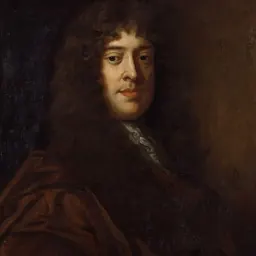
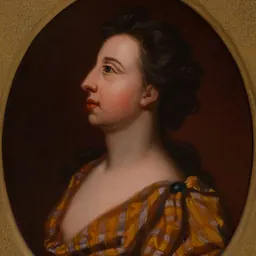

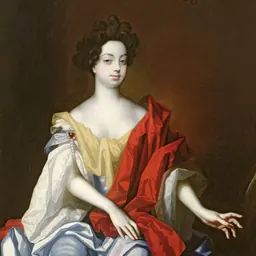

Related people
Same field, nearest in time
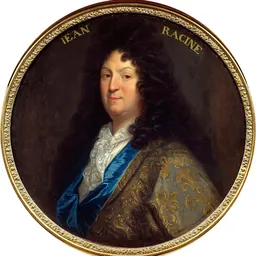

Contemporaries
People whose lives overlapped George Etherege's





Frequently asked questions
Who was George Etherege?
English writer 1635-1691
When was George Etherege born?
George Etherege was born in 1635 in Maidenhead.
When did George Etherege die?
George Etherege died in 1691 in Paris.
What was George Etherege's occupation?
George Etherege was a playwright, diplomat, writer and poet.
What nationality was George Etherege?
George Etherege was British.
Sources & further reading
Cite this page
APA: Biography.guide. (2026). George Etherege. https://biography.guide/george-etherege/
MLA: "George Etherege." Biography.guide, https://biography.guide/george-etherege/.
Chicago: "George Etherege." Biography.guide. https://biography.guide/george-etherege/.
Data last updated: 2026-09-20 · Spot an error? Report a correction.
Page generated 2026-09-27 05:04 UTC