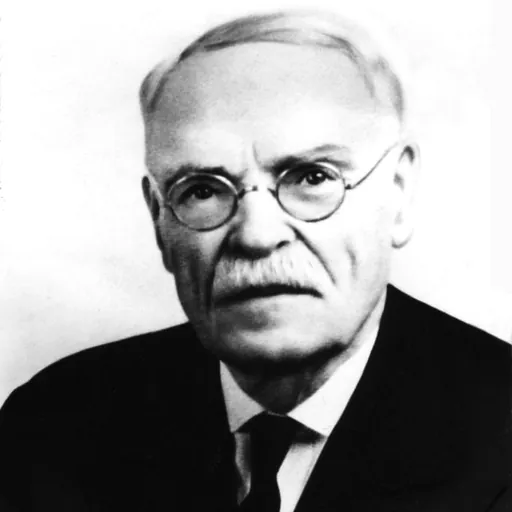
George E. White
American Congregationalist missionary, President of Anatolia College, and witness to the Armenian Genocide
About George E. White
Lived 1861 – 1946 (aged 84). George E. White was a missionary, head teacher, anatolia College and armenian genocide.
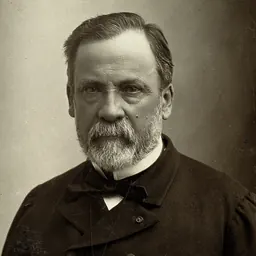
George Edward White (October 14, 1861 – April 27, 1946) was an American Congregationalist missionary for the American Board of Commissioners for Foreign Missions for forty-three years. Stationed in the Ottoman Empire during the Armenian genocide as president of the Anatolia College in Merzifon, White attempted to save the lives of many Armenians, including "refus[ing] to tell" where Armenians were hiding so to save them from getting deported or killed.
White was promoted to the college's president in September 1913. The college's faculty then consisted of 11 Armenians, 10 Americans, and 9 Greeks.
Background Armenian Christians had been an oppressed minority in the Ottoman Empire, often turning to Protestant missionaries as well as Eastern Orthodox Russia for protection. Russian troops had been stationed in several eastern Ottoman provinces after the treaty ending the Russo-Turkish war, pending the Ottoman Empire's adoption of reforms, even as modified by the Congress of Berlin in 1878. Armenian nationalists rioted in Constantinople and in the provinces shortly after White's arrival in Merzifon, and were brutally suppressed in the Hamidian massacres of 1894–1896. Ottoman military officers, including Mustafa Kemal Atatürk, seized power from Sultan Abdülhamid II and attempted to establish a constitutional monarchy in the Young Turk Revolution of 1908.
The collapsing Ottoman Empire lost its Balkan possessions after Orthodox Christian uprisings in the First Balkan War of 1912–13. As White's college presidency began, at least half a million Muslim Ottomans from the empire's former Balkan possessions sought refuge in Turkey, some seeking revenge against Christians. Muslim Balkan refugees intensified Turkish fears that the empire's Armenian Christian minority—with the assistance or encouragement of Western governments—might also attempt to establish an independent state and thus break up the empire's eastern provinces.
Armenian genocide White considered the demographic situation as an "internal breach that would come to surface as a deadly wound." He predicted that since many Christians lived in the area, conflict would be inevitable, merely awaiting an opportune time and conditions.
When the Turkish government began deporting Armenians in 1915, White remained in Merzifon (which Armernians called Marsovan). At the time, half the city's 30,000 people were Armenian. By spring, "the situation for Armenia, became excessively acute", White stated "the Turks determined to eliminate the Armenian question by eliminating the Armenians." White found "the misery, the agony, the suffering (of the deportees) beyond power of words to express, almost beyond the power of hearts to conceive. In bereavement, thirst, hunger, loneliness, hopelessness, the groups were swept on and on along roads which had no destination."
Afterward, White headed a 250-person expedition funded by the Near East Relief Fund to aid Armenian refugees. White also supported an independent Armenia because he believed that without a free Armenia, Armenians would have "no real security for the life of a man, the honor of a woman, the welfare of a child, the prosperity of a citizen or the rights of a father." On 16 May 1916, Turkish authorities closed the college, displacing White and the remaining staff to establish a military hospital.
White helped establish various additions to the campus which included an agriculture section. By 1919, an orphanage was established within the premises of the school which sheltered as many as 2,000 Armenian orphans. In 1924, George White was appointed president of the as-yet-unconstructed Salonika branch. He later described that upon his arrival, the building was "without a book, a bell or a bench." White raised funds to construct and operate the new college. He is buried at Hazelwood Cemetery in Grinnell, Iowa.
Grinnell College has offered a named scholarship to select Anatolia College graduates in White's honor, since 1986.
Don’t just read it —
keep it.
Full-length biographies made to live with: read them, listen on the way to work, watch them tonight.
- E-book
- Audio
- Video
Instant download · yours to keep · every purchase keeps this site free
Important facts
People in George E. White's life
Named in this biography and alive at the same time


Related people
Same field, nearest in time


Contemporaries
People whose lives overlapped George E. White's


Frequently asked questions
Who was George E. White?
American Congregationalist missionary, President of Anatolia College, and witness to the Armenian Genocide (1861-1946)
When was George E. White born?
George E. White was born on 14 October 1861 in Kahramanmaraş.
When did George E. White die?
George E. White died on 27 April 1946 in Claremont.
What was George E. White's occupation?
George E. White was a missionary, head teacher, anatolia College and armenian genocide.
Sources & further reading
· DBpedia: George E. White (missionary)
Cite this page
APA: Biography.guide. (2026). George E. White. https://biography.guide/george-e-white-missionary/
MLA: "George E. White." Biography.guide, https://biography.guide/george-e-white-missionary/.
Chicago: "George E. White." Biography.guide. https://biography.guide/george-e-white-missionary/.
Data last updated: 2026-09-22 · Spot an error? Report a correction.
Portrait: Wikimedia Commons · author & licence
Page generated 2026-09-27 04:57 UTC