
About George E. Kimball
Lived 1906 – 1967 (aged 61). George E. Kimball was an American chemist.
George Elbert Kimball (July 12, 1906 – December 6, 1967) was an American professor of quantum chemistry, and a pioneer of operations research algorithms during World War II.
Early life George E. Kimball was born to Arthur G. Kimball in Chicago in 1906 and he grew up in New Britain, Connecticut. He was the oldest of three children in a middle-class family; his younger brother, Penn Kimball, also became a professor at Columbia, in journalism. His interest in chemistry was due to his high school chemistry teacher. He attended New Britain High School and graduated in 1923. Together, they had four children. he stayed at Princeton as instructor. In 1933, he was awarded a National Research Fellowship in chemistry and went to Massachusetts Institute of Technology (MIT) for two years (1933–1935). While a fellow in MIT's chemistry department, he spent much of his time working in the physics department where his collaborators included the trio John C. Slater, Philip M. Morse (who had been a graduate student at Princeton simultaneously with Kimball, but in physics) and Julius Stratton.
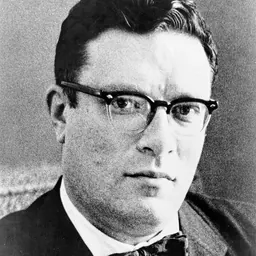
During the summer of 1935, Kimball returned to Princeton, to work with Henry Eyring. After a year when Kimball taught physics at Hunter College, he became assistant professor at the Chemistry Department of Columbia University. One of his students during his early time at Columbia was Isaac Asimov, who remembered getting a zero from him in physical chemistry. The book Quantum Chemistry written by Kimball, Henry Eyring and John Walter, was begun around 1934 and published in 1944. Although periodically occupied with other tasks from 1942, he became a full professor of chemistry at Columbia in 1947 and remained there until 1956.
World War II work (1942–1945) In 1942, after the US had entered World War II and was faced with the problem of Nazi German U-boat attacks on transatlantic shipping, Philip M. Morse was tasked with organizing a scientific group in the US Navy to analyze anti-submarine warfare tactics. Kimball was one of the first persons recruited by Morse, and within the year he became Morse's Deputy Director. During the war, the group was called the Operations Research Group (ORG), and was later known as the Operations Evaluation Group, US Navy, and had grown to number some seventy analysts when the war ended in 1945. The ORG's work has become known as the pioneering application of OR in the US, after OR originated in the United Kingdom a few years earlier through pioneering efforts by Patrick Blackett and other scientists. During the war, there was liaison between US and UK analysts in service of RAF Coastal Command.
The ORG's work also extended into the South Atlantic and into the Pacific Ocean theater of World War II, where the US Navy was carrying out a submarine offensive against Japan's supply lines and where defenses against Kamikaze attacks was high on the agenda. At the end of the war some of the ORG members stayed on to document the lessons of the Group's work. Morse and Kimball wrote Methods of Operations Research, which was initially a classified report, but which was later released for general publication and published by MIT Press in 1951, and this book received a lot of attention. Kimball received the Presidential Citation of Merit for his work during World War II, and in 1954 he was elected to the National Academy of Sciences. and he did service as trustee and president of the Unitarian congregation in Hackensack, New Jersey.
George E. Kimball Medal Following the death of George E. Kimball, ORSA instituted a medal in his honor, which is awarded annually. It was first awarded in 1974, when Thomas Caywood, Philip M. Morse and George Shortley were awarded.
After ORSA merged with The Institute for Management Science (TIMS) to form the Institute for Operations Research and the Management Sciences (INFORMS), the George E. Kimball Medal has been awarded by INFORMS.
Death During his last years, Kimball suffered from cardiac illness which became more severe, and he died on December 6, 1967, while in Pittsburgh, Pennsylvania, on business.
Don’t just read it —
keep it.
Full-length biographies made to live with: read them, listen on the way to work, watch them tonight.
- E-book
- Audio
- Video
Instant download · yours to keep · every purchase keeps this site free
Important facts
People in George E. Kimball's life
Named in this biography and alive at the same time





Related people
Same field, nearest in time



Contemporaries
People whose lives overlapped George E. Kimball's


Frequently asked questions
Who was George E. Kimball?
American chemist
When was George E. Kimball born?
George E. Kimball was born on 12 July 1906 in Chicago.
When did George E. Kimball die?
George E. Kimball died on 6 December 1967 in Pittsburgh.
What was George E. Kimball's occupation?
George E. Kimball was a chemist.
What nationality was George E. Kimball?
George E. Kimball was American.
Sources & further reading
· Wikipedia: George E. Kimball
Cite this page
APA: Biography.guide. (2026). George E. Kimball. https://biography.guide/george-e-kimball/
MLA: "George E. Kimball." Biography.guide, https://biography.guide/george-e-kimball/.
Chicago: "George E. Kimball." Biography.guide. https://biography.guide/george-e-kimball/.
Data last updated: 2026-09-20 · Spot an error? Report a correction.
Page generated 2026-09-27 05:30 UTC