
About George Doundoulakis
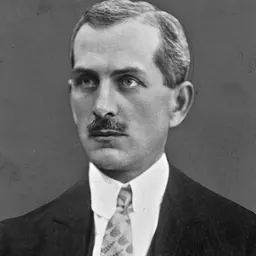
Lived 1921 – 2007 (aged 85). George Doundoulakis was an American physicist, known for Arecibo radio telescope.
George James Doundoulakis (October 18, 1921 – March 17, 2007) was a Greek American physicist and soldier who worked under British Intelligence during World War II with SOE agent Patrick Leigh Fermor, and then served with the OSS in Thessaly, Greece.
He is known for his twenty-six US patents in the fields of radar, electronics, and narrowband television. Doundoulakis is best remembered for the idea of suspending the antenna feed of the Arecibo radio telescope by cables and towers, eventually patented by his brother Helias Doundoulakis.
A decorated veteran of World War II, Doundoulakis formed an underground resistance organization in Crete under the Special Operations Executive. He escaped to Egypt and joined the U.S. Army and Office of Strategic Services – the OSS. He was sent back to Greece, where he outfitted and unified a leftist rebel army, and was awarded the Legion of Merit from the United States Army and the King's Medal for Courage in the Cause of Freedom from Great Britain.
Early life George Doundoulakis was born in Detroit, Michigan to Greek-immigrant parents, Demetrios and Evanthia (née Psaroudakis) Doundoulakis. When he was four years old, his family immigrated to Crete, Greece to look after their blind grandmother in the village of Archanes. Nearby was the Minoan excavations at Knossos, where British archaeologist – later, SOE agent – John Pendlebury had been the curator.
By 1941, Greece had fallen to the Axis powers except Crete. On May 20, 1941, German paratroopers invaded the island, known as the Battle of Crete.
World War II
Battle of Crete and the Cretan resistance During the Battle of Crete, Doundoulakis assisted the Greek and British army headquarters in Archanes, translating communiqués from other military posts. Along with his brother Helias Doundoulakis and friends, they began scouring the island for recruits. Gathering momentum, Doundoulakis rounded up ex-military personnel and civilians from Heraklion and Lasithi. After Woodhouse left Crete, the SOE replaced him with "Tom" Dunbabin. Risky sabotages under his watch were performed, such as the destruction of the Kastelli Airfield. Along with friend Kimon Zografakis and two British commandos, Doundoulakis was able to set the airfield on fire after they placed explosives on seven German airplanes and hundreds of barrels of aviation fuel. Informants also uncovered German naval intelligence through a paramour of a German officer. After being relayed to Dunbabin, it resulted in the destruction of a German convoy destined to resupply Field Marshal Erwin Rommel and his Afrika Korps in September 1942. After the war, Doundoulakis was awarded the King's Medal for Courage in the Cause of Freedom from Great Britain for his services.
Dunbabin finally left, and the SOE followed him up with the legendary Patrick Leigh Fermor, known to the Cretans as "Mihalis". Later, along with Leigh Fermor and "Billy" Moss, he would become a key player in the kidnap of General Kreipe from Crete.
Office of Strategic Services (OSS) Two months of training at the lavish SOE villa in Heliopolis, Cairo, came to an abrupt end when Doundoulakis learned of the Office of Strategic Services, the OSS. Doundoulakis contacted the fledgling American spy service that would become a key player in the Doundoulakis brothers' future. With help from Leigh Fermor, he informed the SOE commander of his intentions to join the American Army. Much to the SOE's dismay, George and Helias ultimately departed as comrades-in-arms and with hopes of defeating their common enemy.
The OSS dispatched Captain James Kellis to enlist the Doundoulakis brothers into the US Army on September 16, 1943, and were assigned to the OSS. Their Commanding Officer was Major John Vassos, RCA's eminent industrial designer. Agents were trained inside a secluded palace of King Farouk's situated along Cairo's Nile River, known as Ras el Kanayas. Doundoulakis was trained in the Morale Operations (MO) and Special Operations (SO) branches. Doundoulakis provided the necessary logistic sustainment that included weapons, a printing press, clothing, and materials for his secret army through OSS bases in Turkey. He had printed and distributed leaflets intended for German soldiers and Greek collaborators, to subvert their confidence while encouraging the Greek population to resist. They were able to inflict enough damage to Volos' railroad transportation hub and its maritime shipping, that it contributed to the demise of the German supply line near Athens. The Germans were unable to remove Doundoulakis and the leftist rebels hidden in the impassable Pelion Mountains. Unrelenting attacks upon German communications and railway links led to an overwhelming success. Doundoulakis was promoted to first sergeant and awarded the Legion of Merit in OSS-Cairo.
General Bronze Corporation Seeing the potential of this rising star in a rapidly developing field, Doundoulakis was hired by the General Bronze Corporation in Garden City, New York as head of Research and Development (R&D). At the time, General Bronze was dedicated to pioneering and taking the lead in the commercial market of antenna designs. Along with Stanley Gethin, he copyrighted antenna and radar-related projects for General Bronze.
Arecibo Radio Telescope As the head of Research and Development for General Bronze, Doundoulakis was notified by Cornell University of their intent to build a radio telescope. Subsequently, he was invited to Cornell the day the project for the design and construction of the antenna at Arecibo, Puerto Rico was announced, by Professor William Gordon. Gordon, who led the project for Cornell, indicated at that time that the support for the antenna feed – or "eye" – was envisioned to be a 500-foot tower situated in the center of the 1000 ft. reflector.
Doundoulakis, foreseeing a simpler approach with a suspended antenna feed, leapt at the opportunity. Along with Zachary Sears – who directed Internal Design at Digital B & E Corporation of New York – he received the request for proposal (RFP) from Cornell University for the antenna design. He studied the idea of suspending the antenna feed with his brother, Helias Doundoulakis, a civil engineer who was then working for Emery Roth. Doundoulakis identified the problem that a tower or tripod would have presented around the center, which is the most critical portion of the reflector. Instead, Doundoulakis' proposal of a revolutionary design, by suspending the feed from cables connected to towers, was more practical. Rather than having a massive tower in the center of the reflector, his design would save millions in construction costs.
He presented his proposal to Cornell University for a suspension system of the feed. This suspension system would possess a doughnut or torus-type truss suspended by four cables from four towers, to provide along its edge a rail track intended for azimuthal positioning of the feed. A second truss in the form of an arch was to hang below and rotate on said rails through 360 degrees. The arch also provided rails onto which the unit supporting the feed would move to provide for the elevational positioning of the feed. A counter-weight would move symmetrically opposite to the feed position for overall stability. George informed his brother, Helias Doundoulakis, to design the cable suspension system which was finally adopted for the Arecibo Antenna. A patent was filed on September 11, 1961, by Helias Doundoulakis for "A radio telescope having a scanning feed supported by a cable suspension over a stationary reflector" who designed the suspension system according to George's specifications. Although the present configuration of the Arecibo Antenna is identical to the original drawings by George and Helias Doundoulakis (except with three towers, instead of the four towers drawn in Doundoulakis' patent ), the United States Patent and Trademark Office finally granted Helias Doundoulakis a U.S. patent on September 13, 1966 – for designing the radio telescope's suspension system. Two other assignees on the patent were close friends William J. Casey, ex-director of the CIA under President Reagan, and attorney Constantine Michalos.
After the observatory was damaged by Hurricane Maria in 2017, it was also affected by earthquakes in 2019 and 2020. Two cable breaks, one in August 2020 and a second in November 2020, threatened the structural integrity of the support structure for the suspended platform and damaged the dish. Due to uncertainty over the remaining strength of the other cables supporting the suspended structure, and the risk of collapse due to further failures making repairs dangerous, the NSF announced on November 19, 2020, that it would decommission and dismantle the telescope. Before it could be decommissioned, several of the remaining support cables suffered a critical failure and the support structure, antenna, and dome assembly all fell into the dish at 7:55 a.m. local time on December 1, 2020, destroying the telescope.
Advancement Devices and William J. Casey
In the 1950s, Doundoulakis began his own company dedicated to pursuing his patent designs and applying them to the market. Advancement Devices was launched, through which William J. Casey first heard of the inventor. In WWII, Casey had been chief of the OSS' Secret Intelligence branch for Europe. He learned that Doundoulakis also served in the OSS, and had secured a contract from the "Army Signal Corps to produce a radar that could measure the trajectory of a mortar shell. But he lacked the capital to follow through on his bid." Nonetheless, the Doundoulakis/Casey business partnership would beget a life-long friendship from, "the inventor who he had long subsidized." He eventually was sworn in and became head of the Securities and Exchange Commission under President Nixon. Afterward, under the presidency of Ronald Reagan, Casey was appointed the director of the Central Intelligence Agency.
Personal life Doundoulakis married Chrysanthe "Chris" (Markomihalakis) in Brooklyn, New York, where they settled after the war, resettling in North Bellmore, New York. They had two sons and one daughter, and three grandchildren.
During the 1980s, Leigh Fermor visited and stayed with Doundoulakis at his North Bellmore home, during one of the many celebrations for the Battle of Crete and the abduction of Gen. Kreipe, punctuating a friendship which had endured throughout both their lives.
Death George Doundoulakis died on March 17, 2007, and was buried with military honors in Greenfield Cemetery, Uniondale, New York.
Awards 2015 – Both George and Helias Doundoulakis were recipients of the OSS Society's 2015 Distinguished Service Award at the annual Donovan Award Dinner honoring Ambassador Hugh Montgomery in Washington, DC. 2008 – OSS Society, May and November, Meritorious Service Award, by the Greek Government and OSS Society, Astoria, NY 1991 – PAA, Pancretan Association of America Distinguished Service Award, 50th Anniversary of Battle of Crete, Astoria, NY
Notable works
US Patent 3985110 Two-rotor engine US Patent 4281628 High efficiency tri-rotor ballistic engine US Patent 4392351 Multi-cylinder Stirling engine Scatter Propagation: Theory and Practice, (with Kamen, I.) publisher: Sams, Long Beach, CA, U.S.A, 1956. Shadows in the nights (Greek: Σκιές τις Νύχτες) 1999, written in Greek.
Filmography George Doundoulakis portrayed himself, along with Patrick Leigh Fermor in the 2005 movie, The 11th Day: Crete 1941 .
Don’t just read it —
keep it.
Full-length biographies made to live with: read them, listen on the way to work, watch them tonight.
- E-book
- Audio
- Video
Instant download · yours to keep · every purchase keeps this site free
Important facts
People in George Doundoulakis's life
Named in this biography and alive at the same time





Related people
Same field, nearest in time



Contemporaries
People whose lives overlapped George Doundoulakis's

Frequently asked questions
Who was George Doundoulakis?
American soldier and physicist
When was George Doundoulakis born?
George Doundoulakis was born on 19 October 1921 in Detroit.
When did George Doundoulakis die?
George Doundoulakis died on 17 March 2007 in The Bellmores.
What was George Doundoulakis's occupation?
George Doundoulakis was a physicist.
What was George Doundoulakis known for?
George Doundoulakis was known for Arecibo radio telescope.
What nationality was George Doundoulakis?
George Doundoulakis was American.
Sources & further reading
· Wikipedia: George Doundoulakis
· DBpedia: George Doundoulakis
Cite this page
APA: Biography.guide. (2026). George Doundoulakis. https://biography.guide/george-doundoulakis/
MLA: "George Doundoulakis." Biography.guide, https://biography.guide/george-doundoulakis/.
Chicago: "George Doundoulakis." Biography.guide. https://biography.guide/george-doundoulakis/.
Data last updated: 2026-09-20 · Spot an error? Report a correction.
Page generated 2026-09-27 05:23 UTC