
George Brydges Rodney, 1st Baron Rodney
Royal Navy admiral;
About George Brydges Rodney, 1st Baron Rodney
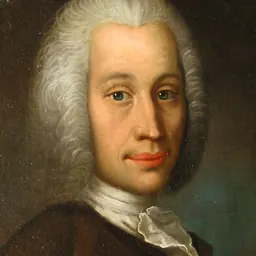
Lived 1719 – 1792 (aged 73). George Brydges Rodney, 1st Baron Rodney was a British politician, naval officer and admiral.
Admiral of the White George Brydges Rodney, 1st Baron Rodney, KB (1718 – 24 May 1792) was a Royal Navy officer, politician and colonial administrator. He is best known for his service in the American War of Independence, particularly his victory over the French at the Battle of the Saintes in 1782. It has often been claimed that Rodney pioneered the tactic of breaking the line, though this is disputed.
Rodney went to sea at the age of 14, with his first major action being the Second Battle of Cape Finisterre in 1747. He made a large amount of prize money during the 1740s, allowing him to purchase a large country estate and a seat in the British House of Commons. During the Seven Years' War, Rodney was involved in a number of amphibious operations such as the Rochefort and Le Havre raids and capture of Louisbourg. He became well known for his role in the capture of Martinique in 1762. Following the 1763 Treaty of Paris, Rodney's financial situation stagnated. He spent large sums of money pursuing his political ambitions, and by 1774 had run up large debts and was forced to flee Britain to avoid his creditors. He was in a French jail when war broke out between Britain and France in 1778. Thanks to a French benefactor, Rodney was able to secure his release and return to Britain where he was appointed to a new command.
Rodney successfully relieved Gibraltar during the Franco-Spanish siege and defeated a Spanish fleet at the 1780 Battle of Cape St. Vincent. He then was posted to the Jamaica Station, where he led the capture of Sint Eustatius of 1781. Later that year, Rodney briefly returned home as he was suffering from ill health. Orders for his recall had been sent when Rodney won a decisive victory at the Battle of the Saintes in April 1782, ending Franco-Spanish plans to invade Jamaica. On his return to Britain, Rodney was made a peer and was awarded an annual pension of £2,000. He lived in retirement until his death in 1792.
Early life George Brydges Rodney was born either in Walton-on-Thames or in London, though the family seat was Rodney Stoke, Somerset. He was most likely born sometime in January 1718. He was baptised in St Giles-in-the-Fields on 13 February 1718. He was the third of four surviving children of and Mary (Newton) Rodney, daughter of Sir Henry Newton. His father had served in Spain under the Earl of Peterborough during the War of the Spanish Succession, and on leaving the army served as captain in a marine corps which was disbanded in 1713. A major investment in the South Sea Company ruined Henry Rodney and impoverished the family. but this had been discounted more recently. to join the Royal Navy, having been appointed, by warrant dated 21 June 1732, a junior officer on board .
He rose swiftly through the ranks of the navy helped by a combination of his own talents and the patronage of the Duke of Chandos. Shortly after this, he was promoted to post-captain on 9 November 1742, having been appointed by Matthews to on 9 November. He picked up several British merchantmen in Lisbon to escort them home, but lost contact with them in heavy storms. Once he reached Britain his promotion was confirmed, making him one of the youngest post-captains in the British navy. In 1746 he obtained command of the 60-gun . After some time spent blockading French-occupied Ostend and cruising around the Western Approaches, where on 24 May he took his first prize a 16-gun Spanish privateer, Eagle was sent to join the Western Squadron.
Battle of Cape Finisterre
The Western Squadron was a new strategy by Britain's naval planners to operate a more effective blockade system of France by stationing the Home Fleet in the Western Approaches, where they could guard both the English Channel and the French Atlantic coast.
Eagle continued to take prizes while stationed with the Squadron being involved directly, or indirectly, in the capture of sixteen French ships. After taking one of the captured prizes to Kinsale in Ireland, Eagle was not present at the First Battle of Cape Finisterre when the Western Squadron commanded by Lord Anson won a significant victory over the French. While returning from Ireland, Eagle fell in with a small squadron under Commodore Thomas Fox which sighted a French merchant convoy heading for the Bay of Biscay. In total around 48 merchantmen were taken by the squadron, although Rodney ignored an order of Fox by pursuing several ships which had broken away from the rest in an attempt to escape managing to capture six of them. Afterwards Eagle rejoined the Western Squadron now under the command of Edward Hawke.
On 14 October 1747 the ship took part in the Second Battle of Cape Finisterre, a victory off Ushant over the French fleet. The French were trying to escort an outgoing convoy from France to the West Indies and had eight large ships-of-the-line while the British had fourteen smaller ships. Rodney was at the rear of the British line, and Eagle was one of the last British ships to come into action engaging the French shortly after noon. Initially Eagle was engaged with two French ships, but one moved away. Rodney engaged the 70-gun Neptune for two hours until his steering wheel was struck by a lucky shot, and his ship became unmanageable. Rodney later complained that Thomas Fox in Kent had failed to support him, and testified at Fox's court martial. The British took six of the eight French ships, but were unable to prevent most of the merchant convoy escaping, although much of it was later taken in the West Indies.
The two Battles of Cape Finisterre had proved a vindication of the Western Squadron strategy. Rodney later often referred to "the good old discipline" of the Western Squadron, using it as an example for his own views on discipline. For the remainder of the war Rodney took part in further cruises, and took several more prizes. Following the Congress of Breda, an agreement was signed at the Treaty of Aix-la-Chapelle ending the war. Rodney took his ship back to Plymouth where it was decommissioned on 13 August 1748. Rodney's total share of prize money during his time with Eagle was £15,000 giving him financial security for the first time in his life.
Commander On 9 May 1749 he was appointed governor and commander-in-chief of Newfoundland, with the rank of Commodore, it being usual at that time to appoint a naval officer, chiefly on account of the fishery interests. After his third and final trip to Newfoundland in the summer of 1751, Rodney sailed home via Spain and Portugal, escorting some merchantmen. Once home he fell ill, and was then unemployed for around ten months. During this time he oversaw the development of an estate at Old Alresford in Hampshire, which he had bought with the proceeds of his prize money.
From 1753 Rodney commanded a series of Portsmouth guard ships without actually having to go to sea before the onset of the Seven Years' War.
Seven Years' War
The first fighting broke out in North America in 1754, with competing British and French forces clashing in the Ohio Country. Despite this fighting formal war wasn't declared in Europe until 1756 and opened with the French laying siege to Minorca, the loss of which was blamed on Admiral of the Blue John Byng, who was court-martialled and executed. He was shot on the quarterdeck of , which until recently had been commanded by Rodney. Rodney excused himself from serving on the court martial by pleading illness. While Rodney disapproved of Byng's conduct, he thought the death sentence excessive and unsuccessfully worked for it to be commuted.
Louisbourg
Rodney had in 1755 and 1756, taken part in preventive cruises under Hawke and Edward Boscawen. In 1757, he took part in the expedition against Rochefort, commanding the 74-gun ship of the line .
Rodney and his ship played a minor role in the taking of Louisburg, which laid the way open for a British campaign up the St Lawrence River the following year, and the fall of Quebec. In August 1758 Rodney sailed for home in charge of six warships and ten transports carrying the captured garrison of Louisbourg who were being taken to Britain as prisoners of war.
Le Havre
On 19 May 1759, Rodney was promoted to Rear-Admiral of the Blue and shortly afterwards given command of a small squadron. The Admiralty had received intelligence that the French had gathered at Le Havre, at the mouth of the River Seine, a large number of flat-bottomed boats and stores which were being collected there for an invasion of the British Isles. After drawing up plans for an attack on Le Havre, Lord Anson briefed Rodney in person. The operation was intended to be a secret with it being implied that Rodney's actual destination was Gibraltar. This soon became impossible to maintain as Rodney tried to acquire pilots who knew the Normandy coast. Lord Anson then selected him to command the naval element of a planned amphibious attack on the lucrative and strategically important French colony of Martinique in the West Indies, promoting him over the heads of a number of more senior officers. A previous British attack on Martinique had failed in 1759. The land forces for the attack on Martinique were to be a combination of troops from various locations including some sent out from Europe and reinforcements from New York City, who were available following the Conquest of Canada which had been completed in 1760. During 1761 Martinique was blockaded by Sir James Douglas to prevent reinforcements or supplies from reaching it. In 1762 he was formally appointed commander-in-chief of the Leeward Islands Station.
In early 1762, Rodney and Robert Monckton led an expeditionary force which captured Martinique, while both Saint Lucia and Grenada had surrendered to his squadron. During the siege of Fort Royal his seamen and marines rendered excellent service on shore. he lost his Greenwich post, but a few months later received the office of Rear-Admiral of Great Britain. Until 1774, he held the Jamaica command, and during a period of quiet, was active in improving the naval yards on his station. Sir George struck his flag with a feeling of disappointment at not obtaining the governorship of Jamaica, and was shortly after forced to settle in Paris. Election expenses and losses at play in fashionable circles had shattered his fortune, and he could not secure payment of the salary as Rear-Admiral of Great Britain. In February 1778, having just been promoted to Admiral of the White, he used every possible exertion to obtain a command to free himself from his money difficulties. By May, he had, through the splendid generosity of his Parisian friend Marshal Biron, effected the latter task, and accordingly he returned to London with his children. The debt was repaid out of the arrears due to him on his return. The story that he was offered a French command is fiction.
Moonlight Battle
Rodney was appointed once more commander-in-chief of the Leeward Islands Station late in 1779. His orders were to relieve Gibraltar on his way to the West Indies. He captured a Spanish convoy of 22 vessels off Cape Finisterre on 8 January 1780. Eight days later at the Battle of Cape St. Vincent he defeated a Spanish fleet under Juan de Lángara, capturing or destroying seven ships of the line. cannot be too soon taken care of – they are notorious in the cause of America and France..." The island was also home to a Jewish community who were mainly merchants with significant international trading and maritime commercial ties. The Jews were estimated to have been at least 10% of the permanent population of St. Eustatius.
Rodney immediately arrested and imprisoned 101 Jews in the warehouses of the lower city. He summarily deported 31 adult Jews to the island of Saint Kitts. Rodney looted Jewish personal possessions and even tore out the linings of the clothes of his captives in search of hidden valuables; this alone yielded him 8,000 pounds. When Rodney realised that the Jews might be hiding additional treasure, he dug up their local cemetery. Even large quantities of non-military trading goods belonging to British merchants on the island were arbitrarily confiscated. This resulted in Rodney being entangled in a series of costly lawsuits for the rest of his life. Still, the wealth Rodney acquired on St. Eustatius exceeded his expectations.
Controversy and Yorktown Rodney wrote to his family with promises of a new London home; to his daughter "the best harpsichord money can purchase". He confidently wrote of a marriage settlement for one of his sons and a soon-to-be purchased commission in the Foot Guards for another son. Rodney also wrote of a dowry for his daughter to marry the Earl of Oxford and noted he would have enough to pay off the young prospective bridegroom's debts.
Other Royal Navy officers scathingly criticised Rodney for his actions. In particular, Samuel Hood suggested that Rodney should have sailed to intercept a French fleet under Francois Joseph Paul de Grasse, travelling to Martinique. The French fleet instead turned north and headed for the Chesapeake Bay of Virginia and Maryland.
Rodney's delay at St. Eustatius was not the first time he had taken the opportunity to capture prizes over the immediate and expeditious fulfillment of his military duties. During the Seven Years' War Rodney had been ordered to Barbados to link up with Sir George Pocock and Lord Albemarle for the attack on Cuba. Instead, Rodney sent valuable ships off in search of prizes. In 1762, Rodney, after the fall of Martinique, quarreled with the army over prize money. During Rodney's command in Jamaica, 1771–1774, the Earl of Sandwich feared that Rodney might provoke a war with Spain to obtain prize money.
Plundering the wealth of St. Eustatius and capturing many prizes over a number of months, Rodney further weakened his fleet by sending two ships-of-the-line to escort his treasure ships to England, though both were in need of major repair. Nevertheless, he is both blamed and defended for the subsequent disaster at Yorktown. His orders as naval commander in chief in the eastern Caribbean were not only to watch de Grasse but also to protect the valuable sugar trade. Rodney had received intelligence earlier that de Grasse would send part of his fleet before the start of the hurricane season to relieve the French squadron at Newport and to co-operate with Washington, returning in the fall to the Caribbean. The other half of de Grasse's fleet, as usual, would escort the French merchantmen back across the Atlantic. Rodney accordingly made his dispositions in the light of this intelligence. Sixteen of his remaining twenty-one warships would go with Hood to reinforce the squadron at New York under Sir Thomas Graves, while Rodney, who was in ill health, returned to England with three other warships as merchant escorts, leaving two others in dock for repair. Hood was well satisfied with these arrangements, informing a colleague that his fleet was "fully equal to defeat any designs of the enemy." What Rodney and Hood could not know was that at the last moment de Grasse decided to take his entire fleet to North America, leaving the French merchantmen to the protection of the Spanish. The result was a decisive French superiority in warships during the subsequent naval campaign, when the combined fleets of Hood and Graves were unable to relieve the British army of Charles Cornwallis, who was then establishing a base on the York River. This left Cornwallis no option but to surrender, resulting a year later in British recognition of American Independence. Although Rodney's actions at St. Eustatius and afterwards contributed to the British naval inferiority in the Battle of the Chesapeake, the real reason for the disaster at Yorktown was the inability of Britain to match the resources of the other naval powers of Europe.
Victory in the Battle of the Saintes
After a few months in England, restoring his health and defending himself in Parliament, Sir George returned to his command in February 1782, and a running engagement with the French fleet on 9 April led up to his crowning victory at the Battle of the Saintes off Dominica, when on 12 April with thirty-five sail of the line he defeated the Comte de Grasse, who had thirty-three sail. The French inferiority in numbers was more than counterbalanced by the greater size and superior sailing qualities of their ships, yet four French ships of the line were captured (including the flagship) as well as one destroyed after eleven hours' fighting.
Recall In a 15 April letter to Lord George Germain, who unknown to Rodney had recently lost his position, he wrote "Permit me most sincerely to congratulate you on the most important victory I believe ever gained against our perfidious enemies, the French". The news of Rodney's victories reached England on 18 May 1782 via HMS Andromache and boosted national morale in Britain and strengthened the pro-war party, who wished to carry on the fight. George III observed to the new Prime Minister Lord Shelburne that he "must see that the great success of Lord Rodney's engagement has so far roused the nation, that the peace which would have been acquiesced in three months ago would now be a matter for complaint".
Rodney was preparing to sail to meet the French off Cape Haitien when arrived from England, not only relieving him of duty, but also bringing his replacement: Hugh Pigot. This bizarre exchange was largely the result of changing politics in Britain: Rodney was a Tory placed in charge of the fleet by a Tory government... but the Whigs were now in power.
Rodney quietly quit his quarters on the Formidable and returned to England in more modest quarters on .
Later life Nepotism and self-interest
Rodney was unquestionably a most able officer, but he was also vain, selfish and unscrupulous, both in seeking prize money, and in using his position to push the fortunes of his family, although such nepotism was common (not to say normal) at the time. He made his son a post-captain at fifteen, and his assiduous self-interest alienated his fellow officers and the Board of Admiralty alike. Naval historian Nicholas A. M. Rodger describes Rodney as possessing weaknesses with respect to patronage "which destroyed the basis of trust upon which alone an officer can command." It must be remembered that he was then prematurely old and racked by disease.
Personal life In 1753 Rodney married firstly Jane Compton (1730–1757), one of the sisters of Charles Compton, 7th Earl of Northampton. He had initially been undecided whether to marry Jane or her younger sister Kitty, whom he had met in Lisbon during his visits to the city, where their father Charles Compton (MP) was consul. The marriage proved happy, and they had two sons together before she died in January 1757:
Captain John Rodney RN (1765–1847), later Chief Secretary to the Government of Ceylon, who married firstly Lady Catherine Nugent, only daughter of Thomas Nugent, 6th Earl of Westmeath, secondly Lady Louisa Martha Stratford, daughter and coheiress of John Stratford, 3rd Earl of Aldborough, and thirdly Antoinette Reyne, only daughter of Anthony Pierre Reyne, having children by all three wives; his daughter Catherine Henrietta Rodney married Patrick Stuart, later Governor of Malta, and their daughter Jane Frances Stuart married George Grey.
Jane Rodney (born c. 1766), who in 1784 married George Chambers; they had nine children; Sarah Brydges Rodney (1780–1871), who in 1801 married General Godfrey Basil Meynell Mundy and had children Captain Edward Rodney RN (1783–1828), who married Rebecca Geer, with children; Margaret Anne Rodney (died 1858)
Rodney died in 1792 and was buried in the church of St Mary the Virgin, Old Alresford, Hampshire, which adjoins his family seat. There is also a memorial to him within St Paul's Cathedral.
Legacy
In February 1783, the colonial government of Jamaica commissioned John Bacon, a renowned British sculptor, to create a statue of Rodney, as an expression of their appreciation. The Assembly spent $5,200 on the statue alone and a reputed $31,000 on the entire project. Bacon sourced the finest marble from Italy to create the Neo-classical sculpture of Rodney, dressed in a Roman robe and breastplate. On its completion, the statue was fronted with cannons taken from the French flagship, Ville de Paris, in the battle. The truly huge monument, known as the Rodney Temple stands in Spanish Town, Jamaica, next to the Governor's House.
In late 1782 and early 1783 a large number of existing taverns renamed themselves "The Admiral Rodney" in admiration of the victory. commemorating the Battle of the Saintes. The poem opens with the lines: "Instead of a Song, boy's, I'll give you a Toast; "Here's to the memory of those on the twelfth that we lost!- "That we lost, did I say?-nay, by Heav'n, that we found; "For their fame it will last while the world goes round. “
Places named after Rodney
Rodney Street, Liverpool Rodney Street, Edinburgh Rodney Bay, Saint Lucia, the Caribbean Rodney County, New Zealand Rodney Gardens, Perth, Scotland Cape Rodney, North Island, New Zealand Rodney, Ontario, Canada Admiral Rodney – Pub, Worcestershire Admiral Rodney - Pub, Criggion Lane, Powys Admiral Lord Rodney - Pub, Colne, Lancashire Admiral Rodney - Hotel, Horncastle, Lincolnshire Admiral Rodney - Pub, Sheffield Rodney Inn - Pub, Helston, Cornwall The Admiral Rodney Inn - Criggion, Powys (in sight of Rodney's Pillar monument on Breidden Hill) The Admiral Rodney Inn - Pub, Hartshorne, Swadlincote, Derbyshire. The Admiral Rodney - Pub, Prestbury, Cheshire The Lord Rodney - Pub, Keighley, West Yorkshire The Admiral Rodney - Pub, Calverton, Nottinghamshire The Rodney Hotel - Hotel, Clifton, Bristol Admiral Rodney - Pub, Wollaton, Nottinghamshire
Don’t just read it —
keep it.
Full-length biographies made to live with: read them, listen on the way to work, watch them tonight.
- E-book
- Audio
- Video
Instant download · yours to keep · every purchase keeps this site free
Important facts
more
Vice-Adm. George Brydges Rodney, Lord RodneyPeople in George Brydges Rodney, 1st Baron Rodney's life
Named in this biography and alive at the same time

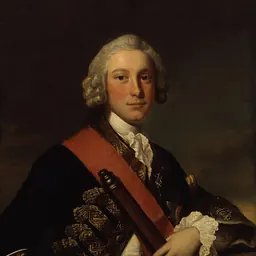

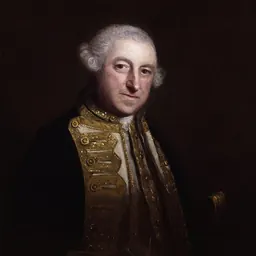
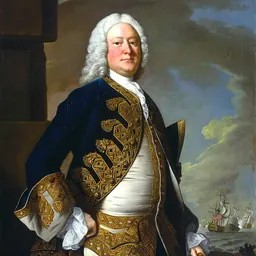

Related people
Same field, nearest in time



Contemporaries
People whose lives overlapped George Brydges Rodney, 1st Baron Rodney's



Frequently asked questions
Who was George Brydges Rodney, 1st Baron Rodney?
Royal Navy admiral; (1719–1792)
When was George Brydges Rodney, 1st Baron Rodney born?
George Brydges Rodney, 1st Baron Rodney was born on 13 February 1719 in Walton-on-Thames.
When did George Brydges Rodney, 1st Baron Rodney die?
George Brydges Rodney, 1st Baron Rodney died on 24 May 1792 in London.
What was George Brydges Rodney, 1st Baron Rodney's occupation?
George Brydges Rodney, 1st Baron Rodney was a politician, naval officer and admiral.
What nationality was George Brydges Rodney, 1st Baron Rodney?
George Brydges Rodney, 1st Baron Rodney was British.
Sources & further reading
· Wikipedia: George Brydges Rodney, 1st Baron Rodney
· DBpedia: George Rodney, 1st Baron Rodney
Cite this page
APA: Biography.guide. (2026). George Brydges Rodney, 1st Baron Rodney. https://biography.guide/george-brydges-rodney-1st-baron-rodney/
MLA: "George Brydges Rodney, 1st Baron Rodney." Biography.guide, https://biography.guide/george-brydges-rodney-1st-baron-rodney/.
Chicago: "George Brydges Rodney, 1st Baron Rodney." Biography.guide. https://biography.guide/george-brydges-rodney-1st-baron-rodney/.
Data last updated: 2026-09-20 · Spot an error? Report a correction.
Page generated 2026-09-27 05:25 UTC