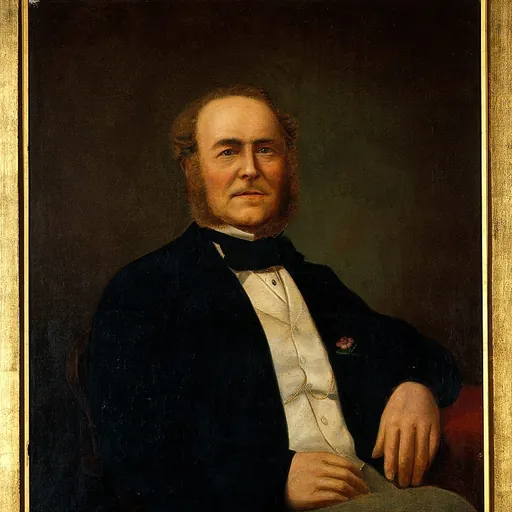
About George Alfred Walker
Lived 1807 – 1884 (aged 76). George Alfred Walker was a British physician, writer, activist and surgeon.
Background Walker was born in Nottingham, the second son of William Walker, a plumber, and his wife Elizabeth Williamson, of Barton under Needwood, Staffordshire. He received his earliest education from Henry Wild, a Quaker from Nottingham. He went to London and attended Aldersgate School. He became a licensee of the Worshipful Society of Apothecaries in 1829, and a member of the Royal College of Surgeons in 1831. He went on to study at St Bartholomew's Hospital in 1835, and the following year at Hôtel Dieu in Paris.
Career Illustration of the burials under the Enon Chapel from his Lectures series. Credit: Wellcome Library In 1837 Walker returned to London establishing a medical practice in 101 Drury Lane. Within a stone's throw of his surgery were seven of the most crowded and infectious cemeteries in London. These included Ground Green in Portugal Street and Enon Chapel St Clement's Lane, where between 10,000 and 12,000 people were buried under the floors in a cellar measuring only 59 x 29 feet. Walker was convinced that the smell derived from these overcrowded cemeteries was toxic and could adversely affect the health of those living nearby.
He published several books and booklets that highlighted the horrific state of urban cemeteries and sought to experience a link between diseases and burial practices. He wanted to see a ban on burials between walls and establish new cemeteries outside the towns.
In 1845 he founded the Metropolitan Society for the Abolition of Burials in Towns to advance his case. Walker's campaign was significantly boosted by a cholera epidemic in 1848. Afterwards, most people were convinced that disease was linked to hygiene and public sanitation.
Walker's campaign led to measures banning any further burials in London city center cemeteries and the appointment of burial inspectors.
Retirement and death Walker retired to Arthog, Dolgellau in 1855. He spent his last years writing an autobiography called Grave reminiscences: some experiences of a sanitary reformer, but the work was not completed. He died at his home on 6 July 1884, after suffering a sudden paralysing attack a week earlier. and his remains were buried in Quaker Cemetery in Llwyngwril.
Publications
Gatherings from Graveyards (1839) The grave yards of London (1841) Interment and Disinterment (1843) Burial Ground Incendiarism (1846) Actual Conditions of Metropolitan Graveyards , 3 collections of lectures (1847) The Warm Vapour Cure (1847) Grave reminiscences: some experiences of a sanitary reformer
Don’t just read it —
keep it.
Full-length biographies made to live with: read them, listen on the way to work, watch them tonight.
- E-book
- Audio
- Video
Instant download · yours to keep · every purchase keeps this site free
Important facts
People in George Alfred Walker's life
Named in this biography and alive at the same time

Related people
Same field, nearest in time





Contemporaries
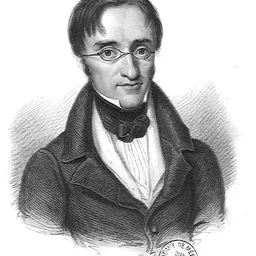
People whose lives overlapped George Alfred Walker's






Frequently asked questions
Who was George Alfred Walker?
English sanitary reformer
When was George Alfred Walker born?
George Alfred Walker was born on 27 October 1807 in Nottingham.
When did George Alfred Walker die?
George Alfred Walker died on 6 July 1884 in Arthog.
What was George Alfred Walker's occupation?
George Alfred Walker was a physician, writer, activist and surgeon.
What nationality was George Alfred Walker?
George Alfred Walker was British.
Sources & further reading
· Wikipedia: George Alfred Walker
· DBpedia: George Alfred Walker (sanitary reformer)
Cite this page
APA: Biography.guide. (2026). George Alfred Walker. https://biography.guide/george-alfred-walker/
MLA: "George Alfred Walker." Biography.guide, https://biography.guide/george-alfred-walker/.
Chicago: "George Alfred Walker." Biography.guide. https://biography.guide/george-alfred-walker/.
Data last updated: 2026-09-23 · Spot an error? Report a correction.
Portrait: Wikimedia Commons · author & licence
Page generated 2026-09-27 05:05 UTC