
George Albert Wells
British Professor of German and rationalist
About George Albert Wells
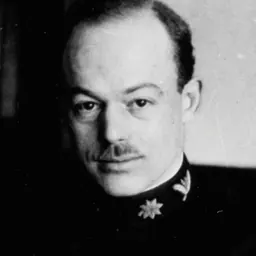
Lived 1926 – 2017 (aged 90). George Albert Wells was a British historian, linguist, university teacher, germanist and philosopher.
George Albert Wells (22 May 1926 – 23 January 2017) was an English scholar who served as Professor of German at Birkbeck, University of London. After writing books about famous European intellectuals, such as Johann Gottfried Herder and Franz Grillparzer, he turned to the study of the historicity of Jesus, starting with his book The Jesus of the Early Christians in 1971. He is best known as an advocate of the thesis that Jesus is essentially a mythical rather than a historical figure, a theory that was pioneered by German biblical scholars such as Bruno Bauer and Arthur Drews.
From the late 1990s, Wells said that the hypothetical Q document, which is proposed as a source used in some of the gospels, may "contain a core of reminiscences" of an itinerant Galilean miracle-worker/Cynic-sage type preacher. This new stance has been interpreted as Wells changing his position to accept the existence of a historical Jesus. In 2003, Wells stated that he disagreed with Robert M. Price on the information about Jesus being "all mythical". Wells believed that the Jesus of the gospels is obtained by attributing the supernatural traits of the Pauline epistles to the human preacher of Q. In 2012, Wells reaffirmed that he agreed that Jesus existed and acknowledged he had changed his stance.
Wells was Chairman of the Rationalist Press Association. He was married and lived in St. Albans, near London. He studied at the University of London and Bern, and held degrees in German, philosophy, and natural science. Wells taught German at London University from 1949, and was Professor of German at Birkbeck College from 1968.
Work on early Christianity Wells's fundamental observation is to suggest that the earliest extant Christian documents from the first century, most notably the New Testament epistles by Paul and some other writers, show no familiarity with the gospel figure of Jesus as a preacher and miracle-worker who lived and died in the recent decades. Rather, the early Christian epistles present him "as a basically supernatural personage only obscurely on Earth as a man at some unspecified period in the past". Wells believed that the Jesus of these earliest Christians was not based on a historical character, but a pure myth, derived from mystical speculations based on the Jewish Wisdom figure.
In his early trilogy (1971, 1975, 1982), Wells argued that the gospel Jesus is an entirely mythical expansion of a Jewish Wisdom figure—the Jesus of the early epistles—who lived in some past, unspecified time period. In addition, Wells wrote, the texts are exclusively Christian and theologically motivated, and therefore a rational person should believe the gospels only if they are independently confirmed.
In his later trilogy from the mid-1990s; The Jesus Legend (1996), The Jesus Myth (1999), and Can We Trust the New Testament? (2004), Wells modified and expanded his initial thesis to include a historical Galilean preacher from the Q source: I propose here that the disparity between the early [New Testament] documents
With this, Wells allowed for the possibility that the central figure of the gospel stories may partly be based on a historical character from first-century Galilee: "he Galilean and the Cynic elements ... may contain a core of reminiscences of an itinerant Cynic-type Galilean preacher (who, however, is certainly not to be identified with the Jesus of the earliest Christian documents)." However, Wells insisted that this figure of late first-century gospel stories is distinct from the sacrificial Christ myth of Paul's epistles and other early Christian documents, and that these two figures have different sources before being fused in Mark, writing, "if I am right, against Doherty and Price - it is not all mythical." Wells notes that he belongs in the category of those who argue that Jesus did exist, but that reports about Jesus are so unreliable that we can know little or nothing about him. Wells argues, for example, that the story of the execution of Jesus under Pilate is not an historical account, writing, "I regarded (and still do regard) [the following stories;] the virgin birth, much in the Galilean ministry, the crucifixion around A.D. 30 under Pilate, and the resurrection—as legendary". Many scholars still note Wells as a mythicist.
Reception Co-author R. Joseph Hoffmann has called Wells "the most articulate contemporary defender of the non-historicity thesis." Wells' claim of a mythical Jesus has received support from Earl Doherty, Robert M. Price and others. The classical historian R. E. Witt, reviewing The Jesus of the Early Christians in the Journal of Hellenic Studies, offered some criticisms but concluded that "Hellenists should welcome the appearance of this challenging book."
However, Wells' conclusions have been criticized by biblical scholars and ecclesiastical historians such as W. H. C. Frend and Robert E. Van Voorst. Voorst further critiques Wells work as "[Wells] advanced the non-historicity hypothesis, not for objective reasons, but for highly tendentious, anti-religious purposes." Wells featured in the controversial Channel 4 television series about the historicity of Jesus, Jesus: The Evidence (LWT: 1984).
After reviewing criticisms from several authors, atheist philosopher Michael Martin said that although "Wells's thesis is controversial and not widely accepted," his "argument against the historicity of Jesus is sound".
Bart Ehrman, in his Did Jesus Exist? (Ehrman) (2012) stated: "The best-known mythicist of modern times — at least among the NT scholars who know of any mythicists at all — is George A. Wells...He has written many books and articles advocating a mythicist position, none more incisive than his 1975 book, Did Jesus Exist?. Wells is certainly one who does the hard legwork to make his case: Although an outsider to NT studies, he speaks the lingo of the field and has read deeply in its scholarship. Although most NT scholars will not (or do not) consider his work either convincing or particularly well argued." (p. 19). Wells provided an answer to these points in an article in Free Inquiry.
Books
German intellectual history Wells' major works in eighteenth- and nineteenth-century German language thought and letters are Herder and After: A Study in the Development of Sociology (Gravenhage, Mouton, 1959) The Plays of Grillparzer (Pergamon Press, 1969) Goethe and the Development of Science, 1750-1900 (Sijthoff & Noordhoff, 1978) The Origin of Language: Aspects of the Discussion from Condillac to Wundt. (Open Court Publishing Company, 1987) The Origin of Language (Rationalist Press Association, 1999)
Early Christianity The Jesus of the Early Christians, (Pemberton, 1971) . Out of print, not republished. The Origins of Christianity: From the Pagan and Jewish Backgrounds, (Conway Hall Humanist Centre, London, 1973) Did Jesus Exist? (Pemberton Publishing, Prometheus Books), 1st ed. 1975, ; 2d ed. 1986, The Historical Evidence for Jesus (Prometheus Books, 1982, 2d ed. 1988) Religious Postures: Essays on Modern Christian Apologists and Religious Problems (Open Court, 1988) Who Was Jesus? A Critique of the New Testament Record (Open Court, 1989) Belief and Make-Believe: Critical Reflections on the Sources of Credulity (Open Court, 1991) What's in a Name? Reflections on Language, Magic and Religion (Open Court, 1993) The Jesus Legend (foreword by R. Joseph Hoffmann) (Open Court, 1996) The Jesus Myth (Open Court, 1999) The Acts of the Apostles: A Historical Record? (South Place Ethical Society, 2000) Can We Trust the New Testament?: Thoughts on the Reliability of Early Christian Testimony (Open Court, 2004) Cutting Jesus Down to Size: What Higher Criticism Has Achieved and Where It Leaves Christianity (Open Court, 2009)
Editor F.R.H. (Ronald) Englefield, Language, Its Origins and Relation to Thought (Pemberton, 1977) F.R.H. Englefield, The Mind at Work and Play (Prometheus, 1985) J. M. Robertson (1856-1933): Liberal, Rationalist and Scholar (Pemberton, 1987). More than half the book (p. 123-259) is Wells's presentation of Robertson's work: ch. 7, "The Critic of Christianity", and ch. 8, "The Philosopher" F.R.H. Englefield, Critique of Pure Verbiage, Essays on Abuses of Language in Literary, Religious, & Philosophical Writings (Open Court, 1990) Carl Loftmark, A History of the Red Dragon (Gwasg Carreg Gwalch, 1995) David Friedrich Strauss, The Old Faith and the New - Two volumes in one, with a 14-page introduction by G.A. Wells (Prometheus, 1997) [1st ed. Berlin, 1872] .
Articles and other media "The Critics of Buckle", Past and Present (1956), pp. 75–84 "Criteria of Historicity", German Life and Letters, New Series, vol. XXII, No.4 (Oct. 1968) "Stages of NT Criticism", Journal of the History of Ideas, vol. XXX, No. 2 (April 1969), pp. 151–155. [Discusses the view of Volney on the origin of astrology in early agriculture and its extension to stars' influence on human affairs.] "The Myth of the Mushroom", Humanist, 86 (1971), pp. 49–51. "The Holy Shroud of Turin," Question 9 (1975), pp. 24–37. "Miracles and the Nature of Truth", Question 10 (1977), pp. 30–41. "Was Jesus Crucified Under Pontius Pilate? Did He Even Live at All?”, The Humanist, vol. XXXVIII, no. 1, January–February, 1978, pp. 22–27. "More on the Holy Shroud," New Humanist 94 (1978), pp. 11–15 "Paul Valéry on the Importance of the Poet", Modern Languages 66 (1985), pp. 186–191 "Burke on Ideas, Words, and Imagination", British Journal for Eighteenth-Century Studies, 9 (1986) "The Historicity of Jesus", in R. Joseph Hoffmann & Gerald A. Larue, ed. Jesus in Myth and History (1986), pp. 27–45. "Robertson as Critic of Christianity", in ed. G.A. Wells, J.M. Robertson, 1856-1933, Liberal, Rationalist, and Scholar (Pemberton, 1987), pp. 123–196 "Wilhelm Wundt and Cultural Origins", Quinquereme, 11 (1988) "Criticism and the Quest for Analogies", New German Studies, 15 (1989) "The Bible With or Without Illusions?", New Humanist, 105 No. 1 (1990) Jesus: What Evidence?, debate between John Warwick Montgomery & G.A. Wells, London, Feb. 10, 1993 (2 CDs, Canadian Institute for Law, Theology and Public Policy) "German Bible Criticism & the Victorian Church", Journal for the Critical Study of Religion, Ethics and Society 2(1) (1997), pp. 55–67. "Don Cupitt's Religion of Language", Theology 105, (2002), pp. 201–210 "A Critique of Schopenhauer's Metaphysic", German Life & Letters, 59 (2006) pp. 379–389. Wells relates Schopenhauer's view of the primacy of the will to Albert Schweitzer's claiming that the will is a transcendent reality at the basis of self-consciousness that provides immediate certainties — allowing us to connect with the "mighty spiritual force streaming forth from [Jesus Christ]", needing no longer to rely on the uncertain results of historical criticism concerning Jesus's message. "Historicity of Jesus", in Tom Flynn, The New Encyclopedia of Unbelief (Prometheus, 2007), pp. 446–451 "Is There Independent Confirmation of What the Gospels Say of Jesus?", Free Inquiry 31 (2011), pp. 19–25.
Don’t just read it —
keep it.
Full-length biographies made to live with: read them, listen on the way to work, watch them tonight.
- E-book
- Audio
- Video
Instant download · yours to keep · every purchase keeps this site free
Important facts
People in George Albert Wells's life
Named in this biography and alive at the same time







Related people
Same field, nearest in time



Contemporaries
People whose lives overlapped George Albert Wells's

Frequently asked questions
Who was George Albert Wells?
British Professor of German and rationalist (1926-2017)
When was George Albert Wells born?
George Albert Wells was born on 22 May 1926 in London.
When did George Albert Wells die?
George Albert Wells died on 23 January 2017.
What was George Albert Wells's occupation?
George Albert Wells was a historian, linguist, university teacher, germanist and philosopher.
What nationality was George Albert Wells?
George Albert Wells was British.
Sources & further reading
· Wikipedia: George Albert Wells
Cite this page
APA: Biography.guide. (2026). George Albert Wells. https://biography.guide/george-albert-wells/
MLA: "George Albert Wells." Biography.guide, https://biography.guide/george-albert-wells/.
Chicago: "George Albert Wells." Biography.guide. https://biography.guide/george-albert-wells/.
Data last updated: 2026-09-20 · Spot an error? Report a correction.
Page generated 2026-09-27 05:06 UTC