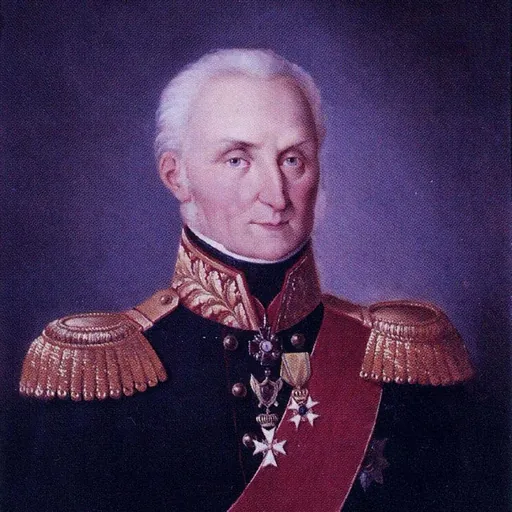
Georg Magnus Sprengtporten
Swedish, Finnish and Russian politician
About Georg Magnus Sprengtporten
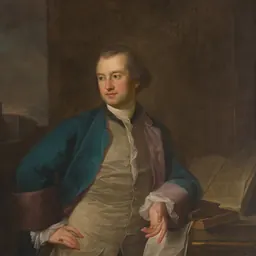
Lived 1740 – 1819 (aged 78). Georg Magnus Sprengtporten was a Russian and Finnish politician and military personnel.
Count Georg Magnus Sprengtporten (16 December 1740 – 13 October 1819) was a Finland-Swedish politician, military officer and statesman, younger brother of Jacob Magnus Sprengtporten. He defected to Russia in 1786 and became the first Governor-General of Finland in 1808. His legacy remains controversial: in Sweden he is remembered as a traitor, while in Finland and Russia he is regarded as a military innovator and political visionary whose ideas were central to the formation of the Grand Duchy of Finland.
Early life and military career Sprengtporten was born in Porvoo , Uusimaa, Kingdom of Sweden (now Finland). He entered the army and rose to the rank of captain during the Seven Years' War. He assisted his brother in the revolution of 1772, and in 1775 was made a colonel and brigadier of the Savolax brigade in east Finland.
As commander of the Savolax Brigade, Sprengtporten proved himself an outstanding military innovator. He reorganised the brigade to emphasise mobility and firepower suited to Finland's forested terrain, equipping his troops with a short-barrelled rifle of his own design — the so-called sprengtportenska studsaren (Sprengtporten carbine) — which was considerably more manageable than the standard long musket. He placed great emphasis on manoeuvres, marksmanship and the ability to exploit local terrain conditions. On his estate at Brahelinna he ran an unofficial cadet school for young men aiming for a military career, funding much of the brigade's development from his own pocket. Through this work he won the admiration of the Finnish officer corps. The military school he founded at Haapaniemi (then Tuhkaniemi), Kuopio (1 August 1780 until 1 May 1781, when it was moved to Haapaniemi estate in Rantasalmi, where it operated until a transfer to Hamina in 1819) subsequently became a state institution (Hamina Cadet School).
Defection to Russia Like his brother, Sprengtporten came to the conclusion that his services had not been adequately appreciated by the Swedish crown. The flattering reception he received at the Russian court during a visit to Saint Petersburg in 1779 further embittered him against his own sovereign. For the next two years he was in French service, returning to Finland in 1781. Due in part to contacts with Benjamin Franklin who was there contemporaneously he conceived of the idea of separating the grand duchy from Sweden. This aim was first approached through the Walhalla-orden subversive secret society and scheming with the king's brother, Charles XIII of Sweden. This scheming was apparently stillborn, as Charles informed his brother of the schemers' approaches.
The chosen Plan B was to establish an independent state under the protection of Russia. During the Riksdag of 1786 he openly opposed Gustav III of Sweden, at the same time engaging in a secret and treasonable correspondence with the Russian ministers with the view of inducing them to assist his plans for an independent Finland by force of arms. At the invitation of Catherine II of Russia, he formally entered Russian service in September 1786.
Plans for Finnish independence Sprengtporten's proposal for a constitution for an independent Finland rested on republican foundations. Finland was to be a federal state in which the provinces would enjoy extensive self-government. The country would have a parliament of four estates, but supreme executive power would be exercised by a council of state led by a president appointed for life. The constitution drew on Enlightenment thought and was clearly influenced by the constitutions of the Netherlands and the United States, while its underlying basis was domestic.
Russo-Swedish War and aftermath When the Russo-Swedish War of 1788–1790 began, Sprengtporten received the command of a Russian army corps directed against Finland. He took no direct part in the Anjala conspiracy but urged Catherine to support it more energetically. His own negotiations with his fellow countrymen, especially after Gustav III of Sweden had brought the treacherous army officers of the Anjala conspiracy back to their allegiance, failed utterly. Nor was he able to serve Russia very effectively in the field for he was seriously wounded at the Battle of Porrassalmi in 1789. At the end of the war, indeed, his position was somewhat precarious, as the High Court of Turku condemned him as a traitor, while Catherine regarded him as an incompetent impostor who could not perform his promises.
For the next five years, between 1793–1798, he thought it expedient to leave Russia and live at Teplice in Bohemia. He was re-employed by the emperor Paul I of Russia who, in 1800, sent him to negotiate with Napoleon concerning the Maltese Order and the interchange of prisoners. Napoleon received him with great courtesy. After Paul's death Sprengtporten was again in disgrace for seven years, but was consulted in 1808 on the eve of the outbreak of hostilities with France.
Governor-General of Finland On 1 December 1808 he was appointed the first Russian Governor-General of Finland with the title of count, but was so unpopular that he had to resign his post the following year. Despite this, he actively worked to ensure that the Finnish Estates were convened, reading aloud the emperor's assurance of rights at the Diet of Porvoo, and his ideas were central to the formation of the Grand Duchy of Finland.
Retirement The last ten years of his life were spent in retirement, partly on his estate near Vyborg and partly in Saint Petersburg, where he died in 1819.
Memorial Georg Magnus Sprengtporten's memorial stones are located in Harbour Park (Satamapuisto) of Kuopio, near the port of Kuopio and near the place where his military school was originally located. While staying in Teplice, Sprengtporten was in regular contact with the Count Waldstein's librarian, Giacomo Casanova. Their correspondence has been preserved and is well known to scholars.
Don’t just read it —
keep it.
Full-length biographies made to live with: read them, listen on the way to work, watch them tonight.
- E-book
- Audio
- Video
Instant download · yours to keep · every purchase keeps this site free
Important facts
People in Georg Magnus Sprengtporten's life
Named in this biography and alive at the same time
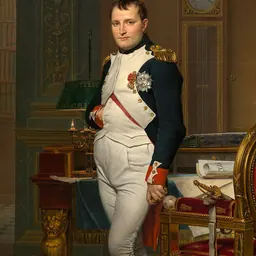
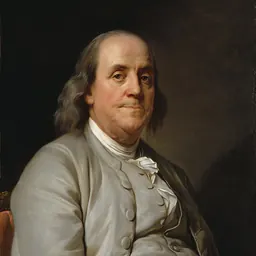
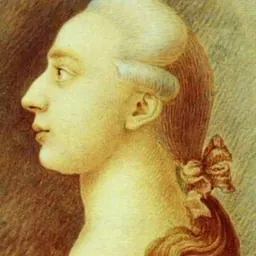
Related people
Same field, nearest in time
Contemporaries
People whose lives overlapped Georg Magnus Sprengtporten's




Frequently asked questions
Who was Georg Magnus Sprengtporten?
Swedish, Finnish and Russian politician
When was Georg Magnus Sprengtporten born?
Georg Magnus Sprengtporten was born on 16 December 1740 in Porvoo.
When did Georg Magnus Sprengtporten die?
Georg Magnus Sprengtporten died on 13 October 1819 in Saint Petersburg.
What was Georg Magnus Sprengtporten's occupation?
Georg Magnus Sprengtporten was a politician and military personnel.
What nationality was Georg Magnus Sprengtporten?
Georg Magnus Sprengtporten was Russian and Finnish.
Sources & further reading
· Wikipedia: Georg Magnus Sprengtporten
· DBpedia: Georg Magnus Sprengtporten
Cite this page
APA: Biography.guide. (2026). Georg Magnus Sprengtporten. https://biography.guide/georg-magnus-sprengtporten/
MLA: "Georg Magnus Sprengtporten." Biography.guide, https://biography.guide/georg-magnus-sprengtporten/.
Chicago: "Georg Magnus Sprengtporten." Biography.guide. https://biography.guide/georg-magnus-sprengtporten/.
Data last updated: 2026-09-25 · Spot an error? Report a correction.
Portrait: Wikimedia Commons · author & licence
Page generated 2026-10-04 09:36 UTC