
About Georg Jacobi
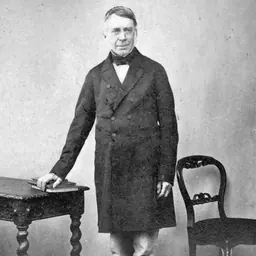
Lived 1840 – 1906 (aged 66). Georg Jacobi was a German composer, known for Alhambra Theatre.
Georges Jacobi (3 February 1840 –13 September 1906) was a German violinist, composer and conductor who was musical director of the Alhambra Theatre in London from 1872 to 1898. His best-known work was probably The Black Crook written with Frederick Clay for the Parisian operetta-star Anna Judic and which ran for 310 performances. Although never achieving the standing of Hervé, or Offenbach or Sullivan, he composed over 100 pieces for ballet and the theatre which were popular at the time. his musical education began aged 6. Educated in Paris, he began his musical career as a violinist and in 1861 at the age of twenty-one he was awarded the first prize for violin playing at the Conservatoire de Paris where he also studied composition with Daniel Auber. He entered the orchestra of the Opéra-Comique where he worked until 1869 as the first violinist. He also gave concerts with his own orchestra in the picture gallery of the Société Nationale des Beaux-Arts. In 1869 he became musical director of the Théâtre des Bouffes-Parisiens, where he mainly conducted operettas by Offenbach. In 1897 Arthur Sullivan composed the ballet Victoria and Merrie England, which was performed at the Alhambra and conducted by Jacobi. In 1900 Jacobi became the conductor at the newly opened Hippodrome in London.
In addition to ballets Jacobi composed several operettas and plays, as well as violin works, including two violin concertos. where among his students were the composers Walter Slaughter and Gustav Holst. He was twice President of the Association of Conductors in England and was decorated both by the French Government and by the King of Spain. and with her had two sons: the conductor Charles Auguste 'Maurice' Jacobi (1871-1939)
On his death in 1906 Jacobi was buried on the west side of Highgate Cemetery, London. In his will he left £4039 7s 6d to his widow.
Works
Ballet music The Demon's Bride (1874) Yolande (1877) Titania Enchant-Pas Seulment (1887) Antiope (1888) Lochinvar (1898) Beauty and the Beast (1898) Mariée depuis midi, with Armand Liorat and William Busnach (1873) Overture for Henry Irving's The Lyons Mail (1879) L'arbre de Noël (with Arnold Mortier) (1880) Le clairon (1883) Music for Henry Irving's Robespierre by Victorien Sardou (1899)
Lyricist The revue A Dream of Whitaker's Almanack, with Walter Slaughter and Henry Pottinger Stephens (1899). Mefistofele II (1880), Hervé (composer), with book by Georges Jacobi and C. Alfred.
Don’t just read it —
keep it.
Full-length biographies made to live with: read them, listen on the way to work, watch them tonight.
- E-book
- Audio
- Video
Instant download · yours to keep · every purchase keeps this site free
Important facts
People in Georg Jacobi's life
Named in this biography and alive at the same time




Related people
Same field, nearest in time


Contemporaries
People whose lives overlapped Georg Jacobi's

Frequently asked questions
Who was Georg Jacobi?
German composer (1840–1906)
When was Georg Jacobi born?
Georg Jacobi was born on 3 February 1840 in Berlin.
When did Georg Jacobi die?
Georg Jacobi died on 13 September 1906 in London.
What was Georg Jacobi's occupation?
Georg Jacobi was a composer.
What was Georg Jacobi known for?
Georg Jacobi was known for Alhambra Theatre.
What nationality was Georg Jacobi?
Georg Jacobi was German.
Sources & further reading
Cite this page
APA: Biography.guide. (2026). Georg Jacobi. https://biography.guide/georg-jacobi/
MLA: "Georg Jacobi." Biography.guide, https://biography.guide/georg-jacobi/.
Chicago: "Georg Jacobi." Biography.guide. https://biography.guide/georg-jacobi/.
Data last updated: 2026-09-22 · Spot an error? Report a correction.
Page generated 2026-09-27 05:06 UTC