
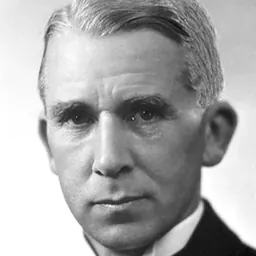
About Geoff Tootill
Lived 1922 – 2017 (aged 95). Geoff Tootill was a British computer scientist, known for Ferranti Mark 1 and Manchester Baby.
Education Tootill attended King Edward's School, Birmingham on a Classics scholarship and in 1940 gained an entrance exhibition to study Mathematics at Christ's College, Cambridge. He was forced to do the course in two years (missing Part One of the Mathematics Tripos) as his studies were cut short by World War II. After the successful operation of the Manchester Baby computer, he was awarded an MSc by the Victoria University of Manchester for his thesis on "Universal High-Speed Digital Computers: A Small-Scale Experimental Machine".
Career On leaving Cambridge in 1942, Tootill managed to get assigned to work on airborne radar at the Telecommunications Research Establishment (TRE) in Malvern. Here, he went out to airfields to troubleshoot problems with the operation of radar in night fighters, designed modifications and oversaw their implementation. He later said that this was the most responsible job that he had in his life.
In 1947, he was recruited by Frederic Calland Williams to join another ex-TRE colleague, Tom Kilburn, at Manchester University developing the world's first wholly electronic stored-program computer. In the UK, three projects were then underway to develop a stored program computer (in Cambridge, the NPL and Manchester) and the main technical hurdle was the memory technology. In order to test the cathode-ray tube (CRT) memory designed by FC Williams when it was constructed, Kilburn and Tootill designed an elementary computer, known as the "Manchester Baby". The computer could store 32 instructions or numbers using a single CRT. On 21 June 1948, after months of patient work constructing and testing the Baby piece by piece, coping with the unreliable electronic components of the day, the machine finally ran a routine written by Kilburn (they didn't use the word "program" then) to find the highest proper factor of a number. In Tootill's words "And we saw the thing had done a computation". A day or two later, the Baby ran successfully for 52 minutes to find the highest proper factor of 218, which required c. 3.5m arithmetic operations.
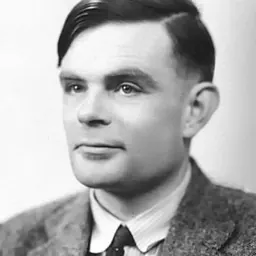
After the Baby's first operation in June 1948, Alan Turing moved to Manchester so he could use the Baby for a project that he was working on at the National Physical Laboratory, where they had also been working on developing a computer. Tootill instructed Alan Turing on use of the Manchester Baby and debugged a program Turing had written to run on the Baby.
In 1949, Tootill joined Ferranti where he developed the logic design of the first commercial computer (which was based on the Baby). He stayed at Ferranti only briefly and later the same year, he joined the Royal Military College of Science at Shrivenham as a Senior Lecturer on a considerably higher salary, lecturing and leading lab studies on digital computing.
In 1956, Tootill joined the Royal Aircraft Establishment (RAE), Farnborough, researching issues for air traffic control systems. Here he wrote, with Stuart Hollingdale, "Electronic Computers", Penguin 1965, which ran through eight printings and was translated into Spanish and Japanese. Tootill was also a founding member of the British Computer Society in 1956. (to recognise that e.g. Deighton and Dayton, Shore and Shaw sound the same) which garnered over 2,000 corporate users as part of a data matching package developed by his son Steve.
In 1998, the Computer Conservation Society (in a project led by Christopher P Burton) unveiled a replica of the Baby (which is now in the Museum of Science and Industry (Manchester)) to commemorate the 50th anniversary of the running of the first electronically stored program, based in large part on Tootill's notes and recollections. A page from his June 1948 notebook details the code of the first ever software program, written by Tom Kilburn.
Personal life As a boy, Tootill was interested in electronics, and built a radio set. He met Pamela Watson while in Malvern during World War II, where they were both members of the "Flying Rockets Concert Party". He and Pam were married in 1947 and had three sons, Peter, Colin and Stephen and two grandchildren, Mia and Duncan.
His first wife Pam died in 1979, and in 1981, Tootill married Joyce Turnbull, who died in 2020.
Books
Don’t just read it —
keep it.
Full-length biographies made to live with: read them, listen on the way to work, watch them tonight.
- E-book
- Audio
- Video
Instant download · yours to keep · every purchase keeps this site free
Important facts
People in Geoff Tootill's life
Named in this biography and alive at the same time



Related people
Same field, nearest in time



Contemporaries
People whose lives overlapped Geoff Tootill's
Frequently asked questions
Who was Geoff Tootill?
British engineer
When was Geoff Tootill born?
Geoff Tootill was born on 4 March 1922 in Chadderton.
When did Geoff Tootill die?
Geoff Tootill died on 26 October 2017.
What was Geoff Tootill's occupation?
Geoff Tootill was a computer scientist.
What was Geoff Tootill known for?
Geoff Tootill was known for Ferranti Mark 1 and Manchester Baby.
What nationality was Geoff Tootill?
Geoff Tootill was British.
Sources & further reading
Cite this page
APA: Biography.guide. (2026). Geoff Tootill. https://biography.guide/geoff-tootill/
MLA: "Geoff Tootill." Biography.guide, https://biography.guide/geoff-tootill/.
Chicago: "Geoff Tootill." Biography.guide. https://biography.guide/geoff-tootill/.
Data last updated: 2026-09-20 · Spot an error? Report a correction.
Page generated 2026-09-27 05:24 UTC