
About Genzō Kitazumi
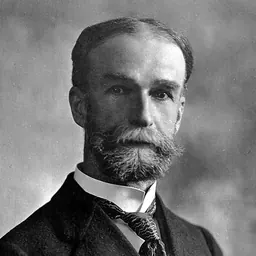
Lived 1898 – 1982 (aged 83–84). Genzō Kitazumi was a photographer.
was an influential Japanese photographer. Kitazumi's work is characterized by manipulation of photographic process for aesthetic rather than representational or documentary effect. His pre-war work features the use of lith print process and solarization. Photograms feature frequently in his post-war work. Kitazumi is also noted for his pioneering work in the commercial use of color photographic processing and printing in Japan.
Pre-war career
Kitazumi was born on 1898 in Shizuoka. He went to Keio school of commerce but dropped out. Toshimo Mitsumura was one of the early pioneers of photography in Japan and had a relationship with the Army and Naval Ministries dating back to the Russo-Japanese War. Kitazumi was to continue working for Mitsumura until 1945.
Kitazumi's early photographic assignments included the trips to Karafuto (Sakhalin) and Mount Kumgang (now in North Korea). Two of the frames featured were hand-colored. Although the magazine frequently featured hand-colored prints, this is the first known instance in which color was used in Kitazumi's photographs.
In 1932, Kitazumi took a series of portraits depicting the "Noh" actor, Kanze Sakon 24th in his various stage costumes. Each portrait was composed from up to eight frames to create hand-colored plates for a four-color separation process with additional masking templates prepared to apply gold and silver details. This was published in 20 volumes containing 60 portraits over a period of two years as Noh Sugata . (In the same year, Kokugakai Arts Association members' commendations were given to Ihei Kimura and Iwata Nakayama.)
Despite the use of hand-colored photographs and his pioneering work in color for his professional work, Kitazumi's submissions to Kokugakai Arts Association were all monochrome. Furthermore, in contrast to most of his contemporaries, his prints are characteristically devoid of tonal gradation. In his memoirs, he wrote that this was in response to Shinzō Fukuhara's "Hikari to Sono Kaichō" (translated as "Light and its Harmony"), which promoted the beauty of tonal gradations (kaichō) attached to the military (gun-zoku). During this assignment he visited French Indochina, Thailand, Malaya, Dutch East Indies and the Philippines. This is in contrast to the works of other photographers working for the military establishment, such as that of Ihei Kimura in Front magazine.
Post-war achievements
On 25 May 1945, Kitazumi's house, including his photographic archive, was destroyed in the B-29 bombing of Tokyo.
In 1960, Kitazumi established Sōsaku Inga Kai ,
In his own words, Genzo Kitazumi was "a failed painter who ended up as a deconstructed photographer". Indeed, his yearly submissions to the Arts Association between 1939 and the late seventies could not easily be classified. He rarely published works of straight photography, preferring instead to manipulate the images in the darkroom, and, in his latter years, dispensing with the use of the camera altogether. In the hard outlines of monochromatic images without tonal gradations, it is possible to see a link between his pre-war photographs and post-war photograms.
Kitazumi died in Tokyo on 1982.
List of known works
Year Title Format Location 1940 (Wavelets) Photograph Unknown 1940–1945 (Fishing Net 1) Photograph, 40.0 × 54.4 cm Unknown 1940–1945 (Fishing Net 2) Photograph, 40.0 × 54.4 cm Unknown 1965 (Fossil) Photogram, 44.6 × 37.0 cm Yokohama Museum of Art 1965 (Little Fish) Photogram, 44.6 × 37.0 cm Yokohama Museum of Art 百舌自身 (Shrike) Photogram, 44.5 × 37.0 cm Yokohama Museum of Art 1965 (Thorns) Photogram, 53.8 × 43.7 cm Yokohama Museum of Art 1970 (Cabbage Song) Photogram, 28.6 × 23.0 cm Yokohama Museum of Art 1971 (Tattered Umbrella Song) Photogram, 51.8 × 35.0 cm Yokohama Museum of Art 1974 Photogram, 51.8 × 35.0 cm Yokohama Museum of Art n/a (Desktop) Photogram, 44.3 × 35.6 cm Yokohama Museum of Art n/a Photogram, 44.6 × 37.0 cm Yokohama Museum of Art n/a (Portrait) Photogram, 44.6 × 37.9 cm Yokohama Museum of Art n/a (Portrait) Photogram, 44.6 × 37.9 cm Tokyo Photographic Art Museum n/a (Portrait) Photogram, 44.6 × 37.9 cm Private Collection H.ITO n/a (Portrait) Photogram, 44.6 × 37.9 cm Private Collection H.ITO
Don’t just read it —
keep it.
Full-length biographies made to live with: read them, listen on the way to work, watch them tonight.
- E-book
- Audio
- Video
Instant download · yours to keep · every purchase keeps this site free
Important facts
People in Genzō Kitazumi's life
Named in this biography and alive at the same time

Related people
Same field, nearest in time



Contemporaries
People whose lives overlapped Genzō Kitazumi's



Frequently asked questions
Who was Genzō Kitazumi?
Japanese photographer
When was Genzō Kitazumi born?
Genzō Kitazumi was born in 1898.
When did Genzō Kitazumi die?
Genzō Kitazumi died in 1982.
What was Genzō Kitazumi's occupation?
Genzō Kitazumi was a photographer.
Sources & further reading
Cite this page
APA: Biography.guide. (2026). Genzō Kitazumi. https://biography.guide/genzo-kitazumi/
MLA: "Genzō Kitazumi." Biography.guide, https://biography.guide/genzo-kitazumi/.
Chicago: "Genzō Kitazumi." Biography.guide. https://biography.guide/genzo-kitazumi/.
Data last updated: 2026-09-20 · Spot an error? Report a correction.
Page generated 2026-09-27 05:31 UTC