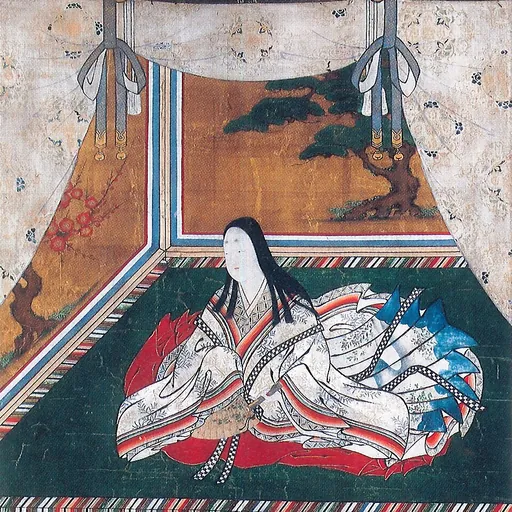
About Genshō
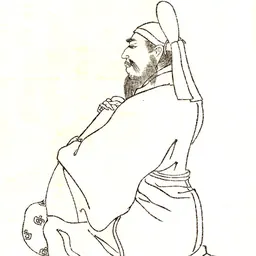
Lived 680 – 748 (aged 67–68). Genshō was a Japanese politician.
was the 44th monarch of Japan, according to the traditional order of succession. Her reign spanned the years 715 through 724.
Genshō was the fifth of eight women to take on the role of empress regnant, and the only one in the history of Japan to have inherited her title from another empress regnant rather than from a male predecessor. The four female monarchs before Genshō were Suiko, Kōgyoku, Jitō and Genmei; the three reigning after her were Kōken, Meishō, and Go-Sakuramachi.
Traditional narrative Before her ascension to the Chrysanthemum Throne, her personal name (imina) was Hidaka-hime.
Genshō was an elder sister of Emperor Monmu and daughter of Prince Kusakabe and his wife who later became Empress Genmei. Therefore, she was a granddaughter of Emperor Tenmu and Empress Jitō by her father and a granddaughter of Emperor Tenji through her mother.
Events of Genshō's life
Empress Genshō's succession to the throne was intended as a regency until Prince Obito, the son of her deceased younger brother Monmu, was mature enough to ascend the throne. Obito would later become the Emperor Shōmu.
Obito was appointed Crown Prince in 714 by Empress Genmei. In the next year, 715, Empress Genmei, then in her fifties, abdicated in favor of her daughter Genshō. Obito was then 14 years old.
715 (Reiki 1, 9th month) : In the 7th year of Genmei-tennōs reign (元明天皇七年), the empress abdicated; and the succession (senso) was received by her daughter, who held the throne in trust for her younger brother. Shortly thereafter, Empress Genshō acceded to the throne (sokui) as Empress Regnant.
Obito remained the crown prince, heir to the new empress. Fujiwara no Fuhito, the most powerful courtier in Genmei's court, remained at his post until his death in 720. After his death, Prince Nagaya, a grandson of Tenmu and the Empress Genshō's cousin, seized power. This power shift served as a backdrop for later conflicts between Nagaya and Fuhito's four sons during the reign of Emperor Shōmu (formerly Prince Obito).
Under Genshō's reign, the Nihon Shoki was finished in 720. The organization of the law system known as the Ritsuryō was continued under Fuhito's initiatives until his death. These laws and codes were edited and enacted by Fujiwara no Nakamaro, a grandson of Fuhito, and published as Yōrō Code under Fuhito's name. The taxation system introduced by Empress Jitō in the late 7th century began to malfunction. To compensate for the decreased tax revenue, the "Act of possession in three generations", an initiative of Prince Nagaya, was enacted in 723. Under this act, people were allowed to possess a newly cultivated field once every three generations. In the fourth generation, the right of possession would revert to the national government. This act was intended to encourage new cultivation, but it remained in effect for only about 20 years.
Empress Genshō reigned for nine years. Although there were seven other reigning empresses, their successors were most often selected from the patriline of the Imperial bloodline, which is why some conservative scholars argue that the women's reigns were temporary and that the male-only succession tradition must be maintained in the 21st century. Empress Genmei, who was succeeded by her daughter, remains the sole exception to this conventional argument.
In 724, Genshō abdicated in favor of her nephew, who would be known as Emperor Shōmu. Genshō lived for 25 years after she stepped down from the throne. She never married and had no children. She died at age 65.
Empress Genshō's grave is located in Nara. The Imperial tomb can be visited today in Narazaka-chō, Nara City.
Kugyō is a collective term for the very few most powerful men attached to the court of the Emperor of Japan in pre-Meiji eras.
In general, this elite group included only three to four men at a time. These were hereditary courtiers whose experience and background would have brought them to the pinnacle of a life's career. During Genshō's reign, this apex of the Daijō-kan included: Daijō-daijin (Chi-daijō-kanji 知太政官事), Toneri-shinnō (Prince Toneri) (舎人親王). (9th son of Emperor Tenmu) 720–735 Sadaijin, Isonokami no Maro (石上麻呂). Reiki (715–717) Yōrō (717–724) Jinki (724–729)
Genealogy Empress Genshō, born Princess Hidaka (氷高皇女), was the eldest child of Empress Genmei (元明天皇) and her husband, Crown Prince Kusakabe (草壁皇子). She had one younger brother, Prince Karu (珂瑠皇子), later known as Emperor Monmu (文武天皇), and one younger sister, Imperial Princess Kibi (吉備内親王).
Empress Genshō never married or had children. The throne was inherited by her younger brother's son, Emperor Shōmu.
Ancestry
Don’t just read it —
keep it.
Full-length biographies made to live with: read them, listen on the way to work, watch them tonight.
- E-book
- Audio
- Video
Instant download · yours to keep · every purchase keeps this site free
Important facts
Family & relationships
People in Genshō's life
Named in this biography and alive at the same time
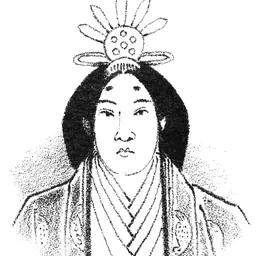
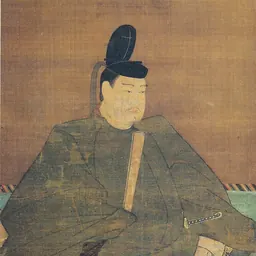
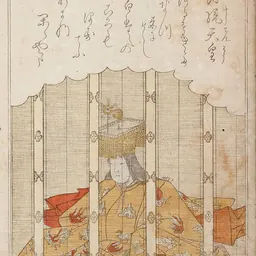

Related people
Same field, nearest in time




Contemporaries
People whose lives overlapped Genshō's
Frequently asked questions
Who was Genshō?
Empress of Japan (680-748)
When was Genshō born?
Genshō was born in 680 in Asuka.
When did Genshō die?
Genshō died on 22 May 748 in Heijō Palace.
What was Genshō's occupation?
Genshō was a politician.
What nationality was Genshō?
Genshō was Japanese.
Sources & further reading
Cite this page
APA: Biography.guide. (2026). Genshō. https://biography.guide/gensho/
MLA: "Genshō." Biography.guide, https://biography.guide/gensho/.
Chicago: "Genshō." Biography.guide. https://biography.guide/gensho/.
Data last updated: 2026-09-20 · Spot an error? Report a correction.
Portrait: Wikimedia Commons · author & licence
Page generated 2026-09-27 04:58 UTC