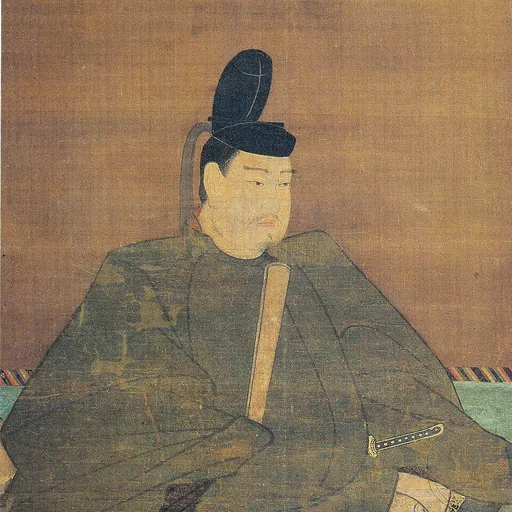
About Shōmu
Lived 701 – 756 (aged 54). Shōmu was a Japanese calligrapher.
was the 45th emperor of Japan, according to the traditional order of succession. Shōmu's reign spanned the years 724 through 749, during the Nara period.
Traditional narrative Before his ascension to the Chrysanthemum Throne, his personal name (imina) is not clearly known, but he was known as Oshi-hiraki Toyosakura-hiko-no-mikoto.
Shōmu was the son of Emperor Monmu and Fujiwara no Miyako, a daughter of Fujiwara no Fuhito.
Shōmu had five consorts and six Imperial sons and daughters.
Events of Shōmu's reign Shōmu was still a child at the time of his father's death; thus, his grandmother, Empress Gemmei, and aunt, Empress Gensho, occupied the throne before he acceded. January 31, 724 (Jinki 1) : The era name is changed to mark the accession of Emperor Shōmu. 735–737: A major smallpox epidemic raged throughout Japan, incurring adult mortality rates of about 25% to 35%.
Shōmu continued to reside in the Hezei Palace.
Emperor Shōmu's tour to the eastern provinces While battle maneuvers of the Fujiwara no Hirotsugu Rebellion were still underway, in Tenpyō 12 10th month (November, 740) Emperor Shōmu left the capital at Heijō-kyō (Nara) and traveled eastward via Horikoshi (堀越頓宮; today Tsuge; 10th month, 29th day: November 22), Nabari (10th month, 30th day: November 23), Ao Presumably Shōmu feared Fujiwara supporters in Nara and was hoping to quell potential uprisings in other parts of the country with his presence. After four days travelling through heavy rain and thick mud, the party reached Kawaguchi on Tenpyō 12 11th month, 2nd day (25 November, 740) A couple of days later, they learn of Hirotsugu's execution and that the rebellion had been quelled. Situated among the hills and near a river north of Nara, Kuni was easily defensible. In addition, the area was linked with the Minister of the Right, Tachibana no Moroe, while Nara was a center of the Fujiwara clan. On Tenpyō 12 12th month, 15 day (6 January, 741) Shōmu proclaimed a new capital at Kuni-kyō.
Timeline
724 (Jinki 1): Emperor Shōmu rises to throne. 740 (Tenpyō 12, 9th month): Hirotsugu rebels in reaction to the growing influence of Genbō and others. 743 (Tenpyō 15): The Emperor issues a rescript to build the Daibutsu (Great Buddha), later to be completed and placed in Tōdai-ji, Nara. 743 (Tenpyō 15): The law of Perpetual Ownership of Cultivated Lands (墾田永代私財法) issued 744 (Tenpyō 16): In the spring, the court was moved to Naniwa-kyō which then became the new capital. which are the Buddha, the Dharma, and the Sangha. 749 (Tenpyō 21, 7th month): After a 25-year reign, Emperor Shōmu abdicates in favor of his daughter, Princess Takano, who would become Empress Kōken. After abdication, Shōmu took the tonsure, thus becoming the first retired emperor to become a Buddhist priest.
Legacy Shōmu, a devout Buddhist, is best remembered for commissioning, in 743, the sixteen-meter high statue of the Vairocana Buddha (the Daibutsu) in Tōdai-ji of Nara. At the time, this was such a massive undertaking that later chroniclers accuse him of having completely exhausted the country's reserves of bronze and precious metals.
Emperor Shōmu died at age 54. The tomb site can be visited today in Horenji-cho, Tenri City near Nara City. The Imperial tomb of Shōmu's consort, Empress Kōmyō, is located nearby.
Shōsōin The Shōsō-in (正倉院) is the treasure house of Tōdai-ji Temple in Nara, Japan. It houses about 9.000 artifacts connected to Emperor Shōmu (701–756) and Empress Kōmyō (701–760), as well as arts and crafts of the Tempyō era of Japanese history. Its general importance derives from the fact, that it may be called an ark of Tang dynasty period cultural relics from Japan as well as from the continent: furniture, games, music instruments, clothing/accessories, weaponry, buddhist objects and pieces of writing. See main entry.
Kugyō is a collective term for the very few most powerful men attached to the court of the Emperor of Japan in pre-Meiji eras.
In general, this elite group included only three to four men at a time. These were hereditary courtiers whose experience and background would have brought them to the pinnacle of a life's career. During Shōmu's reign, this apex of the Daijō-kan included: Daijō-daijin (720–735), Toneri-shinnō (舎人親王) (9th son of Emperor Tenmu). Sadaijin (724–729), Nagaya-ō (長屋王) (son of Prince Takechi).
Jinki (724–729) Tenpyō (729–749) Tenpyō-kanpō (749) Tenpyō-shōhō (749–757)
Consorts and children Empress (Kōgō): Fujiwara Asukabehime (藤原 安宿媛), Fujiwara no Fuhito’s daughter Second Daughter: Imperial Princess Abe (阿倍内親王) later Empress Kōken First Son: Prince Motoi (基王, 727–728) Bunin: Agatainukai no Hirotoji (県犬養広刀自, d.762), Agatainukai no Morokoshi's daughter First Daughter: Imperial Princess Inoe (井上内親王), married to Emperor Kōnin Third Daughter: Imperial Princess Fuwa (不破内親王, 723–795), married to Prince Shioyaki Second Son: Imperial Prince Asaka (安積親王, 728–744) Bunin: Nan-dono (南殿, d.748), Fujiwara no Muchimaro’s daughter Bunin: Hoku-dono (北殿, d.760), Fujiwara no Fusasaki’s daughter Bunin: Tachibana-no-Hirooka no Konakachi (橘広岡古那可智, d.759), Tachibana no Sai's daughter
Ancestry
Don’t just read it —
keep it.
Full-length biographies made to live with: read them, listen on the way to work, watch them tonight.
- E-book
- Audio
- Video
Instant download · yours to keep · every purchase keeps this site free
Important facts
Family & relationships
People in Shōmu's life
Named in this biography and alive at the same time
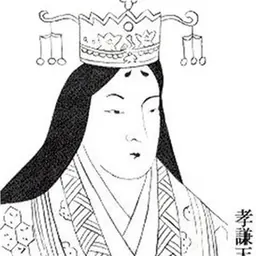

Related people
Same field, nearest in time




Contemporaries
People whose lives overlapped Shōmu's



Frequently asked questions
Who was Shōmu?
Emperor of Japan
When was Shōmu born?
Shōmu was born on 18 September 701.
When did Shōmu die?
Shōmu died on 4 June 756 in Nara.
What was Shōmu's occupation?
Shōmu was a calligrapher.
What nationality was Shōmu?
Shōmu was Japanese.
Sources & further reading
Cite this page
APA: Biography.guide. (2026). Shōmu. https://biography.guide/shomu/
MLA: "Shōmu." Biography.guide, https://biography.guide/shomu/.
Chicago: "Shōmu." Biography.guide. https://biography.guide/shomu/.
Data last updated: 2026-09-20 · Spot an error? Report a correction.
Portrait: Wikimedia Commons · author & licence
Page generated 2026-09-27 04:57 UTC