
About Ge Baoquan
Lived 1913 – 2000 (aged 87). Ge Baoquan was a Chinese translator, writer, diplomat and literary scholar.
Ge Baoquan (. February 15, 1913—May 15, 2000), born in Dongtai, Jiangsu, was a Chinese international cultural activist and literary translator. He began engaging in translation and foreign literature research in the early 1930s, and served as deputy secretary-general of the China-Russia Friendship Association, research fellow at the Institute of Literature of the Chinese Academy of Social Sciences, council member of the China Writers Association, and council member of the Translators Association of China, among other positions.
Biography
Early life and education Ge Baoquan was born on February 15, 1913, in Dongtai, Jiangsu. He began school at age five, completing four years of primary school and three years of upper primary school before entering the Dongtai Muli Normal School founded by Zhang Jian in 1925. In 1928, he enrolled in the Faculty of Law and Economics at in Shanghai. There he studied English, French, and Japanese, taught himself Esperanto, and later learned Russian, reading extensively in Chinese and foreign literature—particularly the works of famous Russian authors such as Pushkin, Tolstoy, and Turgenev. During this period, he also translated lyric poems by Byron, Shelley, and Rossetti, short stories by Tolstoy, and—from Japanese—an interview with the Irish poet Yeats. He graduated with a bachelor's degree in law after three and a half years. In 1932, on the recommendation of university president , he became an editor at the publishing department of , where he contributed a regular column titled "Summaries of World Celebrities and Their Works" to the weekly New Life, thus embarking on a career as editor, translator, and journalist.
Wartime years From 1935, Ge served as the Tianjin-based Ta Kung Pao correspondent stationed in Moscow, Soviet Union, for three years. After the Marco Polo Bridge incident of 1937, he decided to return to China and join the resistance. He traveled from Moscow through Poland, Germany, and France, then sailed for 22 days across the Atlantic and Pacific, arriving in Saigon. He continued via Nanning and Guilin, and reached Wuhan in early 1938. Introduced by , he became an editor and editorial board member of the Xinhua Daily and the journal Masses. On the recommendation of Ai Hansong and editor-in-chief , Ge passed organizational scrutiny and officially joined the Chinese Communist Party in May, becoming active in the same party branch as Zhou Enlai. At Zhou's suggestion, he took on underground activities as a secret party member.
He participated in editorial work successively in Wuhan and Chongqing, and during this period also became acquainted with prominent cultural figures such as Zou Taofen and Guo Moruo. After the New Fourth Army Incident, at Zhou Enlai's instruction, Ge disguised himself and left, traveling via Guiyang and Guilin to Hong Kong. There he contributed translations to publications such as the Hua Shang Daily and Mass Life (大众生活), served on the editorial board of Youth Knowledge (青年知识), and co-founded the "Literary and Art News Agency" (文艺通讯社) with , supplying material to progressive newspapers in , and Nanyang.
In late 1941, the outbreak of the Pacific War led to Hong Kong's occupation by Japanese forces. On January 9, 1942, Ge, together with Mao Dun, , and a group of cultural figures, changed into civilian clothes on Lockhart Road in Hong Kong, disguised as "refugees," and were guided by East River Column couriers past Japanese checkpoints and inspection stations. By dusk they reached Causeway Bay Typhoon Shelter and boarded a large barge that had been prepared in advance. The following day they arrived safely at a secret reception point in Kowloon. On January 11, they departed Kowloon, proceeding along the western route via Castle Peak Road, through secret routes, and past Japanese blockades. They then crossed mountains and valleys, forded the Sham Chun River, and on January 13 safely reached the anti-Japanese base area at Yangtai Mountain in Bao'an.
In May 1942, following Zhou Enlai's instructions, he returned to the Chongqing Xinhua Daily, where he translated several reportage collections about the Spanish Civil War and the Soviet–German War. After Japan's surrender in 1945, Ge was tasked with founding a Xinhua Daily in Shanghai, but Kuomintang obstruction prevented publication. During this period he served in editorial roles at Life Bookstore and Times Publishing House, and published several translated works and research writings.
Cultural envoy In the spring of 1949, Ge participated as a member of the delegation led by Guo Moruo at the First World Peace Congress held in Prague, Czechoslovakia. Before departure, Zhou Enlai publicly revealed Ge's secret party membership. After the Association's national headquarters was established on October 5, he was one of its 197 council members. On July 23, when the All-China Federation of Literary Workers (renamed the China Writers Association in October 1953) was established in Beiping, Ge was one of 69 inaugural committee members elected. In early October 1949, following the establishment of Sino-Soviet diplomatic relations, the Ministry of Foreign Affairs appointed Ge as counselor and chargé d'affaires ad interim of the People's Republic of China Embassy in the Soviet Union. In November, after the arrival of Wang Jiaxiang as the first PRC ambassador to the Soviet Union, Ge was appointed counselor. In 1954, he became deputy secretary-general of the China-Russia Friendship Association.
During the Cultural Revolution, he was sent down with the entire staff of the Institute of Foreign Literature to a May Seventh Cadre School in Xi County, Henan, for labor re-education. Foreign literature was branded a product of "feudalism, capitalism, and revisionism" and placed in a reading "forbidden zone." Ge turned to a careful study of literary allusions cited in the works of Marx and Engels, and later published Greek and Roman Mythological Allusions in Selected Works of Marx and Engels.
In 1980 he became a founding member of .
Later years and legacy In September 1983, he returned to his hometown of Dongtai—which he had left more than fifty years earlier—and donated a collection of books. In 1985, the Jiangsu provincial government arranged a private courtyard residence for him near the city wall in Nanjing. On July 5, 1986, he donated approximately 20,000 volumes from his personal collection to the Nanjing Library. The library established a special "Ge Baoquan Reading Room" in his honor. He received a government prize, which he returned to society by establishing the "Ge Baoquan Translation Prize."
From 1995 onward, he was bedridden due to Parkinson's disease. He died in Nanjing on May 15, 2000, at the age of 88. His will requested that there be no memorial service and no farewell ceremony. His wife Liang Peilan honored this wish, setting up only a simple mourning hall at home to receive condolences from friends.
On January 25, 1981, a founding congress of the Beijing Esperanto Association was held at the Xinqiao Hotel in Beijing, at which Ge was elected its first chairman. During his ten years in office, the Beijing Esperanto Association he led held 113 Esperanto training classes with a total of 4,400 students. A Beijing Esperanto Choir and Drama Troupe were also established. Large exhibitions and cultural performances were held on multiple occasions at the Beijing Working People's Cultural Palace, Zhongshan Park, and other venues. In 1985, he led a 40-person Beijing Esperanto delegation to the first National Esperanto Congress held in Kunming. In 1986, as head of the Beijing Esperanto delegation, he delivered a report at the 71st World Esperanto Congress held in Beijing.
Honors and awards
Honorary Fellow of the Hong Kong Translation Society (1989)
Ivan Franko Literary Prize (Union of Writers of Ukraine, 1988)
Order of Friendship of Peoples (Soviet Union, March 1, 1988): awarded in recognition of his contributions to strengthening Soviet–Chinese cultural cooperation and introducing Russian and Soviet literature, and in celebration of his 75th birthday.
Pushkin Literary Prize (Soviet Union, 1988): awarded in recognition of his contributions to translating, studying, and introducing Russian culture. (Presented by Soviet Ambassador to China Troyanovsky at the Soviet Embassy on behalf of the Soviet Literary Fund and the Board of the Union of Soviet Writers.)
Honorary doctorate from Moscow State University (1987)
Honorary doctorate from University of Paris VIII (February 24, 1987)
Family
Grandfather: Ge Minglie (also known as Ge Junshu, a late-Qing gongsheng)
Father: Ge Shudong (also known as Ge Shaojia, a well-known educator in Dongtai County)
Uncle:
First wife: Zheng Xingli (singer)
Second wife: Shalina
Third wife: Liang Peilan
Daughter: Ge Xiaoli (with Zheng Xingli)
Nephew: Sun Ge
Selected works
Journal and newspaper articles (early period)
Don’t just read it —
keep it.
Full-length biographies made to live with: read them, listen on the way to work, watch them tonight.
- E-book
- Audio
- Video
Instant download · yours to keep · every purchase keeps this site free
Important facts
People in Ge Baoquan's life
Named in this biography and alive at the same time


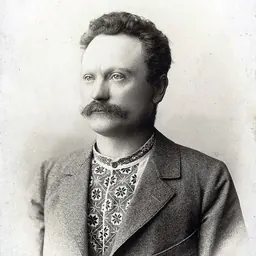

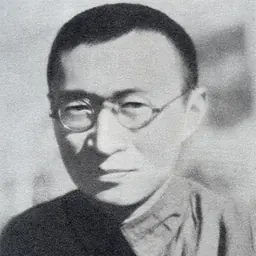
Related people
Same field, nearest in time




Contemporaries
People whose lives overlapped Ge Baoquan's






Frequently asked questions
Who was Ge Baoquan?
Chinese translator
When was Ge Baoquan born?
Ge Baoquan was born on 15 February 1913 in Dongtai.
When did Ge Baoquan die?
Ge Baoquan died on 15 May 2000 in Nanjing.
What was Ge Baoquan's occupation?
Ge Baoquan was a translator, writer, diplomat and literary scholar.
What nationality was Ge Baoquan?
Ge Baoquan was Chinese.
Sources & further reading
Cite this page
APA: Biography.guide. (2026). Ge Baoquan. https://biography.guide/ge-baoquan/
MLA: "Ge Baoquan." Biography.guide, https://biography.guide/ge-baoquan/.
Chicago: "Ge Baoquan." Biography.guide. https://biography.guide/ge-baoquan/.
Data last updated: 2026-09-20 · Spot an error? Report a correction.
Page generated 2026-09-27 05:04 UTC