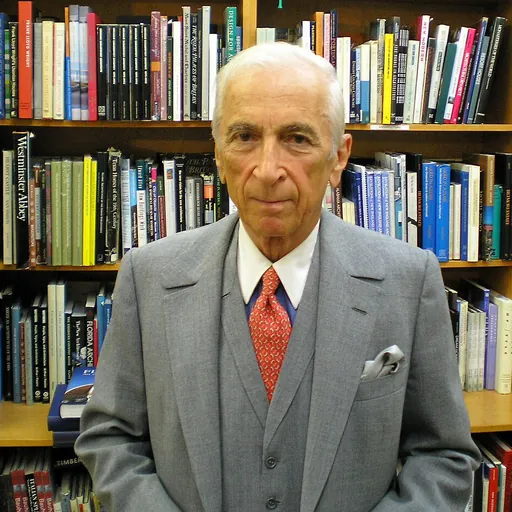
About Gay Talese
Born 1932. Gay Talese is an American writer, journalist and university teacher.
Gaetano "Gay" Talese (; born February 7, 1932) is an American writer. As a journalist for The New York Times and Esquire magazine during the 1960s, he helped to define contemporary literary journalism and is considered, along with Joan Didion, Truman Capote, Norman Mailer, Hunter S. Thompson and Tom Wolfe, one of the pioneers of New Journalism. Talese's most famous articles are about Joe DiMaggio and Frank Sinatra.
Early life and education
Talese, who is of Italian heritage, was born in Ocean City, New Jersey. At school as a child, Talese wore hand-crafted suits from his father's shop which, he later speculated in his memoir, Origins of a Nonfiction Writer (1996), caused him to seem older than his classmates. Talese recounted his early years in his book Unto the Sons.
Talese graduated from Ocean City High School in 1949. Screenwriter and author Nicholas Pileggi is his first cousin.
Talese's entry into writing was entirely coincidental and an unintentional consequence of his attempt as a high school sophomore to gain more playing time on the baseball team. The assistant coach had the duty of telephoning in the chronicle of each game to the local newspaper and when he complained he was too busy to do it properly, the head coach gave Talese the duty. As he recalls in his 1996 memoiristic essay "Origins of a Nonfiction Writer":
On the mistaken assumption that relieving the athletic department of its press duties would gain me the gratitude of the coach and get me more playing time, I took the job and even embellished it by using my typing skills to compose my own account of the games rather than merely relaying the information to the newspapers by telephone.
It was there that Talese would begin to employ literary devices more well known for fiction, such as establishing the "scene" with minute details and beginning articles in medias res. During his junior year, he became the sports editor for the campus newspaper, The Crimson White, and started a column he dubbed "Sports Gay-zing", for which he wrote on November 7, 1951:
Career
Newspaper reporter After graduation in June 1953, Talese moved to New York City, but could only find work as a copyboy. The job, however, was at The New York Times. He was eventually able to get an article published in the Times, albeit unsigned. In "Times Square Anniversary" (November 2, 1953), Talese interviewed the man (Herbert Kesner, Broadcast Editor) responsible for managing the headlines that flash across the famous marquee above Times Square. However, his budding journalism career would have to be put on hold, as he was drafted into the United States Army in 1954. Talese was sent to Fort Knox, Kentucky, to train in the Tank Corps. Finding his mechanical skills lacking, Talese was transferred to the Office of Public Information where he worked for an army newspaper, Inside the Turret (known today as The Gold Standard), and soon had his own column, "Fort Knox Confidential".
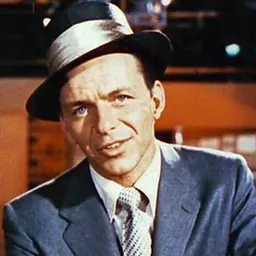
When Talese completed his military service in 1956, he was re-engaged by The New York Times as a sports reporter. Of the various fields, boxing had the most appeal for Talese, largely because it was about individuals engaged in contests and those individuals in the mid to late 1950s were becoming predominately non-white at the prizefight level. When the Times newspaper unions had a work stoppage in December 1962, Talese had plenty of time to watch rehearsals for a production by Broadway director Joshua Logan for an Esquire profile. As Carol Polsgrove indicates in her history of Esquire during the 1960s, it was the kind of reporting he liked to do best: "just being there, observing, waiting for the climactic moment when the mask would drop and true character would reveal itself." In 1965, he left The New York Times to write full-time for editor Harold Hayes at Esquire. His 1966 Esquire article on Frank Sinatra, "Frank Sinatra Has a Cold", is one of the most influential American magazine articles of all time, and a pioneering example of New Journalism and creative nonfiction. With what some have called brilliant structure and pacing, the article focused not just on Sinatra himself, but also on Talese's pursuit of his subject.
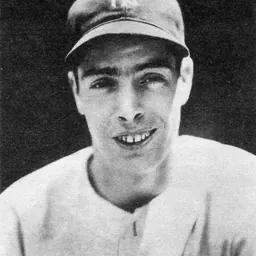
Talese's celebrated Esquire essay about Joe DiMaggio, "The Silent Season of a Hero" – in part a meditation on the transient nature of fame – was also published in 1966.
For his part, Talese regarded his 1966 profile of obituarist Alden Whitman, "Mr. Bad News", as his finest.
A number of Talese's Esquire essays were collected into the 1970 book Fame and Obscurity; in its introduction, Talese paid tribute to two writers he admired, citing "an aspiration on my part to somehow bring to reportage the tone that Irwin Shaw and John O'Hara had brought to the short story."
In 1971, Talese published Honor Thy Father, a book about the travails of the Bonanno crime family in the 1960s, especially Salvatore Bonanno and his father Joseph. The book was based on seven years of research and interviews. Honor Thy Father was made into a television film in 1973.
Talese signed a $1.2 million contract with Doubleday in 1972 to write two books, with the first, Thy Neighbor's Wife, due in 1973. Paperback rights to Thy Neighbor's Wife were sold to Dell Publishing for $750,000 in 1973. He missed Doubleday's initial deadline and spent 8 years researching the book, including managing massage parlors in New York and running a sex shop. In 1979 United Artists paid Talese a record $2.5 million for the film rights. The book was eventually published in 1981 but no film was produced.
In 2008, The Library of America selected Talese's 1970 account of the Charles Manson murders, "Charlie Manson's Home on the Range", for inclusion in its two-century retrospective of American True Crime.
In 2011, Talese was awarded the Norman Mailer Prize for Distinguished Journalism.
Personal life In 1959, Talese married writer Nan Talese (née Ahearn), a New York editor who manages the Nan A. Talese/Doubleday imprint. Their marriage is being documented in a non-fiction book he has been working on since 2007. They have two daughters, Pamela Talese, a painter, and Catherine Talese, a photographer and photo editor.
Talese was a close friend of fellow journalist and author Tom Wolfe.
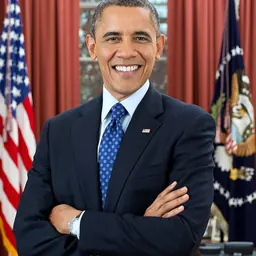
Views Talese is a lifelong Democrat. Despite this, he was a fierce critic of President Barack Obama and has defended President Donald Trump on several occasions. In a February 2017 interview with Haaretz, Talese said, “This crazy Trump, hustler, real estate tycoon, I think he’s better than Obama. We love to say Obama is Frederick Douglass, Obama is Booker T. Washington, Obama is Paul Robeson, the enlightenment. Well it didn’t work."
Controversies In April 2016, Talese spoke at a panel at a Boston University journalism conference. During the panel, Talese was asked what non-fiction women writers he found inspiring, to which he responded, "I didn't know any women writers that I loved." In response, a Twitter hashtag was created under #womengaytaleseshouldread.
In June 2016, the credibility of Talese's book The Voyeur's Motel, whose subject was Gerald Foos, was questioned when it came to light Foos had made false statements to Talese which Talese did not verify. When news of the credibility broke, Talese stated, "I'm not going to promote this book. How dare I promote it when its credibility is down the toilet?" In subsequent interviews and on an appearance on Late Night with Seth Meyers, Talese recanted this disavowal, stating that his story was still accurate despite the discrepancies found by The Washington Post.
In a November 2017 interview with Vanity Fair at the New York Public Library's Literary Lions Gala, Talese made comments about the sexual assault accusations against Kevin Spacey that had surfaced over the previous weeks. Talese stated, "I would like to ask [Spacey] how it feels to lose a lifetime of success and hard work all because of 10 minutes of indiscretion 10 years or more ago. I feel so sad, and I hate that actor that ruined this guy's career. So, OK, it happened 10 years ago... Jesus, suck it up once in a while! You know something, all of us in this room at one time or another did something we're ashamed of. The Dalai Lama has done something he's ashamed of. The Dalai Lama should confess... put that in your magazine!" CNN reported the "backlash on social media was almost immediate." Jenavieve Hatch of the Huffington Post called the remarks "disrespectful to survivors of sexual trauma." The Washington Post called his statements a "bizarre, rabid defense of the actor."
In popular culture Talese appeared as a character in several strips of the comic Doonesbury. Talese is referenced in Pete Townshend's "Communication". Talese is referenced in season 1, episode 3 of Ted Lasso.
Works As author: New York: A Serendipiter's Journey (1961) The Bridge: The Building of the Verrazano-Narrows Bridge (1964) The Overreachers (1965; compilation of past reportage) The Kingdom and the Power (1969) Fame and Obscurity (1970; compilation of past reportage, including "Frank Sinatra Has a Cold") Honor Thy Father (1971) Thy Neighbor's Wife (1981) Unto the Sons (1992; memoir) The Gay Talese Reader: Portraits and Encounters (2003; contains material from New York: A Serendipiter's Journey, The Overreachers and Fame and Obscurity) A Writer's Life (2006; memoir) The Silent Season of a Hero: The Sports Writing of Gay Talese (2010; compilation of past reportage) The Voyeur's Motel (2016) Frank Sinatra Has a Cold (2016; coffee table book version of the 1966 article with photographs by Phil Stern) Bartleby and Me: Reflections of an Old Scrivener (2023)
As editor Writing Creative Nonfiction: The Literature of Reality (1995; with Barbara Lounsberry)
Films Voyeur (2017)
Don’t just read it —
keep it.
Full-length biographies made to live with: read them, listen on the way to work, watch them tonight.
- E-book
- Audio
- Video
Instant download · yours to keep · every purchase keeps this site free
Important facts
Family & relationships
People in Gay Talese's life
Named in this biography and alive at the same time





Related people
Same field, nearest in time



Contemporaries
People whose lives overlapped Gay Talese's


Frequently asked questions
Who is Gay Talese?
American writer (born 1932)
When was Gay Talese born?
Gay Talese was born on 7 February 1932 in Ocean City.
What is Gay Talese's occupation?
Gay Talese is a writer, journalist and university teacher.
What nationality is Gay Talese?
Gay Talese is American.
Sources & further reading
Cite this page
APA: Biography.guide. (2026). Gay Talese. https://biography.guide/gay-talese/
MLA: "Gay Talese." Biography.guide, https://biography.guide/gay-talese/.
Chicago: "Gay Talese." Biography.guide. https://biography.guide/gay-talese/.
Data last updated: 2026-09-23 · Spot an error? Report a correction.
Portrait: Wikimedia Commons · author & licence
Page generated 2026-09-27 05:04 UTC