
About Gavriil Baranovsky
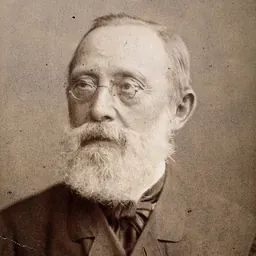
Lived 1860 – 1920 (aged 60). Gavriil Baranovsky was a Russian architect, engineer and art historian.
Gavriil Vasilyevich Baranovsky, also Baranovskii (; – ) was a Russian architect, civil engineer, art historian and publisher, who worked primarily in Saint Petersburg for the Elisseeff family, but also practiced in Moscow and produced the first town plan for Murmansk (then Romanov-na-Murmane).
Biography Education and early career
He was born in Odessa to attorney Vasili Ivanovitš Baranovsky and his wife Rosalia Malinovska Gavriil Baranovsky. Baranovsky trained at Saint Petersburg Institute of Civil Engineers (1881–1886), graduating with an honorary silver medal. He began his architectural career as an assistant to Paul Susor (Pavel Susor) between 1883 and 1885. His first commission was a state-financed Main Palace Chancellery (Главная дворцовая канцелярия); in 1885-1888, Baranovsky worked on numerous apartment buildings in Saint Petersburg. After 1888 he became staff architect for the Baltic Shipyards.
Architect to the Elisseeffs
Baranovsky was married to a daughter of Grigory Elisseeff of the Elisseeff (Yeliseyev, Elisseieff) merchant family based in Saint Petersburg, owner of a lot of local real estate. Grigory Elisseeff's apartment building (1889–1890) became Baranovsky's first independent commission as a lead architect. Later, Baranovsky completed various country homes for the Elisseeff family and, most visible of his buildings, an eclectic Elisseeff Emporium on Nevsky Prospect (1900–1903) and its Moscow counterpart, the Elisseeff Store on Tverskaya Street (1898–1901, with Marian Peretyatkovich). In 1898 Baranovsky was appointed construction manager for all Elisseeff businesses.
Baranovsky's style varied through different shades of eclectics, eventually focusing on Art Nouveau.
Public activities
In 1891 Baranovsky was appointed to Empress Maria's Office of Charitable Institutions and designed Saint-Petersburg Eye Hospital. He also held various consultancy roles with other state institutions. More important was his public editorial activity, starting as chief editor of Our Home (Наше Жилище, 1894–1895), later Stroitel (Строитель, 1895–1905) magazine. Baranovsky promoted and edited the "Architectural Encyclopaedia of the Second Half of 19th century" ("Архитектурная энциклопедия второй половины XIX века") in seven volumes. It was then considered to be the most complete Russian reference on contemporary architecture of the world.
According to St. Petersburg Fragments (Петербург - фрагменты) Biographical section, the aging architect died in 1920 from starvation that followed the Russian Revolution of 1917 and the Russian Civil War. Baranovskys son Wassilij (d. 1945) immigrated to Sweden. He was pianist and composer and made several recordings in his new homeland. He was married with violinist Nora Duesberg.
Buildings Saint Petersburg and suburbs
1880s - Baltic Shipyard workshops, St. Petersburg, 1880, assistant to Ernest Gibert (1823–1909) 1885-1888 Apartment buildings: 20, Shirokaya Street; 7th line of Vasilyevsky Island, etc. 1888 Elisseeff building expansion, 18 Birzhevaya Linia; 1900-1903 further rebuild 1887 Smolenka River bridge, Goloday Island Railroad 1889-1890 Elisseeff apartment building, 64 Fontanka Embankment 1889-1892 Elisseeff apartment building, 14 Lomonosova Street; repairs and expansion, 12 Lomonosova Street 1892 Grigory Elisseeff House, Birzhevaya Linia 1897-1898 Own rental apartment building, 36 Dostoyevskogo Street 1899-1900 Princess Obolenskaya School for the Girls, 8 Baskov Lane 1900-1903 Elisseeff Emporium, 56 Nevsky Prospect; 1906 rebuild of adjacent buildings 1907-1909 Russian Geographical Society, 10 Grivtsova Lane 1908 Shuvalov apartment building, Knyagininskaya Street 1909 Pawn Shop, 72 Moika Embankment 1909-1910 Dorzhiev House, 93 Primorsky Prospect 1909-1915 Buddhist Temple, 91 Primorsky Prospect
Moscow 1899-1901 Elisseeff Store, 14 Tverskaya Street with Marian Peretyatkovich and Vladimir Voeykov 1905 Elisseeff apartment building, 1 Kozitsky Lane, with Vladimir Voeykov
Elsewhere 1897-1899 Elisseeff Estate and Park (Oru Palace), Toila-Oru, Estonia (destroyed) 1917 Town plan for Romanov-na-Murmane settlement (present-day Murmansk)
Don’t just read it —
keep it.
Full-length biographies made to live with: read them, listen on the way to work, watch them tonight.
- E-book
- Audio
- Video
Instant download · yours to keep · every purchase keeps this site free
Important facts
People in Gavriil Baranovsky's life
Named in this biography and alive at the same time

Related people
Same field, nearest in time




Contemporaries
People whose lives overlapped Gavriil Baranovsky's


Frequently asked questions
Who was Gavriil Baranovsky?
Russian architect (1860-1920)
When was Gavriil Baranovsky born?
Gavriil Baranovsky was born on 25 March 1860 in Odesa.
When did Gavriil Baranovsky die?
Gavriil Baranovsky died on 28 June 1920 in Komarovo.
What was Gavriil Baranovsky's occupation?
Gavriil Baranovsky was an architect, engineer and art historian.
What nationality was Gavriil Baranovsky?
Gavriil Baranovsky was Russian.
Sources & further reading
· Wikipedia: Gavriil Baranovsky
Cite this page
APA: Biography.guide. (2026). Gavriil Baranovsky. https://biography.guide/gavriil-baranovsky/
MLA: "Gavriil Baranovsky." Biography.guide, https://biography.guide/gavriil-baranovsky/.
Chicago: "Gavriil Baranovsky." Biography.guide. https://biography.guide/gavriil-baranovsky/.
Data last updated: 2026-09-20 · Spot an error? Report a correction.
Page generated 2026-09-27 05:18 UTC