
About Gary Rader
Lived 1944 – 1973 (aged 29). Gary Rader was an American soldier.
Gary Eugene Rader (January 14, 1944 – November 1973) was an American Army Reservist known for burning his draft card in protest of the Vietnam War, while wearing his U.S. Army Special Forces uniform. Afterward, he engaged in anti-war activism.
Background Upon turning 18, Rader registered for the draft, and received his draft card from the Selective Service System. He entered Northwestern University in Evanston, Illinois, as an undergraduate student of political science. His status as a college student deferred his being drafted into the military. Upon leaving college, in mid-1965 he was re-classified as 1A: available for unrestricted military duty. He signed up for the U.S. Army Reserve, then trained for the Army Special Forces, commonly known as the Green Berets. Of this elite formation, Rader said, "I wanted to see what the best was like." Reading Ramparts magazine in February 1966, he was struck by an article, "The whole thing was a lie!", from ex-Green Beret Master Sergeant Donald Duncan who turned down a field commission to the rank of captain and left the Army. Duncan wrote that a majority of South Vietnamese citizens were in favor of North Vietnamese politics, or against Saigon politics, or both. After realizing this, Duncan said he "had to accept also that the position, 'We are in Vietnam because we are in sympathy with the aspirations and desires of the Vietnamese people,' was a lie." Duncan did not think the U.S. should be a part of Vietnam's political disputes, and he opined that "anti-communism is a lousy substitute for democracy." He wrote that the U.S. should get out of Vietnam and let them decide their own fate, even though he felt that a united Vietnam would not be better off "under Ho's brand of communism."
Draft-card burning
Frustrated with his Army experiences in February and March, on April 14, 1967, Rader heard about a large anti-war protest which was to take place the next day in New York City. He contacted the leader of the student protesters coming from Cornell University and said he would join them. he removed his jacket, placed his beret on his head "at the correct angle", and burned his draft card. New York City policemen, FBI men, newsreel cameramen, reporters, photographers and passers-by. Time magazine estimated 75 total cards burnt;
On April 17, he wrote a letter of resignation to his company commander. The 23-year-old Rader was arrested by FBI agents several days later at his home in Evanston. seven men burned their draft cards at his arraignment.
In May 1967 in response to the Sheep Meadow demonstration, 56-year-old anarchist intellectual Paul Goodman published a piece in The New York Review of Books sympathetic to draft-card burning. In September 1967 with anti-war activist David F. Greenberg, he founded Chicago Area Draft Resisters (CADRE), an organization with links to the national protest movement. In association with the National Mobilization Committee to End the War in Vietnam (The Mobe), Rader helped organize the "March on the Pentagon" held on October 21, 1967. For this rally, Rader worked with Abbie Hoffman, David Dellinger, Jerry Rubin, William Francis Pepper, Carl Davidson of Students for a Democratic Society, Professor Robert Greenblatt of The Mobe, Lincoln Lynch of the Congress of Racial Equality, and Amy Swerdlow of Women Strike for Peace (WSP). Rader stood up and spoke at the March on the Pentagon; Norman Mailer described the speech he gave as being "thought by many to be the best hour of them all." He wrote a letter seeking funds for CADRE from readers of The Movement, a publication of the Student Nonviolent Coordinating Committee. He wrote to WSP to ask for bail donations and legal defense resources, urging the women to "get behind this fine group of young idealists, working not for themselves, but for the future of the race."
CADRE printed original articles as well as reprints of other articles, and made the literature available to young people in the Chicago metropolitan area. CADRE raised funds to bail out any imprisoned for draft resistance, and established a pool of lawyers willing to take such cases. Rader moved to New York in February 1968 but he continued to work for the cause of war resistance.
Rader's CADRE partner Greenberg had been a member of The Mobe, and in 1967 he wrote a monograph for CADRE: Vietnam and the draft. Later he earned a Ph.D. in high-energy physics, then became interested in crime and society. Greenberg is a sociology professor emeritus at New York University and has published several books. After Rader committed suicide in a Boston psychiatric hospital in November 1973, Greenberg dedicated his 1993 book to him as well as to German Green Party founder Petra Kelly who died in 1992 and prisoner rights activist Fay Stender who died in 1980.
Don’t just read it —
keep it.
Full-length biographies made to live with: read them, listen on the way to work, watch them tonight.
- E-book
- Audio
- Video
Instant download · yours to keep · every purchase keeps this site free
Important facts
People in Gary Rader's life
Named in this biography and alive at the same time

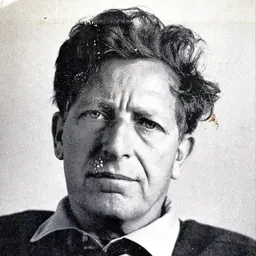


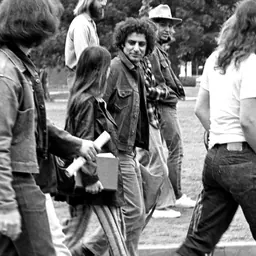
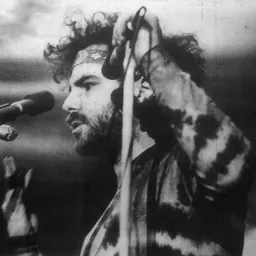


Related people
Same field, nearest in time


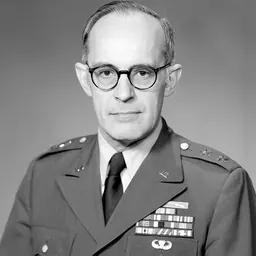


Contemporaries
People whose lives overlapped Gary Rader's
Frequently asked questions
Who was Gary Rader?
Green Beret draft card burner
When was Gary Rader born?
Gary Rader was born on 14 January 1944 in New York City.
When did Gary Rader die?
Gary Rader died on 1 November 1973 in Boston.
What was Gary Rader's occupation?
Gary Rader was a soldier.
What nationality was Gary Rader?
Gary Rader was American.
Sources & further reading
Cite this page
APA: Biography.guide. (2026). Gary Rader. https://biography.guide/gary-rader/
MLA: "Gary Rader." Biography.guide, https://biography.guide/gary-rader/.
Chicago: "Gary Rader." Biography.guide. https://biography.guide/gary-rader/.
Data last updated: 2026-09-20 · Spot an error? Report a correction.
Page generated 2026-09-27 05:30 UTC