
About Gart Westerhout
Lived 1927 – 2012 (aged 85). Gart Westerhout was a Dutch and American astronomer.
Gart Westerhout (15 June 1927 – 14 October 2012) was a Dutch-American astronomer. Well before completing his university studies at Leiden, he had already become well-established internationally as a radio astronomer in the Netherlands, specializing in studies of radio sources and the Milky Way Galaxy based on observations of radio continuum emissions and 21-cm spectral line radiation that originates in interstellar hydrogen. He emigrated to the United States, became a naturalized citizen, and held a number of important scientific and management positions in academic and government institutions.
Career Westerhout was born in The Hague, and studied at the University of Leiden (Sterrewacht te Leiden) with Hendrik van de Hulst and Jan Hendrik Oort. Contemporaries and colleagues in the Netherlands included Hugo van Woerden, C. Lex Muller, Maarten Schmidt, Kwee Kiem King, Lodewijk Woltjer, and Charles L. Seeger, III. While they were students, Wim Brouw, Mike Davis, Ernst Raimond, Whitney Shane and worked with him.
He was awarded Physics and Astronomy degrees: Cand. (1950) and Drs. (1954) and was awarded a Ph.D. in Astronomy and Physics in 1958. Notable scientific achievements included: the significant Westerhout Catalog of continuum emission radio sources, by which "W" numerical designations such sources are still referenced (see for example Westerhout 49), done with the then-new Dwingeloo telescope; and his survey of neutral hydrogen in the outer parts of our Galaxy. His pioneering work, with colleagues, showed the first hints of spiral structure in the interstellar gas, revealed differential rotation in our Galaxy, and established a revised Galactic coordinate system still in use today.
While still at Leiden University, he held the posts of Assistant (1952–56), Scientific Officer (1956–59, and Chief Scientific Officer (1959–62). Arriving in 1962 as the first Director of a fledgling Astronomy Program at the University of Maryland (started by Uco van Wijk), he grew it into a major department granting masters and doctorate degrees. On the research side the Line Survey, Maryland-Green Bank Galactic 21-cm undertaken with the 91-m radio telescope of the National Radio Astronomy Observatory, not only extended to higher angular resolution our knowledge of Galactic structure, but also accomplished the training of graduate students who went on to notable achievements of their own.
He continued at Maryland in that role through 1973, with additional responsibilities from 1972-73 as Chairman of the Division of Mathematical & Physical Sciences and Engineering. From 1973 to '77 he was Professor of Astronomy at the University of Maryland, temporarily becoming Visiting Astronomer at the Max-Planck-Institut für Radioastronomie (MPIfR) in Bonn, Germany 1973-74.
From 1977-1993 he was Scientific Director at the U.S. Naval Observatory in Washington, DC. While there, he guided the evolution of that observatory toward astronomical data obtained from telescopes at the Flagstaff station, astrometric data produced by the techniques of radio interferometry and by innovative application of optical interferometry techniques (ground- and space-based.)
Together with his wife Judith, he had 5 children – Magda Cathleen, Gart, Brigit, Julian, and Anthony.
When Edward L. G. Bowell discovered asteroid 5105 Westerhout, he named it in Westerhout's honor.
Memberships Memberships include International Astronomical Union (IAU) (Commissions 33, 34, 40, 24 & 5), International Scientific Radio Union (URSI), American Astronomical Society (AAS), Royal Astronomical Society, and Sigma Xi.
He contributed his scientific and management expertise widely, for example to IAU, National Science Foundation (NSF), AAS, National Research Council, Associated Universities Inc., Inter-Union Committee for the Allocation of Frequencies (IUCAF), URSI, National Radio Astronomy Observatory, MPIfR, MIT's Haystack Observatory, Arecibo Observatory, National Academy of Sciences.
Awards Awards and special recognition have included a NATO Fellowship, CSIRO (Australia) Fellowship, Award for the Teaching of Science, Washington Academy of Sciences, Humboldt Prize, Listings in : Outstanding Educators of America, American Men and Women in Science, Who's Who in America.
Don’t just read it —
keep it.
Full-length biographies made to live with: read them, listen on the way to work, watch them tonight.
- E-book
- Audio
- Video
Instant download · yours to keep · every purchase keeps this site free
Important facts
People in Gart Westerhout's life
Named in this biography and alive at the same time

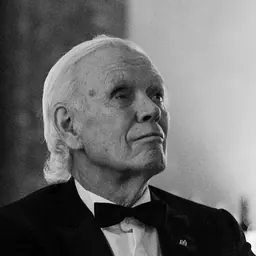



Related people
Same field, nearest in time


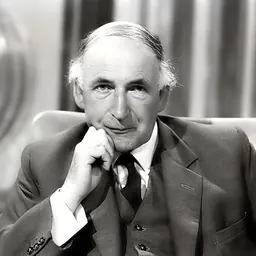

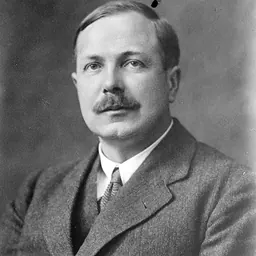
Contemporaries
People whose lives overlapped Gart Westerhout's


Frequently asked questions
Who was Gart Westerhout?
Dutch astronomer (1927–2012)
When was Gart Westerhout born?
Gart Westerhout was born on 15 June 1927 in The Hague.
When did Gart Westerhout die?
Gart Westerhout died on 14 October 2012 in Catonsville.
What was Gart Westerhout's occupation?
Gart Westerhout was an astronomer.
What nationality was Gart Westerhout?
Gart Westerhout was Dutch and American.
Sources & further reading
Cite this page
APA: Biography.guide. (2026). Gart Westerhout. https://biography.guide/gart-westerhout/
MLA: "Gart Westerhout." Biography.guide, https://biography.guide/gart-westerhout/.
Chicago: "Gart Westerhout." Biography.guide. https://biography.guide/gart-westerhout/.
Data last updated: 2026-09-26 · Spot an error? Report a correction.
Page generated 2026-09-27 05:13 UTC