
About Jan Hendrik Oort
Lived 1900 – 1992 (aged 92). Jan Hendrik Oort was a Dutch astronomer, physicist and university teacher, known for Dark matter, Oort cloud and Oort constants.
Jan Hendrik Oort ( or ; 28 April 1900 – 5 November 1992) was a Dutch astronomer who made significant contributions to the understanding of the Milky Way and who was a pioneer in the field of radio astronomy. The New York Times called him "one of the century's foremost explorers of the universe"; the European Space Agency website describes him as "one of the greatest astronomers of the 20th century" and states that he "revolutionised astronomy through his ground-breaking discoveries." In 1955, Oort's name appeared in Life magazine's list of the 100 most famous living people. He has been described as "putting the Netherlands in the forefront of postwar astronomy". However, Oort's data have been challenged and his discovery may have been spurious.
Oort discovered the galactic halo, a group of stars orbiting the Milky Way but outside the main disk. Additionally Oort is responsible for a number of important insights about comets, including the realization that their orbits "implied there was a lot more solar system than the region occupied by the planets." a physician, who died on May 12, 1941, and Ruth Hannah Faber, who was the daughter of Jan Faber and Henrietta Sophia Susanna Schaaii, and who died on November 20, 1957. Both of his parents came from families of clergymen, with his paternal grandfather, a Protestant clergyman with liberal ideas, who "was one of the founders of the more liberal Church in Holland" and who "was one of the three people who made a new translation of the Bible into Dutch." He "was finally able to calculate, on the basis of the various stellar motions, that the Sun was some 30,000 light-years from the center of the Galaxy and took about 225 million years to complete its orbit. He also showed that stars lying in the outer regions of the galactic disk rotated more slowly than those nearer the center. The Galaxy does not therefore rotate as a uniform whole but exhibits what is known as 'differential rotation'."
These early discoveries by Oort about the Milky Way overthrew the Kapteyn system, named after his mentor, which had envisioned a galaxy that was symmetrical around the Sun. As Oort later noted, "Kapteyn and his co-workers had not realized that the absorption in the galactic plane was as bad as it turned out to be."
Comet studies Oort went on to study comets, which he formulated a number of revolutionary hypotheses. He hypothesized that the Solar System is surrounded by a massive cloud consisting of billions of comets, many of them "long-period" comets that originate in a cloud far beyond the orbits of Neptune and Pluto. This cloud is now known as the Oort Cloud. He also realized that these external comets, from beyond Pluto, can "become trapped into tighter orbits by Jupiter, and become periodic comets, like Halley's comet." According to one source, "Oort was one of the few people to have seen Comet Halley on two separate apparitions. At the age of 10, he was with his father on the shore at Noordwijk, Netherlands, when he first saw the comet. In 1986, 76 years later, he went up in a plane and was able to see the famous comet once more."
"Colleagues remembered him as a tall, lean and courtly man with a genial manner," reported his New York Times obituary. Member of the American Academy of Arts and Sciences (1946–) Members of the United States National Academy of Sciences (1953–) Member of the American Philosophical Society (1957–)
Upon his death, Nobel Prize winning astrophysicist Subrahmanyan Chandrasekhar remarked, "The great oak of Astronomy has been felled, and we are lost without its shadow."
Don’t just read it —
keep it.
Full-length biographies made to live with: read them, listen on the way to work, watch them tonight.
- E-book
- Audio
- Video
Instant download · yours to keep · every purchase keeps this site free
Important facts
People in Jan Hendrik Oort's life
Named in this biography and alive at the same time

Related people
Same field, nearest in time

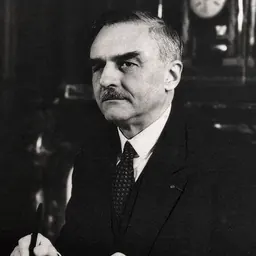
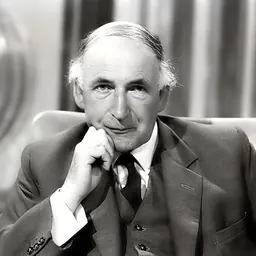


Contemporaries
People whose lives overlapped Jan Hendrik Oort's
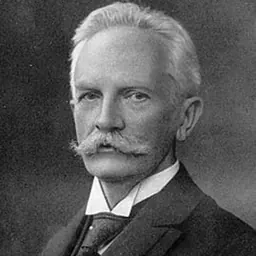


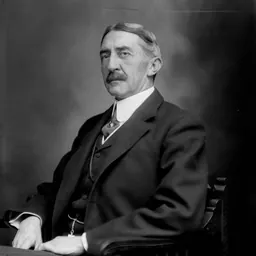

Frequently asked questions
Who was Jan Hendrik Oort?
Dutch astronomer (1900–1992)
When was Jan Hendrik Oort born?
Jan Hendrik Oort was born on 28 April 1900 in Franeker.
When did Jan Hendrik Oort die?
Jan Hendrik Oort died on 5 November 1992 in Leiden.
What was Jan Hendrik Oort's occupation?
Jan Hendrik Oort was an astronomer, physicist and university teacher.
What was Jan Hendrik Oort known for?
Jan Hendrik Oort was known for Dark matter, Oort cloud and Oort constants.
What nationality was Jan Hendrik Oort?
Jan Hendrik Oort was Dutch.
Sources & further reading
Cite this page
APA: Biography.guide. (2026). Jan Hendrik Oort. https://biography.guide/jan-hendrik-oort/
MLA: "Jan Hendrik Oort." Biography.guide, https://biography.guide/jan-hendrik-oort/.
Chicago: "Jan Hendrik Oort." Biography.guide. https://biography.guide/jan-hendrik-oort/.
Data last updated: 2026-09-20 · Spot an error? Report a correction.
Page generated 2026-09-27 05:24 UTC