
About Garfield Barwick
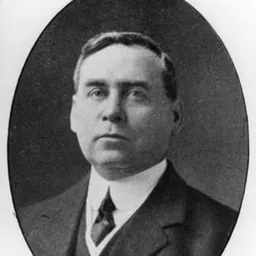
Lived 1903 – 1997 (aged 94). Garfield Barwick was an Australian politician, judge, diplomat and jurist.
Sir Garfield Edward John Barwick (22 June 190313 July 1997) was an Australian judge who was the seventh and longest serving Chief Justice of Australia, in office from 1964 to 1981. He had earlier been a Liberal Party politician, serving as a minister in the Menzies government from 1958 to 1964.
Barwick was born in Sydney, and attended Fort Street High School before going on to study law at the University of Sydney. He was called to the bar in 1927 and became one of Australia's most prominent barristers, appearing in many high-profile cases and frequently before the High Court. He served terms as president of the NSW Bar Association and the Law Council of Australia. Barwick entered politics only at the age of 54, winning election to the House of Representatives at the 1958 Parramatta by-election. Prime Minister Robert Menzies made him Attorney-General by the end of the year, and in 1961 he was additionally made Minister for External Affairs.
In 1964, Menzies nominated Barwick as his choice to replace the retiring Owen Dixon as Chief Justice. Over the next 17 years, the Barwick court decided many significant constitutional cases, including a significant broadening of the corporations power and several cases regarding the constitutional basis of taxation. Barwick also played a small but significant role in the 1975 constitutional crisis, advising Governor-General John Kerr that it was within his powers to dismiss Prime Minister Gough Whitlam from office. He retired from the court at the age of 77, but remained a public figure until his death at the age of 94. Outside of his professional career, he also served as the inaugural president of the Australian Conservation Foundation.
Early life and education Barwick was born on 22 June 1903 in Stanmore, New South Wales. He was the first of three children born to Lily Grace (née Ellicott) and Jabez Edward Barwick. He was of Cornish descent, and was later very insistent on his Cornish identity.
Barwick was raised in "a Methodist family of modest means".
Attorney-General, 1958–1964 On 10 December 1958, Barwick was appointed to cabinet as attorney-general of Australia, replacing the retiring Neil O'Sullivan. He had been a member of parliament for only nine months.
External affairs minister, 1961–1964 After the 1961 election, Barwick was additionally made Minister for External Affairs on 22 December 1961. and became the first president of the Australian Conservation Foundation in 1966.
Barwick was one of only eight justices of the High Court to have served in the Parliament of Australia prior to his appointment to the Court; the others were Edmund Barton, Richard O'Connor, Isaac Isaacs, H. B. Higgins, Edward McTiernan, John Latham, and Lionel Murphy.
In 1972, he became President of the Australian Institute for International Affairs. He was an ad hoc judge of the International Court of Justice in 1973–74 in the Nuclear Tests (Australia v. France) and Nuclear Tests (New Zealand v. France) cases, representing Australia and New Zealand jointly.
A significant decision of the Barwick court marked the beginning of the modern interpretation of the corporations power, which had been interpreted narrowly since 1909. The Concrete Pipes case (1971) established that the federal parliament could exercise the power to regulate at least the trading activities of corporations, whereas earlier interpretations had allowed only the regulation of conduct or transactions with the public.
The court decided many other significant constitutional cases, including the Seas and Submerged Lands case (1975), upholding legislation asserting sovereignty over the territorial sea; the First (1975) and Second (1977) Territory Senators cases, which concerned whether legislation allowing for the mainland territories to be represented in the Parliament of Australia was valid; and Russell v Russell (1976), which concerned the validity of the Family Law Act 1975. The court also decided several cases relating to the historic 1974 joint sitting of the Parliament of Australia, including Cormack v Cope (1974) and the Petroleum and Minerals Authority case (1975).
The Barwick court decided several cases on tax avoidance and tax evasion, almost always deciding against the taxation office. Led by Barwick himself in most judgments, the court distinguished between avoidance (legitimately minimising one's tax obligations) and evasion (illegally evading obligations). The decisions effectively nullified the anti-avoidance legislation and led to the proliferation of avoidance schemes in the 1970s, a result which drew much criticism upon the court.
During the 1975 Australian constitutional crisis, he controversially Further, Whitlam had refused Kerr's request for permission to consult Barwick, or to act on any advice except his own.
The High Court was due to move to new premises in Canberra in May 1980. A year earlier, in anticipation of the move, Barwick wrote to Malcolm Fraser (who had become prime minister as a result of the dismissal and who was confirmed in office by the December 1975 election), seeking an official residence in the national capital. His request "went down like a lead balloon with the cabinet which had run into trouble with the High Court's burgeoning costs while urging economic restraint on other Australians", between 1966 and 1980 , including in the rare instances where two Commonwealth judges sat and the even fewer occasions when two Commonwealth or Dominion Chief Justices were present. Barwick insisted before sitting on an amendment to Privy Council procedure to allow dissent but exercised that right on only a few occasions, being appeals from Malaysia (with Lord Guest) and New Zealand (as the sole dissentient). While Barwick mostly dealt with cases from other Commonwealth countries, he occasionally sat on appeals from Australian State courts.
Barwick supported the passage of the Privy Council (Limitation of Appeals) Act 1968, which closed off appeals from the High Court to the Judicial Committee of the Privy Council. He said that "Australia needed to make its own legal mistakes". However, it remained possible to appeal to the Privy Council from state supreme courts until the passage of the Australia Act 1986.
Personal life In 1929, Barwick married Norma Symons, with whom he had one son and one daughter. He was a cousin of Bob Ellicott, who also became federal attorney-general.
Honours In June 1953, he was made a Knight Bachelor, "in recognition of service to the Public service".
In January 1965, he was appointed a Knight Grand Cross of the Order of St Michael and St George (GCMG), honouring his contribution as Chief Justice of the High Court.
In June 1981, he was appointed a Knight of the Order of Australia (AK), "in recognition of service to the Australian Parliament, government and the law".
Don’t just read it —
keep it.
Full-length biographies made to live with: read them, listen on the way to work, watch them tonight.
- E-book
- Audio
- Video
Instant download · yours to keep · every purchase keeps this site free
Important facts
People in Garfield Barwick's life
Named in this biography and alive at the same time




Related people
Same field, nearest in time






Contemporaries
People whose lives overlapped Garfield Barwick's
Frequently asked questions
Who was Garfield Barwick?
7th Chief Justice of Australia and politician (1903-1997)
When was Garfield Barwick born?
Garfield Barwick was born on 22 June 1903 in Sydney.
When did Garfield Barwick die?
Garfield Barwick died on 13 July 1997 in Sydney.
What was Garfield Barwick's occupation?
Garfield Barwick was a politician, judge, diplomat and jurist.
What nationality was Garfield Barwick?
Garfield Barwick was Australian.
Sources & further reading
Cite this page
APA: Biography.guide. (2026). Garfield Barwick. https://biography.guide/garfield-barwick/
MLA: "Garfield Barwick." Biography.guide, https://biography.guide/garfield-barwick/.
Chicago: "Garfield Barwick." Biography.guide. https://biography.guide/garfield-barwick/.
Data last updated: 2026-09-26 · Spot an error? Report a correction.
Page generated 2026-09-27 05:15 UTC