
About Gale Gillingham
Lived 1944 – 2011 (aged 67). Gale Gillingham was an American american football player.
Gale Herbert Gillingham (February 3, 1944 – October 20, 2011) was an American professional football player who was a guard for 10 seasons in the National Football League (NFL) with the Green Bay Packers (1966–1974, 1976).
Early life Gillingham was born on February 5, 1944, in Madison, Wisconsin. He moved to Stoughton, Wisconsin at age five, and grew up on a farm there. At age 13, his family moved to Tomah, Wisconsin, and then at age 16 Gillingham's family moved to Little Falls, Minnesota, when he was in high school.
He began high school at Monticello High School and/or Tomah High School, but attended Little Falls High School for his junior and senior years after moving to Minnesota. He was a 6 ft 3 in (1.9 m), 215 pound (97.5 kg) fullback on Little Falls' football team, rushing for over 1,000 yards in 1961. He was also on the track and field team, and was a Minnesota State Champion as a senior in throwing the discus in 1962. As a junior, he had set a conference record in the discus throw. He also threw shot put. He was also a member of Little Falls' basketball team.
College Gillingham played college football for the Minnesota Golden Gophers. He played tackle on both offense and defense, and was also used as a running back. As a senior, he was named second-team All-Big Ten at offensive tackle.
Before his sophomore season (1963), the team planned to use him as a fullback. However, before the season began, Gillingham left the football team, saying he was only playing because his father wanted him to; telling coach Murray Warmath he did not like the sport and would be locked into it if he joined the varsity team. His coaches were surprised, and Gillingham returned to his family home to reflect on decisions he needed to make concerning his future, including coming back to the football team. Gillingham did not play in 1963, but returned to play for Minnesota the next season (1964), as a junior. However, Gillingham lost his scholarship and had to prove himself on a trial basis before Warmath would allow him to rejoin the team.
Gillingham played in the 1966 Senior Bowl. Gillingham also was selected to play in Chicago College All-Star Game, but broke a bone in his hand while training with the team and could not make the college team. However, the July 1966 game was against the Green Bay Packers (the 1965 NFL champions), and as the Packers drafted Gillingham, coach Vince Lombardi played him in the College All-Star Game for the Packers and against the collegians.
Professional career The Packers drafted Gillingham in the first round with the 13th overall selection of the 1966 NFL draft, where he began his career in 1966 under Hall of Fame head coach Vince Lombardi. Gillingham's selection was made with the knowledge the Packers' offensive line was aging. and their starting guards on the team were future Hall of Famer Jerry Kramer at right guard and Fred "Fuzzy" Thurston at left guard. By the start of the 1966 season, the 30-year old Kramer had been a first-team All-Pro three times.
When the Packers reached the NFL Championship Game against the Dallas Cowboys on January 1, 1967, Thurston started, but Cowboys Hall of Fame coach Tom Landry said before the game, "'This kid Gale Gillingham, who put Thurston on the bench, must be wonderful'". After defeating the Cowboys, 34–27, the Packers defeated the Kansas City Chiefs, 35–10, on January 15, 1967, in Super Bowl I. Thurston again started at left guard, Lombardi favoring Thurston's experience in big games even though Gillingham had shown brilliant promise in his play as a rookie. This would be Thurston's fifth championship game (one with the 1958 Baltimore Colts and four with the Packers).
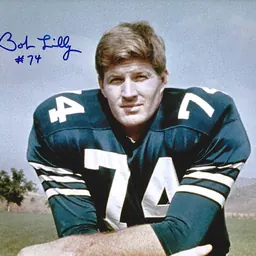
During the 1967 season, Gillingham took Thurston's spot full-time at left guard, starting all 14 games, playing opposite Kramer except when Kramer was hurt. This was Thurston's final season, playing in nine games as a backup. The Packers next played the Cowboys again for the 1967 NFL Championship, winning 21–17 on the game's last play. The game came to be known as the "Ice Bowl" because of the sub-freezing temperatures in which the teams played, reaching as low as –18 degrees Fahrenheit (-27.8 C) at the end of the game. Gillingham faced Hall of Fame right tackle Bob Lilly, one of the NFL's top 100 players of all time, in that game.
The Packers then defeated the Oakland Raiders in Super Bowl II, 33–14. Gillingham battled against American Football League (AFL) All-Pro right defensive tackle Tom Keating throughout the game. This was the last game for Vince Lombardi as head coach after nine seasons with the team. Individually, however, Gillingham was stellar during this period.
Gillingham was a five-time Pro Bowler (1969-71, 1973-74). 1969, the NEA selected him first-team All-Pro, and the Associated Press (AP), Pro Football Hall of Fame and UPI selected him second-team All-Pro. The AP and NEA both selected him NFL first-team All-Pro in 1970. In 1971, the NEA again selected him first-team All-Pro and the Pro Football Writers of America selected him second-team All-Pro. In 1973, the Pro Football Writers selected him second-team All-Pro, and in 1974, the NEA again named him first-team All-Pro.
Gillingham was selected as the inaugural winner of the Football Writers Association of America Forrest Gregg Award for the NFL Offensive Lineman of the Year following the 1970 season. Gillingham had played on the same offensive line with Gregg from 1966 to 1970. He was the NFC choice as the NFLPA/Coca-Cola Offensive Lineman of the Year for 1971.
Gillingham moved to right guard in 1969, after Kramer retired. After three unsuccessful seasons, Bengtson resigned after the 1970 season. In Devine's first year (1971), the team was 4–8–2, with Gillingham at right guard and Mike McCoy starting the majority of games at defensive left tackle.
The only season he was not on offense was 1972 when head coach Dan Devine shifted him to the defensive line after the pre-season, even though Gillingham was the team's best offensive lineman. Devine had been thinking of the move for a year, and the team's left defensive tackle Mike McCoy was injured in training camp 1972. Devine traded running back Dave Hampton to the Atlanta Falcons for guard Mal Snider, to facilitate Gillingham's move to defensive tackle. Snider started all 14 games at right guard in 1972.
Gillingham, who considered himself the best offensive guard in the NFL at the time, did not agree with Devine's decision to move him to the defensive line. as saying Devine did not know what he was doing and that switching Gillingham to defense "'made no sense whatsoever" and "was the dumbest thing in the world'". Devine's move failed when Gillingham sustained a season-ending knee injury two games into the regular season, and he was criticized for eventually being a factor in diminishing the team's playoff run.
During that season, the success of the Packers' offense heavily depended on a strong running attack led by MacArthur Lane and John Brockington, who gained over 2,000 yards from scrimmage between them. Though Gillingham missed virtually the entire season, this would be the first time the Packers reached the playoffs since Super Bowl II, losing in the first round to Washington 16–3. Brockington, who rushed for over 1,000 yards during the season,
Lane considered Gillingham the leader of the Packers offense, and that if Gillingham had stayed at guard in 1972 the team would have fared even better. During the two seasons Gillingham blocked for Brockington (1971, 1973), Brockington averaged 5.1 and 4.3 yards per carry; while in 1972, Brockington averaged only 3.7 yards per carry.
While Gillingham returned to top form at right guard in 1973 (with Snider moving to left tackle), the Packers record fell to 5–7–2.
When the Packers still refused to trade him, Gillingham decided to rejoin the team in 1976. He started all 14 games at right guard that season, but retired permanently at the end of the season. Gillingham still had differences with the team's offensive philosophy, and his knees were weakened after three surgeries during his career.
Legacy and honors In 1982, he was inducted into the Green Bay Packers Hall of Fame. Former Packers center Larry McCarran believed Gillingham's decision not to politic for inclusion in the Hall of Fame hurt his chances; and Green Bay sports editor Cliff Christl, a Hall of Fame voter, believed Gillingham's lack of inclusion involved some fatigue with so many members of the Packers being inducted into the Hall of Fame, along with the poor quality of the post-Lombardi Packers being held against Gillingham's selection.
Personal life and death After his playing days, Gillingham was in the real estate business in Little Falls, Minnesota and retired in 2010.
Gillingham died at age 67 in 2011 in Little Falls, while lifting weights.
Don’t just read it —
keep it.
Full-length biographies made to live with: read them, listen on the way to work, watch them tonight.
- E-book
- Audio
- Video
Instant download · yours to keep · every purchase keeps this site free
Important facts
People in Gale Gillingham's life
Named in this biography and alive at the same time





Related people
Same field, nearest in time


Contemporaries
People whose lives overlapped Gale Gillingham's




Frequently asked questions
Who was Gale Gillingham?
Player of American football (1944-2011)
When was Gale Gillingham born?
Gale Gillingham was born on 3 February 1944 in Madison.
When did Gale Gillingham die?
Gale Gillingham died on 20 October 2011 in Little Falls.
What was Gale Gillingham's occupation?
Gale Gillingham was an american football player.
What nationality was Gale Gillingham?
Gale Gillingham was American.
Sources & further reading
Cite this page
APA: Biography.guide. (2026). Gale Gillingham. https://biography.guide/gale-gillingham/
MLA: "Gale Gillingham." Biography.guide, https://biography.guide/gale-gillingham/.
Chicago: "Gale Gillingham." Biography.guide. https://biography.guide/gale-gillingham/.
Data last updated: 2026-09-20 · Spot an error? Report a correction.
Page generated 2026-09-27 05:24 UTC