
Tom Landry
American football coach and player
About Tom Landry
Lived 1924 – 2000 (aged 75). Tom Landry was an American aircraft pilot, american football coach and american football player.
Thomas Wade Landry ( ; September 11, 1924 – February 12, 2000) was an American professional football coach, player, and World War II bomber pilot. Regarded as one of the greatest head coaches of all time, he was the first head coach of the Dallas Cowboys in the National Football League (NFL), a position he held for 29 seasons. During his coaching career, he created many new formations and methods, such as the now default 4–3 defense that is used by a majority of teams in the NFL, and the "flex defense" system made famous by the "Doomsday Defense" squads he built during his tenure with the Cowboys. His 29 consecutive years from 1960 to 1988 as the coach of one team is an NFL record, along with his 20 consecutive winning seasons, which is considered to be his most impressive professional accomplishment.
In addition to his record 20 consecutive winning seasons from 1966 to 1985, Landry won two Super Bowl titles in Super Bowl VI and XII, five NFC titles, and 13 divisional titles. He compiled a 270–178–6 record, the fifth-most wins all-time for an NFL coach, and his 20 career playoff victories are the third-most of any coach in NFL history. Landry was also named the NFL Coach of the Year in 1966 and the NFC Coach of the Year in 1975.
From 1966 to 1982, a span of 17 years, Dallas played in 12 NFL or NFC Championship games. Furthermore, the Cowboys appeared in 10 NFC Championship games in the 13-year span from 1970 to 1982. Leading the Cowboys to three Super Bowl appearances in four years between 1975 and 1978, and five in nine years between 1970 and 1978, along with being on television more than any other NFL team, resulted in the Cowboys receiving the label of "America's Team", a title he did not appreciate because he felt it would bring on extra motivation from the rest of the league to compete with the Cowboys. He was inducted into the Pro Football Hall of Fame in 1990 as a head coach.
Early life Born in Mission, Texas, to Ray (an auto mechanic and volunteer fireman) and Ruth (Coffman) Landry, Tom was the second of four children (Robert, Tom, Ruthie, and Jack). Landry's father had suffered from rheumatism, and relocated to the warmer climate of Texas from Illinois. Ray Landry was an athlete, making his mark locally as a pitcher and football player. Tom played quarterback and punter for Mission High School, where he led his team to a 12–0 record in his senior season. missions, (his entire crew went on 29 missions and Landry did not go on three of them), he also survived a crash landing in Belgium after his bomber ran out of fuel.
He returned to his studies at the University of Texas in the fall of 1946.
Playing career Landry was selected in the 19th round (128th overall) of the 1948 AAFC Draft. He played one season in the All-America Football Conference for the New York Yankees, then moved in 1950 across town to the New York Giants.
Landry was also selected by the New York Giants in the 20th round (184th overall) of the 1947 NFL draft.
After the 1949 season, the AAFC folded, and the Yankees were not among the teams absorbed by the NFL. The New York Giants exercised their territorial rights and selected Landry in a dispersal draft. Under the guidance of Giants head coach Steve Owen, Landry got his first taste of coaching. Instead of explaining the 6–1–4 defense to the players, Owen called Landry up to the front, and asked him to explain the defense to his teammates. Landry got up, and explained what the defense would do to counter the offense, and this became Landry's first coaching experience. The 1953 season would be a season to forget, with the lowest point coming in a 62–10 loss at the hands of the Cleveland Browns. This loss would ultimately cost Coach Owen his job, and would again have Landry pondering his future. In 1954, he was selected as an All-Pro. He played through the 1955 season, and acted as a player-assistant coach the last two years, 1954 through 1955, under the guidance of new Giants head coach Jim Lee Howell. Landry ended his playing career with 32 interceptions in only 80 games, which he returned for 404 yards and three touchdowns. He also recovered 10 fumbles (seven defensive), returning them for 67 yards and two touchdowns.
Career statistics
Led the NFL Led the AAFC
Defense Year Team Games Interceptions Fumbles GP GS Int Yards Avg Lng TD Fmb FR Yds TD 1949 NY Yankees 12 1 1 44 44 44 0 0 0 0 0 1950 NY Giants 12 12 2 0 0 0 0 0 2 41 1 1951 NY Giants 12 10 8 121 15.1 55 2 0 1 9 1 1952 NY Giants 12 11 8 99 12.4 30 1 5 3 3 0 1953 NY Giants 12 11 3 55 18.3 30 0 1 1 0 0 1954 NY Giants 12 12 8 71 8.9 27 0 1 2 14 0 1955 NY Giants 12 12 2 14 7 10 0 0 1 0 0 Career (1949–1955) 84 69 32 404 12.6 55 3 7 10 67 2 AAFC stats (1949) 12 1 1 44 44 44 0 0 0 0 0 NFL stats (1950–55) 72 68 31 360 11.6 55 3 7 10 67 2
Special teams Year Team G Punting Kick returns Punt returns Punts Yards Avg Long Block KR Yards Avg TD PR Yards Avg TD 1949 NY Yankees 12 51 2,249 44.1 – 2 2 39 19.5 0 3 52 17.3 0 1950 NY Giants 10 58 2,136 36.8 61 1 – – – – – – – – 1951 NY Giants 12 15 638 42.5 59 0 1 0 0.0 0 1 0 0.0 0 1952 NY Giants 12 82 3,363 41.0 61 1 1 20 20.0 0 10 88 8.8 0 1953 NY Giants 12 44 1,772 40.3 60 0 2 38 19.0 0 1 5 5.0 0 1954 NY Giants 12 64 2,720 42.5 61 0 – – – – – – – – 1955 NY Giants 12 75 3,022 40.3 69 1 – – – – – – – – Career (1949–1955) 82 389 15,900 40.9 69 5 6 97 16.2 0 15 145 9.7 0 AAFC stats (1949) 12 51 2,249 44.1 – 2 2 39 19.5 0 3 52 17.3 0 NFL stats (1950–55) 70 338 13,651 40.4 69 3 4 58 14.5 0 12 93 7.8 0
Coaching career For the 1954 football season, Landry became the defensive coordinator of the Giants, opposite Vince Lombardi, who was the offensive coordinator. Landry stayed on as a full-time defensive coordinator after his retirement, and led one of the best defensive units in the league from 1956 to 1959. The two coaches created a fanatical loyalty on a team that they coached to three appearances in the NFL championship game in four years. The Giants beat the Paddy Driscoll-led Chicago Bears 47–7 in 1956, but lost to the Baltimore Colts in 1958 and 1959.
In 1960, he became the first head coach of the Dallas Cowboys, a position he held for 29 seasons (1960–88). The Cowboys started with difficulties, recording an 0–11–1 record during their first season, with five or fewer wins in each of their next four. Despite this early futility, in 1964, Landry was given a 10-year extension by owner Clint Murchison Jr. It would prove to be a wise move, as Landry's hard work and determination paid off, and the Cowboys improved to a 7–7 record in 1965. In 1966, they surprised the NFL by posting 10 wins and making it all the way to the NFL Championship game. Dallas lost the game to Lombardi's Green Bay Packers, but this season was but a modest display of what lay ahead.
The Great Innovator
Landry developed the now-popular "4–3 defense" while serving as Giants defensive coordinator. It was called "4–3" because it featured four down linemen (two ends and two defensive tackles on either side of the offensive center) and three linebackers – middle, left, and right. The innovation was the middle linebacker. Previously, a lineman was placed directly over the center. Landry had this person stand up and move back two yards. The Giants' middle linebacker was the legendary Sam Huff.
When he came to Dallas, Landry refined the 4–3 even further, specifically to counter Lombardi's "run to daylight" strategy. Lombardi's offense was built around sending the running back through any open space, rather than a specific assigned hole. Landry reasoned that the best counter was a defense that flowed to possible daylight and blotted it out. The result was the "Flex Defense," which assigned the defenders specific areas of the field to cover. When Landry first implemented it in 1964, fans were initially mystified when they saw the Cowboys defense not swarming to the ball. However, the skeptics were won over when ball carriers invariably ran right into the arms of one of Landry's defenders. The Flex Defense worked so well that Landry had to create an offense to score on it, one which disguised an otherwise simple play with multiple formations.
Landry did not always search inside the traditional college football pipeline for talent. For example, he recruited several soccer players from Latin America, such as Efren Herrera and Rafael Septién, to compete for the job of placekicker for the Cowboys. Landry looked to the world of track and field for speedy skill-position players. For example, Bob Hayes, once considered the fastest man in the world, was drafted by and played wide receiver for the Cowboys under Landry.
Landry produced a very large coaching tree. In 1986, five NFL head coaches were former Landry assistants: Mike Ditka, Dan Reeves, John Mackovic, Gene Stallings, and Raymond Berry.
Coaching in the Super Bowl
While Landry's Cowboys are known for their two Super Bowls against Chuck Noll and the Pittsburgh Steelers, Landry also led Dallas to three other Super Bowls, and they were a Bart Starr quarterback sneak away from representing the NFL in the second Super Bowl. Landry was 2–3 in the Super Bowl, winning both in New Orleans and losing all three at the Miami Orange Bowl.
Landry coached the Cowboys to their first Super Bowl win in Super Bowl VI, defeating the Miami Dolphins 24–3, holding the Dolphins to a single field goal. This win came a year after the Cowboys lost Super Bowl V to the Baltimore Colts. The Cowboys lost Super Bowl X, their first battle with the Pittsburgh Steelers, in a game that is heralded as a classic. The rematch in Super Bowl XIII would be just as good, with the Cowboys being a Jackie Smith catch away from tying the Steelers and keeping pace early in the third quarter; instead, Pittsburgh scored twice in succession and put the game away. Before the Super Bowl XIII rematch, Cowboys linebacker Thomas "Hollywood" Henderson famously stated, "Terry Bradshaw couldn't spell c-a-t if you spotted him the C and the T." Landry recalled in his autobiography how he cringed when he heard that, because he did not feel that Bradshaw needed additional motivation in a big game like the Super Bowl.
Landry signed a three-year contract in the summer of 1987. However, general manager Tex Schramm brought in Paul Hackett as a new offensive coach in 1986, and in 1987, he hired offensive line coach Jim Erkenbeck and special-teams coach Mike Solari. Some suggested that Schramm's moves divided the coaching staff, a plan to first undermine and then dismiss Landry. Bright, who usually stayed behind the scenes, publicly criticized Landry after a home loss to the Atlanta Falcons in 1987, saying that he was "horrified" at the play-calling and complaining, "It doesn't seem like we've got anybody in charge who knows what he's doing, other than Tex." Bright's belief that former first-round draft picks Danny Noonan and Herschel Walker were not being used enough further put him at odds with the coaching staff. On the day after the Cowboys lost to the Detroit Lions, a team that had entered the game tied for the worst record in the NFL, Schramm said on his radio show, "There's an old saying, 'If the teacher doesn't teach, the student doesn't learn.'"
Meanwhile, Bright had suffered major losses in his banking, real estate, and oil businesses; He had spent 40 consecutive years at field level in the AAFC and NFL: five as a player (1949–1953), two as a player-assistant coach (1954–1955), four as an assistant coach (1956–1959), and 29 as a head coach.
Jones received immediate backlash for his decision to fire Landry, while the former coach received an outpouring of public support. Despite Landry's recent poor performance, Cowboys fans felt disillusioned that the only coach in the team's history had been removed so unceremoniously.
Landry's last work in professional football was as a limited partner of the San Antonio Riders of the World League of American Football in 1992.
Head coaching record Team Year Regular season Postseason Won Lost Ties Win % Finish Won Lost Win % Result DAL 1960 0 11 1 .042 7th in NFL West — — — — DAL 1961 4 9 1 .321 6th in NFL East — — — — DAL 1962 5 8 1 .393 5th in NFL East — — — — DAL 1963 4 10 0 .286 5th in NFL East — — — — DAL 1964 5 8 1 .393 5th in NFL East — — — — DAL 1965 7 7 0 .500 2nd in NFL East — — — — DAL 1966 10 3 1 .750 1st in NFL East 0 1 .000 DAL 1967 9 5 0 .643 1st in NFL Capitol 1 1 .500 DAL 1968 12 2 0 .857 1st in NFL Capitol 0 1 .000 DAL 1969 11 2 1 .821 1st in NFL Capitol 0 1 .000 DAL 1970 10 4 0 .714 1st in NFC East 2 1 .667 DAL 1971 11 3 0 .786 1st in NFC East 3 0 1.000 DAL 1972 10 4 0 .714 2nd in NFC East 1 1 .500 DAL 1973 10 4 0 .714 1st in NFC East 1 1 .500 DAL 1974 8 6 0 .571 3rd in NFC East — — — — DAL 1975 10 4 0 .714 2nd in NFC East 2 1 .667 DAL 1976 11 3 0 .786 1st in NFC East 0 1 .000 DAL 1977 12 2 0 .857 1st in NFC East 3 0 1.000 DAL 1978 12 4 0 .750 1st in NFC East 2 1 .667 DAL 1979 11 5 0 .688 1st in NFC East 0 1 .000 DAL 1980 12 4 0 .750 2nd in NFC East 2 1 .667 DAL 1981 12 4 0 .750 1st in NFC East 1 1 .500 DAL 1982 6 3 0 .667 2nd in NFC 2 1 .667 DAL 1983 12 4 0 .750 2nd in NFC East 0 1 .000 DAL 1984 9 7 0 .563 4th in NFC East — — — — DAL 1985 10 6 0 .667 1st in NFC East 0 1 .000 DAL 1986 7 9 0 .438 3rd in NFC East — — — — DAL 1987 7 8 0 .467 2nd in NFC East — — — — DAL 1988 3 13 0 .188 5th in NFC East — — — — Total 250 162 6 .605 20 16 .556
In popular culture On December 24, 1959, while defensive coach of the Giants, Landry pretended to be Catholic missionary Father William A. Lightning on the panel game To Tell The Truth. The Machiavellian coach in Peter Gent's novel North Dallas Forty is based on Tom Landry. G.D. Spradlin played the role in the film of the same name. In the animated sitcom King of the Hill, the middle school in Arlen is named "Tom Landry Middle School", and Landry is a personal hero of the show's main character Hank Hill. He mentions being "mortified" because he went to work on the date of Landry's death after his cousin Dusty (guest star Dusty Hill of ZZ Top) had previously tricked him into thinking Landry had died, and he thought it was a repeat of that prank. Hank also has a Tom Landry ceramic plate that he sometimes consults in times of need, on one occasion saying, "Where did I go wrong, Tom?" Landry also occasionally appears to Hank in dream sequences to counsel him in times of need, such as during Hank's varnish-induced hallucination in the episode "Hillennium" and in "Trans-Fascism", when he tells Hank the consequences of breaking the law. In an episode of The Simpsons ("You Only Move Twice"), Homer Simpson buys Landry's trademark fedora in an effort to improve his leadership qualities, and is shown in several later episodes wearing the hat. Landry is also featured in the season 7 episode "Marge Be Not Proud" as one of the Christmas carolers introduced by Krusty the Clown early in the episode. In a Campbell's Chunky Soup commercial, the game takes place in a fictional Reginald H. White Memorial Park, on the corner of Landry Road and Halas Drive.
Awards and honors 1966: National Football League Coach of the Year Award 1978: Recipient of the Golden Plate Award of the American Academy of Achievement 1989: Honored by the city of Dallas 1990: Inducted into Pro Football Hall of Fame 1993: Inducted into Dallas Cowboys' Ring of Honor
Personal life Landry married Alicia Wiggs on January 28, 1949. They had a son and two daughters. He was a Christian, attending Highland Park Methodist Church, at times even giving sermons there. On January 22, 2021, the Dallas Cowboys announced that Alicia had died the previous day at the age of 91.
When coaching on the sidelines Landry always wore a suit and tie with his trademark fedora.
Death
Landry was diagnosed with leukemia in May 1999. He died nine months later on February 12, 2000, at the age of 75.
Landry's funeral service was held at Highland Park United Methodist Church, where he was an active and committed member for 43 years. He was interred in the Sparkman-Hillcrest Memorial Park Cemetery in Dallas. A cenotaph dedicated to Landry, complete with a depiction of his fedora, was placed in the official Texas State Cemetery in Austin at the family's request.
The Cowboys wore a patch on their uniforms during the 2000 season depicting Landry's trademark fedora. A bronze statue of Landry stood outside of Texas Stadium, and now stands in front of AT&T Stadium since the Cowboys relocated in 2009. The section of Interstate 30 between Dallas and Fort Worth was named the Tom Landry Highway by the Texas Legislature in 2001. The football stadium in Landry's hometown of Mission, Texas, was named Tom Landry Stadium to honor one of the city's most famous former residents. Similarly, Trinity Christian Academy's stadium in Addison, Texas, is named Tom Landry Stadium in honor of Landry's extensive involvement and support of the school. An elementary school in the Carrollton-Farmers Branch Independent School district, very near the Cowboys former training facility in Valley Ranch, is also named in honor of Landry. The Tom Landry Welcome Center at Dallas Baptist University, where he was a frequent chapel speaker and award recipient, was posthumously dedicated to him in 2002.
In 2013, a major new biography of Landry was published, entitled The Last Cowboy.
Don’t just read it —
keep it.
Full-length biographies made to live with: read them, listen on the way to work, watch them tonight.
- E-book
- Audio
- Video
Instant download · yours to keep · every purchase keeps this site free
Important facts
People in Tom Landry's life
Named in this biography and alive at the same time





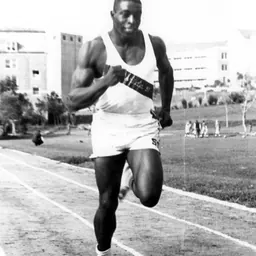
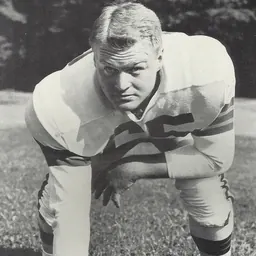

Related people
Same field, nearest in time



Contemporaries
People whose lives overlapped Tom Landry's


Frequently asked questions
Who was Tom Landry?
American football coach and player (1924–2000)
When was Tom Landry born?
Tom Landry was born on 11 September 1924 in Mission.
When did Tom Landry die?
Tom Landry died on 12 February 2000 in Dallas.
What was Tom Landry's occupation?
Tom Landry was an aircraft pilot, american football coach and american football player.
What nationality was Tom Landry?
Tom Landry was American.
Sources & further reading
Cite this page
APA: Biography.guide. (2026). Tom Landry. https://biography.guide/tom-landry/
MLA: "Tom Landry." Biography.guide, https://biography.guide/tom-landry/.
Chicago: "Tom Landry." Biography.guide. https://biography.guide/tom-landry/.
Data last updated: 2026-09-20 · Spot an error? Report a correction.
Page generated 2026-09-27 05:19 UTC