
Gaius Papius Mutilus
1st century BC Samnite leader of an anti-Rome rebellion
About Gaius Papius Mutilus
Lived 200 BC – 100 BC. Gaius Papius Mutilus was a politician and military personnel.
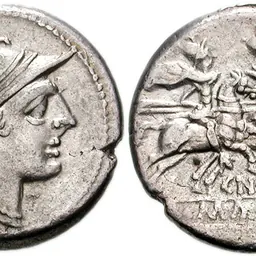
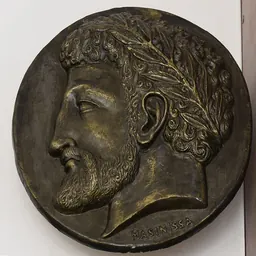
Denarius of C. Papius Mutilus, minted in 90 BC. The obverse portrays Bacchus, while the reverse displays an allegory of the Social War, with the Italian Bull goring the Roman Wolf. Gaius Papius Mutilus was a Samnite noble who is best known for being the leader of the southern rebels who fought against the army of Rome in the Social War (also known as the Italian War); was a member of the clan Variani/Varriano. His father was Gaius Papius Mutilus, who held the highest Samnite magistracy in Bovianum a number of times in the second half of the 2nd century BC
The southern forces under Gaius Papius The Samnite army, consisting of southern rebels, was very similar to that of the Romans. Two men were elected consuls while another twelve were granted the position of praetor. The consuls were the leaders of their respective armies and are referred to as “commanders in chief". Papius became the consul for the southern rebel forces, known as the Samnites, in 90 BC. His fellow consul was Quintus Poppaedius Silo; the leader of a centrally located army, staffed mainly by members of the Italian tribe of the Marsi. Both of these men held the position of consul into the year 89 BC due to their success during the campaigning season of the following year.
Success in battle Papius achieved great success as the leader of the Samnite army during his advance into Roman territory. One of the more famous battles fought by the southern rebels occurred in the city of Nola. The Samnite army captured the city with 2,000 Roman soldiers remaining inside. The soldiers did not accept Papius' offer to serve under him and were therefore starved to death.
Following his victory at Nola, Papius took the cities of Stabiae, Minervium, and Salernum while conquering the country around Nuceria. The citizens of these cities and those surrounding them feared the wrath of Papius. He gathered the prisoners and slaves from each city while also being given infantry and cavalry out of fear (these troops amounted to over 10,000 infantry and 1,000 cavalry). Papius continued to destroy the Romans while continuing to have success in Campania. During his leadership of the Samnite army, Papius only lost two notable battles. These were to consul Lucius Julius Caesar in 90 BC and to Lucius Cornelius Sulla in 89 BC. Following his loss to Sulla, Papius is said to have been granted Roman citizenship. Papius Mutilus was not prominent during the ensuing civil wars. Shortly after, he was proscribed and committed suicide in 80 BC.
Don’t just read it —
keep it.
Full-length biographies made to live with: read them, listen on the way to work, watch them tonight.
- E-book
- Audio
- Video
Instant download · yours to keep · every purchase keeps this site free
Important facts
People in Gaius Papius Mutilus's life
Named in this biography and alive at the same time

Related people
Same field, nearest in time


Contemporaries
People whose lives overlapped Gaius Papius Mutilus's

Frequently asked questions
Who was Gaius Papius Mutilus?
1st century BC Samnite leader of an anti-Rome rebellion
When was Gaius Papius Mutilus born?
Gaius Papius Mutilus was born in 200 BC in Samnium.
When did Gaius Papius Mutilus die?
Gaius Papius Mutilus died in 100 BC.
What was Gaius Papius Mutilus's occupation?
Gaius Papius Mutilus was a politician and military personnel.
Sources & further reading
· Wikipedia: Gaius Papius Mutilus
· DBpedia: Gaius Papius Mutilus
Cite this page
APA: Biography.guide. (2026). Gaius Papius Mutilus. https://biography.guide/gaius-papius-mutilus/
MLA: "Gaius Papius Mutilus." Biography.guide, https://biography.guide/gaius-papius-mutilus/.
Chicago: "Gaius Papius Mutilus." Biography.guide. https://biography.guide/gaius-papius-mutilus/.
Data last updated: 2026-09-20 · Spot an error? Report a correction.
Page generated 2026-09-27 05:24 UTC