
Lucius Julius Caesar
Roman consul in 64 BC
About Lucius Julius Caesar
Lived 110 BC – 40 BC (aged 69–70). Lucius Julius Caesar was a Roman ancient Roman priest, politician and military personnel.
Lucius Julius Caesar was a Roman politician and senator who was consul in 64 BC. A supporter of his distant cousin, the Roman dictator Gaius Julius Caesar, Lucius was a key member of the senatorial coalition which strove to avoid civil war between the Senate and his nephew Mark Antony in the aftermath of Caesar's assassination in 44 BC.
Early life A member of the patrician Julii Caesares, Lucius Julius Caesar was the son of the homonymous consul of 90 BC and Fulvia. Lucius had a sister named Julia who was the wife of Marcus Antonius Creticus, with whom she had several children, among them Mark Antony. After her first husband's death Julia married Publius Cornelius Lentulus Sura.
Early career He began his political career serving as quaestor in Asia in 77 BC, probably under Terentius Varro. By 69 BC, Lucius had been elected augur, and by the end of 67 BC, he had served in the office of praetor.
Lucius Caesar was then elected consul for 64 BC, serving alongside Gaius Marcius Figulus. During his consulship, senatorial decrees were passed which limited the number of attendants who could accompany candidates during election campaigns. Action was also taken that year against certain guilds and societies deemed subversive and prohibited celebration of the ludi Compitalicii. During the following year (63 BC), he, together with his cousin Gaius Julius Caesar, was appointed duumviri perduellionis for the purpose of bringing the senator Gaius Rabirius to trial for perduellio committed during Saturninus' riot in 100 BC.
Later that same year, during the Catilinarian conspiracy, the senate met after discovery of a plot within the city and apprehension of conspirators. Among them was Lucius' brother-in-law Publius Cornelius Lentulus Sura, whom Lucius denounced. At a later meeting on the urban conspirators' fate, Lucius was among the former consuls who voted for the death penalty.
Lucius is believed by modern scholars to have served as censor in 61 BC based on an inscription from 58 BC in Delos. More than anything else, he sought to avoid another civil war, and worked toward reconciling the various factions. Some time in the year, he was appointed princeps senatus after the title was revived. In early March of 43 BC, he was one of five ex-consuls appointed by the Senate to form a second delegation to Antony, seeking to arrange a truce between Mark Antony and Decimus Brutus Albinus. However, when two of the ex-consuls decided to withdraw from the delegation (Cicero and Publius Servilius Vatia Isauricus), the embassy was disbanded.
Later, after Antony had suffered a number of military setbacks, Lucius Caesar was one of the first to state that his nephew should be declared an enemy of the state. He was however to regret this when the Second Triumvirate was formed: as a consequence of his actions, Antony had him proscribed. Fleeing to his sister's (Antony's mother's) house, Lucius remained there until she obtained a pardon for him from her son. Lucius Caesar was still alive in 40 BC, when he was recorded as still being active as an augur.
Family Lucius likely had several sons, one named Lucius is known, and another named Sextus is also likely to have existed. Besides these there is also a Gnaeus Julius L.f. attested on coinage from Cordova who might have been his son. The use of the praenomen "Gnaeus", which was rare among the Julii, and possibly unique among the Caesars, might indicate that the man was a fourth son of Lucius, who had to use an unusual praenomen because the traditional three (Gaius, Sextus, and Lucius) were already in use by older brothers at the time of Gnaeus birth. Lucius is also generally believed by modern scholars to be the man honored along with a daughter named Julia at Ilium around 61 BC. No wife of Lucius is known.
Don’t just read it —
keep it.
Full-length biographies made to live with: read them, listen on the way to work, watch them tonight.
- E-book
- Audio
- Video
Instant download · yours to keep · every purchase keeps this site free
Important facts
People in Lucius Julius Caesar's life
Named in this biography and alive at the same time
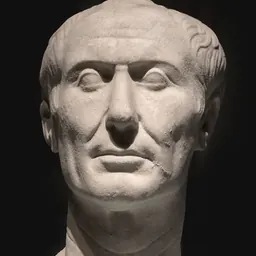



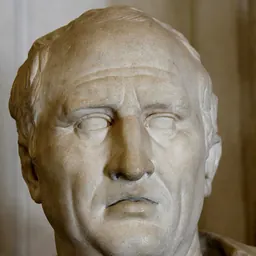

Related people
Same field, nearest in time





Contemporaries
People whose lives overlapped Lucius Julius Caesar's




Frequently asked questions
Who was Lucius Julius Caesar?
Roman consul in 64 BC
When was Lucius Julius Caesar born?
Lucius Julius Caesar was born in 110 BC in Ancient Rome.
When did Lucius Julius Caesar die?
Lucius Julius Caesar died in 40 BC in Rome.
What was Lucius Julius Caesar's occupation?
Lucius Julius Caesar was an ancient Roman priest, politician and military personnel.
What nationality was Lucius Julius Caesar?
Lucius Julius Caesar was Roman.
Sources & further reading
· Wikipedia: Lucius Julius Caesar
· DBpedia: Lucius Julius Caesar (consul 64 BC)
Cite this page
APA: Biography.guide. (2026). Lucius Julius Caesar. https://biography.guide/lucius-julius-caesar-ancient-roman-priest/
MLA: "Lucius Julius Caesar." Biography.guide, https://biography.guide/lucius-julius-caesar-ancient-roman-priest/.
Chicago: "Lucius Julius Caesar." Biography.guide. https://biography.guide/lucius-julius-caesar-ancient-roman-priest/.
Data last updated: 2026-09-20 · Spot an error? Report a correction.
Page generated 2026-09-27 05:10 UTC