
About Gaetano Mosca
Lived 1858 – 1941 (aged 83). Gaetano Mosca was an Italian jurist, politician, journalist, philosopher, writer and sociologist.
Gaetano Mosca (; 1 April 1858 – 8 November 1941) was an Italian political scientist, journalist and public servant. He is credited with developing the elite theory and the doctrine of the political class and is one of the three members constituting the Italian school of elitism together with Vilfredo Pareto and Robert Michels.
Life Mosca earned a degree in law from the University of Palermo in 1881. In 1887 he moved to Rome and took a position as editor of proceedings of the Chamber of Deputies of Italy. Having taught occasionally at Palermo and Rome, Mosca became chair of constitutional law at the University of Turin in 1896. He would hold this position until 1924, when he settled permanently in Rome to occupy the chair of public law at the University of Rome. Mosca held several other academic positions throughout his life.
He was skeptical towards democracy, and placed his lifelong liberalism in direct opposition to mass democracy. In a 1904 interview, he stated:
I can certainly call myself an anti-democrat, but I am not an anti-liberal; indeed I am opposed to pure democracy precisely because I am a liberal. I believe that the ruling class ought not to be monolithic and homogeneous but ought to consist of elements which are diverse in regard to origin and interests; when, instead, political power originates from a single source, even if this be elections with universal suffrage, I regard it as dangerous and liable to become oppressive. Democratic Jacobinism is an illiberal doctrine precisely because it subordinates everything to a single force, that of the so-called majority, on which it does not set any limits.
In 1909 Mosca was elected to the Chamber of Deputies of Italy, in which he served until 1919. During this time, he served as Under-secretary for the Colonies from 1914 until 1916. During this time, Mosca also worked as a political journalist for the Corriere della Sera of Milan (after 1901) and the Tribuna of Rome (from 1911 to 1921).
In 1919, Mosca was nominated life senator of the Kingdom of Italy. He served actively in this capacity until 1926. In 1925 he signed the Manifesto of the Anti-Fascist Intellectuals. On numerous occasions, the elderly Mosca took to the floor to speak against bills endorsed by Benito Mussolini which intended to curtail political rights and parliamentary institutions. Mosca explained his opposition to these bills not only by referring to his own faith in political liberties as values worth preserving, but also by appealing to the "development and progress" that accompanied those nations where political liberties had been safeguarded through representative institutions.
Mosca defined modern elites in term of their superior organisational skills. These skills are especially useful in gaining political power in modern bureaucratic society. Nevertheless, Mosca's theory was more liberal than the elitist theory of Pareto, for example. In Mosca's view, elites are not always hereditary, as peoples from all classes of society can theoretically become elite. When this happens, the reproduction of power is defined as democratic; in contrast, when the members' turnover remains inside the elite, the reproduction of power is defined as aristocratic. He also adhered to the concept of the circulation of elites, a dialectical theory of constant competition among elites, with different elite groups alternating with each other repeatedly over time. This concept originated from his materialist idea of history as a conflict between classes (Marx), from the conflictual nature of politics considered as a fight for acquisition and deployment of power (Machiavelli), and finally from the non-egalitarian, hierarchical structure of society. Unlike Marx, Mosca has not a narrow concept of historical time, but a circular one, as in classical political theory, which consists in a perpetual condition of conflict and recycling of the elite. For Mosca, the dichotomous structure of society would not be solved by a revolution.
Works in English translation
The Ruling Class, McGraw-Hill Book Company, Inc., 1939. "On the Ruling Class." In Talcott Parsons, ed., Theories of Society; Foundations of Modern Sociological Theory, Vol. I, Part Two, The Free Press of Glencoe, 1961. "What is Mafia." M&J, 2014. Translation of the book "Cosa è la Mafia," Giornale degli Economisti, Luglio 1901, pp. 236-62. Mosca, G. (1972). A short history of political philosophy (S. Z. Koff, Tran.; [1st American ed.].). Crowell.
Don’t just read it —
keep it.
Full-length biographies made to live with: read them, listen on the way to work, watch them tonight.
- E-book
- Audio
- Video
Instant download · yours to keep · every purchase keeps this site free
Important facts
People in Gaetano Mosca's life
Named in this biography and alive at the same time


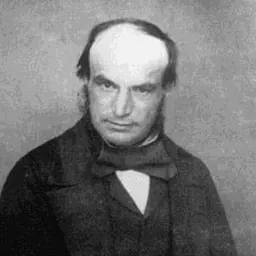
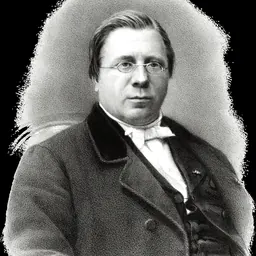
Related people
Same field, nearest in time
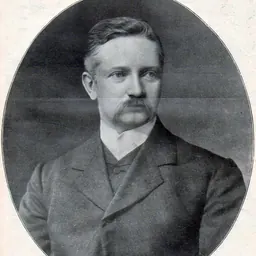


Contemporaries
People whose lives overlapped Gaetano Mosca's




Frequently asked questions
Who was Gaetano Mosca?
Italian political scientist and journalist (1858–1941)
When was Gaetano Mosca born?
Gaetano Mosca was born on 1 April 1858 in Palermo.
When did Gaetano Mosca die?
Gaetano Mosca died on 8 November 1941 in Rome.
What was Gaetano Mosca's occupation?
Gaetano Mosca was a jurist, politician, journalist, philosopher, writer and sociologist.
What nationality was Gaetano Mosca?
Gaetano Mosca was Italian.
Sources & further reading
Cite this page
APA: Biography.guide. (2026). Gaetano Mosca. https://biography.guide/gaetano-mosca/
MLA: "Gaetano Mosca." Biography.guide, https://biography.guide/gaetano-mosca/.
Chicago: "Gaetano Mosca." Biography.guide. https://biography.guide/gaetano-mosca/.
Data last updated: 2026-09-20 · Spot an error? Report a correction.
Page generated 2026-09-27 05:23 UTC