
About Gabrielle Réjane
Lived 1856 – 1920 (aged 64). Gabrielle Réjane was a French stage actor, film actor, theatre manager, actor, entrepreneur and soubrette.
Gabrielle Réjane , née Gabrielle Charlotte Réju (6 June 1856 – 14 June 1920), was a French actress of the late 19th and early 20th centuries.
The daughter of a former actor, Réjane studied at the Paris Conservatoire and made her stage debut in 1875. After eight seasons at the Théâtre du Vaudeville in increasingly prominent roles, she became leading lady at the Théâtre des Variétés, a position she combined with appearances in more substantial plays at other theatres. She became known chiefly for her roles in comedies, but made an impression in serious character parts from time to time. Her biggest success was as Catherine, the outspoken washerwoman who becomes a duchess in the historical comedy-drama Madame Sans-Gêne by Sardou and Moreau. She created the role in 1893 and played it frequently for much of her career. Among her other celebrated roles was Nora in Henrik Ibsen's A Doll's House in 1894, which gave the author his first success in France.
Réjane appeared in major cities throughout Europe, and was particularly popular in London, where she played frequently between 1877 and 1915. She twice played on Broadway, but did not become popular with American audiences. She married the director of the Vaudeville, and starred there, but after their divorce in 1905 she opened her own theatre, which she ran until 1918. Between 1900 and 1920 she appeared in six silent films, including two versions of Madame Sans-Gêne. She was widely regarded as the embodiment of the Parisienne, and when she died in 1920 Le Figaro said that Paris had lost its soul.
Life and career Early years
Réjane was born in Paris on 6 June 1856. Her father, a former actor, was on the front-of-house staff of the Théâtre de l'Ambigu-Comique. He died when Réjane was about five, leaving his widow in straitened circumstances. She obtained a post at another Parisian theatre, and the young Réjane painted fans to augment the family income. In 1870–71 her education, at the Pension Boulet, was interrupted by the Siege of Paris and the bloody events of the Commune. After the fighting ended she returned to her studies and was appointed as a paid assistant to look after the younger pupils.
Réjane had ambitions to go on the stage, and, having obtained a reluctant consent from her mother, she successfully applied to François-Joseph Regnier, a distinguished actor and teacher, for admission to his class at the Paris Conservatoire. In 1874 she won the Conservatoire's deuxième prix (second prize) for comedy. The critic Francisque Sarcey held that she deserved the premier prix, but "A first prize carries with it the right of entrance into the Comédie-Française, and the jury did not think Mademoiselle Réjane, with her little wide-awake face, suited to the vast frame of the House of Molière".
According to the official regulations, Réjane, as a winner of the deuxième prix, was required to join the company of France's second national theatre, the Odéon, but she preferred the repertoire and better pay at the Théâtre du Vaudeville, and the Odéon management did not press the point. She made her debut at the Vaudeville in 1875 in the prologue to the Revue des deux-mondes, by Clairville, making an immediate impression. A reviewer commented, "She has the arch and sprightly air of a Parisian grisette, a flexible voice of an agreeable tone, and perfect self-possession – qualities more than sufficient to succeed on the stage". Later in the year she had her first substantial success, as Niquette in the comedy Fanny Lear by Henri Meilhac and Ludovic Halévy. The critic Dauphin Meunier later wrote: Parisian theatres customarily closed for a few weeks during the height of summer, and in July, with Vaudeville colleagues, she played at the Gaiety Theatre in the West End in the comedies Perfide comme l'onde, Nos alliées and Aux crochets d'un gendre. The Athenaeum applauded "a display of vivacity and espièglerie quite exceptional on the part of Mdlle Réjane", and The Morning Post found her "infinitely diverting".
Variétés and stardom
In 1882, the year after the retirement of Hortense Schneider, star of the Théâtre des Variétés, Réjane was engaged as leading lady there. in that part, and as Adrienne de Boistulbé in Meilhac's Ma camarade at the Théâtre du Palais-Royal in the same year, Réjane attracted highly favourable critical attention.
Over the next ten years Réjane appeared at six or more Paris theatres, in an exceptionally wide variety of plays, from new works by Edmond Gondinet (Clara Soleil, 1885), Meilhac (Les demoiselles Clochart, 1886, and Ma cousine, 1890), Victorien Sardou (Marquise, 1889) and Edmond Haraucourt (Shylock, 1889), to revivals of classics by Beaumarchais (Le mariage de Figaro, 1889), Dumas (La Demi-Monde, 1890) and Aristophanes (Lysistrata, 1892). | Among those who saw the performance was Marcel Proust who became a devoted admirer, and later friend; his character Berma, the great actress in À la recherche du temps perdu, is partly based on Réjane.
In 1893 Réjane married Paul Porel, director of the Vaudeville; they had two children – Germaine and Jacques. She appeared at the Vaudeville in a series of successful plays; two of the earliest productions demonstrated her range. In October 1893 she created the role with which she was most closely associated during the rest of her career: Catherine, the outspoken washerwoman-duchess in Sardou and Moreau's historical comedy-drama Madame Sans-Gêne. Another reviewer wrote:
Six months later Réjane played Nora in the French premiere of Henrik Ibsen's A Doll's House ("Une maison de poupée"). Ibsen had never succeeded with Parisian audiences until now, but to his delight the production was a triumph. Les annales du théâtre et de la musique recorded, "Nora's role is overwhelming; Mademoiselle Réjane took the opportunity of one of the greatest successes of her career. She was able to highlight the very complex character of the role, and with a rare simplicity of means she demonstrated in the famous tarantella scene an admirable dramatic power. Needless to say, it was acclaimed". Another contemporary critic wrote:
London and New York
In 1894 Réjane returned to the West End. Since her first appearance there, in 1877, she had been in a production of Alphonse Daudet's Le Nabab at the Gaiety in 1883. Her reviews then had been good, but her return in June 1894 in Madame Sans-Gêne prompted superlatives from the critics and drew full houses, even with the counter-attraction of a Bernhardt season at Daly's Theatre. Réjane's season had to be extended by a fortnight to meet demand. Among those in the audience who understood the words there was a substantial section whose broadness of mind did not extend to the content of French plays.
Réjane was so disgusted at the lack of appreciation that she vowed never to return. Madame Sans-Gêne was once again an immense success, and Sir Henry Irving negotiated the rights to stage an English version, which he produced at the Lyceum Theatre with Ellen Terry in Réjane's role two years later.
Réjane eventually relented and agreed to return to the US, but not until 1904, by which time she had been seen by audiences in Belgium, Denmark, the Netherlands, Germany, Russia, Austria, Romania, Italy, Spain and Portugal. |
At the Théâtre Réjane its proprietor appeared in twenty new plays and revivals by playwrights ranging from the grandiose Catulle Mendès to the chic Sacha Guitry between 1906 and 1910La souris ("The Mouse", Édouard Pailleron), Heureux ("Happy", Pailleron), La rafale ("The Gust", Henri Bernstein), La suzeraine (Dario Niccodemi, La piste ("The Track", Sardou), Le masque (Henry Bataille), Le joug ("The Yoke", Albert Guinon and Jane Marny), Antoinette Sabrier (Romain Coolus), Après le pardon ("After Forgiveness", Matilde Serao and Pierre Decourcelle), La Savelli (Max Maurey and Gilbert Thierry), Le monde ou l'on s'ennuie ("The World Where We are Bored", Pailleron), Paris – New York (Francis de Croisset), La clef ("The Key", Sacha Guitry), Israël (Bernstein), Le refuge (Niccodemi), L'Impératrice ("The Empress", Catulle Mendès), Madame Margot (Emile Moreau and Charles Clairville), Trains de luxe (Abel Hermant), La risque ("The Risk", Coolus) and La flamme ("The Flame", Niccodemi). Réjane did not appear in every production at her theatre; she was not in the cast of the French premiere of Maurice Maeterlinck's play The Blue Bird ("L'oiseau bleu"), given at the Théâtre Réjane in March 1911. Nor did she confine her appearances in Paris to her own theatre; in 1911 and 1916 she appeared at the Théâtre de la Porte Saint-Martin in Henry Bataille's L'enfant de l'amour and L'amazone.
As well as her base in Paris, Réjane hoped to found a French repertory theatre in London. A first step was made in 1906 with a season at the Royalty Theatre, but the plan was not taken further.
Réjane took part in six silent films. Two were versions of Madame Sans-Gêne, the first directed by Clément Maurice, 1900, and the second by André Calmettes, 1911. The others were Britannicus (Calmettes, 1908), L'Assomoir (Albert Capellani, 1909), Alsace (Henri Pouctal, 1916) and Miarka (Louis Mercanton, 1920).
During the First World War, Réjane devoted much effort to helping the Allied cause, and she appeared at the Royal Court Theatre, London, in a patriotic drama called Alsace, and at the London Coliseum in a war-play entitled The Bet.
Gallery
Notes, references and sources
Don’t just read it —
keep it.
Full-length biographies made to live with: read them, listen on the way to work, watch them tonight.
- E-book
- Audio
- Video
Instant download · yours to keep · every purchase keeps this site free
Important facts
Family & relationships
People in Gabrielle Réjane's life
Named in this biography and alive at the same time
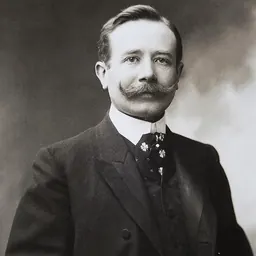

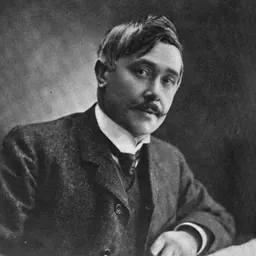
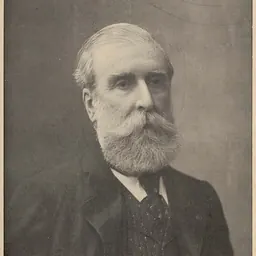
Related people
Same field, nearest in time

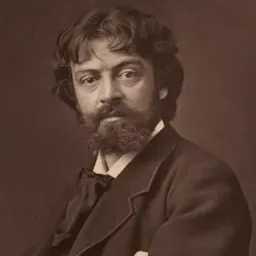


Contemporaries
People whose lives overlapped Gabrielle Réjane's





Frequently asked questions
Who was Gabrielle Réjane?
French actress (1856–1920)
When was Gabrielle Réjane born?
Gabrielle Réjane was born on 6 June 1856 in former 5th arrondissement of Paris.
When did Gabrielle Réjane die?
Gabrielle Réjane died on 14 June 1920 in 16th arrondissement of Paris.
What was Gabrielle Réjane's occupation?
Gabrielle Réjane was a stage actor, film actor, theatre manager, actor, entrepreneur and soubrette.
What nationality was Gabrielle Réjane?
Gabrielle Réjane was French.
Sources & further reading
Cite this page
APA: Biography.guide. (2026). Gabrielle Réjane. https://biography.guide/gabrielle-rejane/
MLA: "Gabrielle Réjane." Biography.guide, https://biography.guide/gabrielle-rejane/.
Chicago: "Gabrielle Réjane." Biography.guide. https://biography.guide/gabrielle-rejane/.
Data last updated: 2026-09-25 · Spot an error? Report a correction.
Page generated 2026-09-27 05:12 UTC