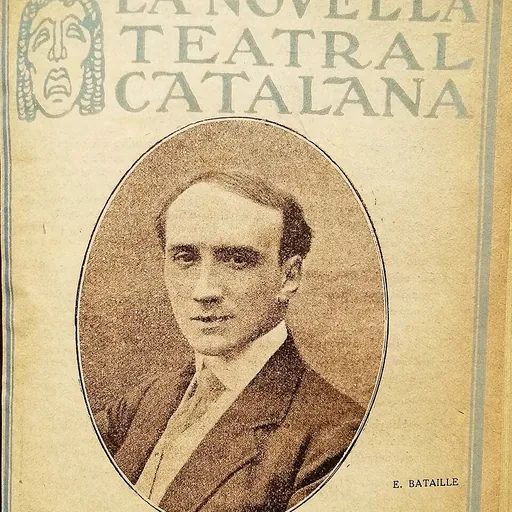
About Henry Bataille
Lived 1872 – 1922 (aged 49). Henry Bataille was a French poet, playwright, writer and printmaker.
Félix-Henri "Henry" Bataille (; 1872–1922) was a French poet, playwright. engraver and lithographer, popular during the early 20th century.
Biography Bataille's parents died when he was young. He attended the École des Beaux-Arts and Académie Julian to study painting, but started writing when he was 14. Henry wrote plays and poems, but after the success of his second play, La Lépreuse, he became a playwright exclusively. Bataille's early works explored the effects of passion on human motivation and how stifling the social conventions of the times could be. For example, Maman Colibri, is about a middle-aged woman's affair with a younger man. Later, Bataille would gravitate towards the theatre of ideas and social drama.
Bataille was also a theorist of subconscious motivation. While he did not use his theories in most of his own works, he influenced later playwrights such as Jean-Jacques Bernard and the "school of silence".
Works La Belle au bois dormant, 1894 La Chambre blanche (poetry), 1895 La Lépreuse, 1896 L'Enchantement, 1900 Le Masque, 1902 Maman Colibri (Mother Colibri), 1904 La Marche nupitale, 1905 Poliche, 1906 La Femme nue, 1908 Le Scandale, 1909 La Vierge folle (The Foolish Virgin), 1910 L'Enfant de l'amour, 1911 Le Phalène, 1913 L'Amazone, 1916 La divine tragédie (poetry), 1917 L'Animateur, 1920 L'Homme à la rose, 1920 La Tendresse, 1921 La Possession, 1921 La Chair humaine (Human Flesh), 1922
Filmography The Naked Truth, directed by Carmine Gallone (Italy, 1914, based on the play La Femme nue) The Wedding March, directed by Carmine Gallone (Italy, 1915, based on the play La Marche nupitale) La falena, directed by Carmine Gallone (Italy, 1916, based on the play Le Phalène) L'Enfant de l'amour, directed by Emilio Ghione (Italy, 1916, based on the play L'Enfant de l'amour) Maman Colibri, directed by Alfredo De Antoni (Italy, 1918, based on the play Maman Colibri) Le Scandale, directed by Jacques de Baroncelli (France, 1918, based on the play Le Scandale) Incantesimo, directed by Ugo Gracci (Italy, 1919, based on the play L'Enchantement) La vergine folle, directed by Gennaro Righelli (Italy, 1920, based on the play La Vierge folle) La maschera, directed by Ivo Illuminati (Italy, 1921, based on the play Le Masque) The Nude Woman, directed by Roberto Roberti (Italy, 1922, based on the play La Femme nue) The Scandal, directed by Arthur Rooke (UK, 1923, based on the play Le Scandale) The Nude Woman, directed by Léonce Perret (France, 1926, based on the play La Femme nue) La Vierge folle, directed by Luitz-Morat (France, 1929, based on the play La Vierge folle) The Wedding March, directed by André Hugon (France, 1929, based on the play La Marche nupitale) La Possession, directed by Léonce Perret (France, 1929, based on the play La Possession) Der Narr seiner Liebe, directed by Olga Chekhova (Germany, 1929, based on the play Poliche) Maman Colibri, directed by Julien Duvivier (France, 1929, based on the play Maman Colibri) L'Enfant de l'amour, directed by Marcel L'Herbier (France, 1930, based on the play L'Enfant de l'amour) La Tendresse, directed by André Hugon (France, 1930, based on the play La Tendresse) Zärtlichkeit, directed by Richard Löwenbein (Germany, 1930, based on the play La Tendresse) The Nude Woman, directed by Jean-Paul Paulin (France, 1932, based on the play La Femme nue) Le Scandale, directed by Marcel L'Herbier (France, 1934, based on the play Le Scandale) Poliche, directed by Abel Gance (France, 1934, based on the play Poliche) The Private Life of Don Juan, directed by Alexander Korda (UK, 1934, based on the play L'Homme à la rose) La Marche nupitale, directed by Mario Bonnard (France, 1935, based on the play La Marche nupitale) The Wedding March, directed by Mario Bonnard (Italy, 1935, based on the play La Marche nupitale) Maman Colibri, directed by Jean Dréville (France, 1937, based on the play Maman Colibri) Second Youth, directed by Michał Waszyński (Poland, 1938, based on the play Maman Colibri) La Vierge folle, directed by Henri Diamant-Berger (France, 1938, based on the play La Vierge folle) Imprudencia, directed by Julián Soler (Mexico, 1944, based on the play Le Scandale) L'Enfant de l'amour, directed by Jean Stelli (France, 1944, based on the play L'Enfant de l'amour) La Femme nue, directed by André Berthomieu (France, 1949, based on the play La Femme nue)
Don’t just read it —
keep it.
Full-length biographies made to live with: read them, listen on the way to work, watch them tonight.
- E-book
- Audio
- Video
Instant download · yours to keep · every purchase keeps this site free
Important facts
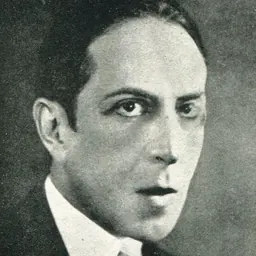
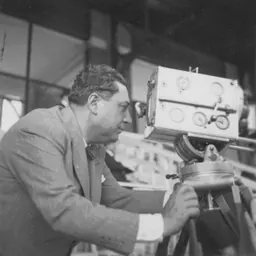
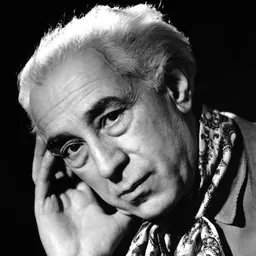
People in Henry Bataille's life
Named in this biography and alive at the same time



Related people
Same field, nearest in time
Contemporaries
People whose lives overlapped Henry Bataille's



Frequently asked questions
Who was Henry Bataille?
French writer, artist, printmaker (1872–1922)
When was Henry Bataille born?
Henry Bataille was born on 4 April 1872 in Nîmes.
When did Henry Bataille die?
Henry Bataille died on 2 March 1922 in Rueil-Malmaison.
What was Henry Bataille's occupation?
Henry Bataille was a poet, playwright, writer and printmaker.
What nationality was Henry Bataille?
Henry Bataille was French.
Sources & further reading
Cite this page
APA: Biography.guide. (2026). Henry Bataille. https://biography.guide/henry-bataille/
MLA: "Henry Bataille." Biography.guide, https://biography.guide/henry-bataille/.
Chicago: "Henry Bataille." Biography.guide. https://biography.guide/henry-bataille/.
Data last updated: 2026-09-20 · Spot an error? Report a correction.
Portrait: Wikimedia Commons · author & licence
Page generated 2026-09-27 04:58 UTC