
About Gabriel Slaughter
Lived 1767 – 1830 (aged 62). Gabriel Slaughter was an American politician and military personnel.
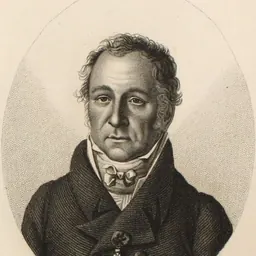
Gabriel Slaughter (December 12, 1767 – September 19, 1830) was the seventh governor of Kentucky and was the first person to ascend to that office upon the death of the sitting governor. His family moved to Kentucky from Virginia when he was very young. He became a member of the Kentucky militia, serving throughout his political career. He received a citation from the state legislature in recognition of his service at the Battle of New Orleans.
After spending a decade in the state legislature, Slaughter was elected the fourth lieutenant governor of Kentucky, serving under Charles Scott. With the War of 1812 looming at the end of his tenure, Slaughter ran for governor against Isaac Shelby, the state's first governor and a noted military leader. Shelby beat Slaughter soundly. Four years later, Slaughter was again elected as the sixth lieutenant governor, serving under George Madison.
Madison died a short time into his term, whereupon Slaughter became acting governor. He sought to be sworn in as governor, but public sentiment turned against him when he replaced Shelby's son-in-law with John Pope as Secretary of State. Pope was an unpopular figure in Kentucky and, after his appointment, some in the General Assembly began to call for a special election to replace Slaughter. The measure did not pass, but Slaughter was never able to shed the title of "acting governor." Following his term as governor, Slaughter became a Baptist lay minister and served on the first board of trustees of Georgetown College. He died September 19, 1830, and was buried in his family's cemetery.
Early life Gabriel Slaughter was born in Culpeper County in the Colony of Virginia on December 12, 1767, the son of Robert and Susannah (Harrison) Slaughter. He was educated in the county's public schools and worked as a farmer.
Slaughter's father visited Kentucky as early as 1776, and moved to Mercer County permanently in 1789. In September 1791, Gabriel Slaughter sold his land in Virginia, and he and his family followed his father to Kentucky. Among his guests was future lieutenant governor Robert B. McAfee. Soon after his arrival in Kentucky, however, his wife Sarah died, leaving Slaughter to care for his two daughters alone. On a return trip to Virginia in 1797, Slaughter married his second wife, Sara Hord. The couple returned to Slaughter's home in Mercer County, where they had three children: John Hord Slaughter, Frances Ann Hord Slaughter, and Felix Grundy Slaughter.
Slaughter was re-elected to the state House in 1800, and from 1801 to 1808 he served in the Kentucky Senate.
Slaughter was elected lieutenant governor in 1808. In a four-man race, Slaughter received more than three times the number of votes as his nearest opponent. His four-year term under Governor Charles Scott was largely undistinguished. Despite Shelby's immense popularity, Slaughter refused to withdraw from the race and was soundly beaten by more than a two-to-one margin.
When the Quartermaster general did not deliver promised supplies to Slaughter's regiment, private funds had to be used to purchase boats for their travel down the Mississippi River. They also ran short of weapons. Upon their arrival at New Orleans on January 4, 1815, General Jackson noted in his official report that "Not one man in ten was well armed, and only one man in three had any arms at all." The citizens of New Orleans provided enough firearms to equip the rest of Slaughter's men and another Kentucky battalion. Slaughter commanded 526 men. Despite being vastly outnumbered, Jackson's forces were victorious. Units from Kentucky and Tennessee, including Slaughter's regiment, bore the brunt of the British attack. Slaughter's troops were in reserve, behind the rest of Major General William Carroll's troops on the left wing Slaughter was later recognized by the state legislature for his service.
Following their service together, Jackson asked Slaughter to preside over a court martial. When the verdict was not satisfactory to Jackson, he ordered Slaughter to reconsider and reverse the decision. Slaughter declined, replying "I know my duty, and have performed it." George Madison was elected governor without opposition. Slaughter did replace Todd with former Senator John Pope, however, apparently as a political favor.
On January 27, 1817, a faction in the Kentucky House of Representatives led by Joseph Cabell Breckinridge proposed a bill calling for the election of "a governor to fill the vacancy occasioned by the death of" Governor Madison. The measure failed, but the legislative elections of 1817 showed a popular mandate for a special gubernatorial election. The Kentucky House passed a bill calling for such elections by a vote of 56–30, but the measure died in the state senate. Slaughter, an anti-relief partisan, vetoed the bill, but relief party legislators held a large majority in the General Assembly thanks to the previous fall's elections, and overrode the veto. These actions were a precursor to the Old Court-New Court controversy. While Slaughter clashed with the General Assembly over potential solutions to the crisis at the state level, he adopted a strong states' rights policy at the national level. During this term, he continued to support measures to improve education. He voted to ask Congress for aid for the Deaf and Dumb School in the state, and opposed redirecting fines and forfeitures earmarked for the state's "Seminaries of Learning" into the state treasury. He was also named to a joint committee to investigate the use of state appropriations to Transylvania University.
Concurrent with his political career, Slaughter took a leading role in the affairs of his church. He was born into the tradition of the Church of England, but soon became associated with the Baptist congregation at Shawnee Run. He served as a messenger from this congregation to the various associations with which it was connected for over thirty years. One such association was the South District Association; Slaughter served as clerk at that body's annual meeting in 1808 and 1809, and later served as its moderator for nine years. In 1813, he helped found the Kentucky Bible Society.
Following his term in the state House, Slaughter retired from politics and became an active lay minister of the Baptist faith. In 1829, he was appointed to the first board of trustees of Georgetown College, a Baptist college in Georgetown, Kentucky. He died on September 19, 1830, and was interred in his family's cemetery in Mercer County.
Don’t just read it —
keep it.
Full-length biographies made to live with: read them, listen on the way to work, watch them tonight.
- E-book
- Audio
- Video
Instant download · yours to keep · every purchase keeps this site free
Important facts
People in Gabriel Slaughter's life
Named in this biography and alive at the same time
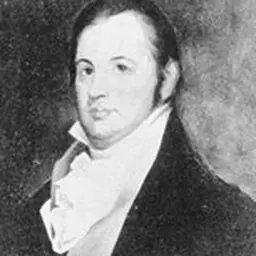

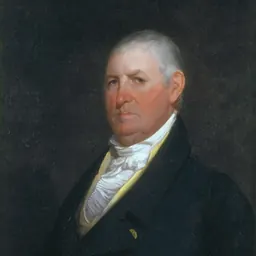
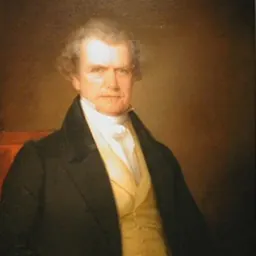

Related people
Same field, nearest in time


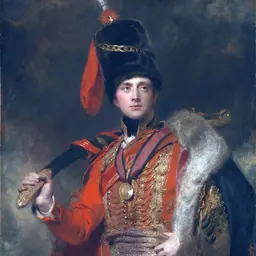

Contemporaries
People whose lives overlapped Gabriel Slaughter's





Frequently asked questions
Who was Gabriel Slaughter?
American politician (1767-1830)
When was Gabriel Slaughter born?
Gabriel Slaughter was born on 12 December 1767 in Culpeper County.
When did Gabriel Slaughter die?
Gabriel Slaughter died on 19 September 1830 in Mercer County.
What was Gabriel Slaughter's occupation?
Gabriel Slaughter was a politician and military personnel.
What nationality was Gabriel Slaughter?
Gabriel Slaughter was American.
Sources & further reading
· Wikipedia: Gabriel Slaughter
Cite this page
APA: Biography.guide. (2026). Gabriel Slaughter. https://biography.guide/gabriel-slaughter/
MLA: "Gabriel Slaughter." Biography.guide, https://biography.guide/gabriel-slaughter/.
Chicago: "Gabriel Slaughter." Biography.guide. https://biography.guide/gabriel-slaughter/.
Data last updated: 2026-09-20 · Spot an error? Report a correction.
Page generated 2026-09-27 05:22 UTC