
Gabriel Jean Joseph Molitor
Marshal of France
About Gabriel Jean Joseph Molitor
Lived 1770 – 1849 (aged 79). Gabriel Jean Joseph Molitor was a French politician, military officer, military personnel, governor (Les Invalides and france).
Gabriel-Jean-Joseph Molitor ( , ; 7 March 1770 – 28 July 1849) was a Marshal of France, known for his experience during the Coalition Wars.
Molitor defeated Franjo Jelačić during the encounter at Mollis in 1799. Together with Honoré Gazan, he then managed to stop Alexander Suvorov's vanguard, commanded by Pyotr Bagration, at the combat of Näfels as part of the larger Battle of Glarus (1799). He also forced Dmitry Senyavin to lift the siege of Ragusa (1806). In the course of the "Hundred Thousand Sons of Saint Louis", the French Royal intervention in the Spanish Royalist War, he commanded the initial siege of Pamplona (1823), ultimately successful.
Biography He was born in Hayingen in Lorraine. Upon the outbreak of the French Revolution, Molitor joined the French revolutionary armies as a captain in a battalion of militia. In 1793 he was given command of a brigade and served under Hoche under whom he fought at Kaiserslautern and Wissembourg. In 1795, Molitor was severely wounded in the Battle of Mainz. In 1799, Molitor was sent to Switzerland where he fought under André Masséna against an Austro-Russian force led by Alexander Suvorov, particularly at the Klöntal, Näfels, and Schwanden. In 1800, he fought in the Army of the Rhine under Moreau.
Molitor was promoted to the rank of général de division in 1801. He was sent with Massena to Italy in 1805, where he served at Vago and Caldiero. In 1806 he took part in the relief of Republic of Ragusa. In 1807, Molitor was transferred to the German theatre of operations, where he served against the Swedes around Stralsund. He was then made governor of Pommern and was granted a comital title by Napoleon. In 1809 he was given command of a division in Massena's IV Corps and he saw action in the battles of Aspern and Wagram. In 1810 he was sent to occupy the cities of the Hanseatic League, from 1811 to 1813 he served in Holland, in the campaign of 1814 he served under MacDonald.
After the abdication of Napoleon, Molitor made his submission to the Bourbons who made him Inspector-General of the infantry. Upon the return of the emperor from Elba, Molitor joined him during the Hundred Days, for which he was stripped of his functions after Napoleon's defeat. In 1818, Molitor was restored to grace.
In 1823 he commanded the II Corps which was sent to Spain as part of the Hundred Thousand Sons of Saint Louis taking part in the initial stages of the Siege of Pamplona. The same year he was made a Marshal of France as well as a Peer. From 1827, he served as secretary to the Chamber of Peers. After the July Revolution, Molitor was allowed to keep all his functions and he later served as Governor of Les Invalides and as Grand Chancellor of the Legion d'Honneur. He died in 1849 in Paris. A statue of Molitor was later erected in Nancy.
Stradivarius The 1697 Molitor Stradivarius, rumored to have once been owned by Napoleon Bonaparte, belonged to Molitor beginning in 1804. It was sold by Tarisio Auctions in October 2010 for a world record $3.6M.
Don’t just read it —
keep it.
Full-length biographies made to live with: read them, listen on the way to work, watch them tonight.
- E-book
- Audio
- Video
Instant download · yours to keep · every purchase keeps this site free
Important facts
People in Gabriel Jean Joseph Molitor's life
Named in this biography and alive at the same time
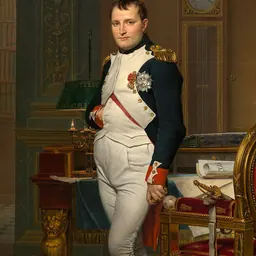
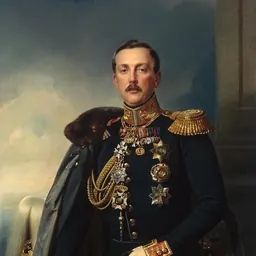
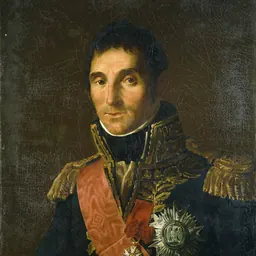


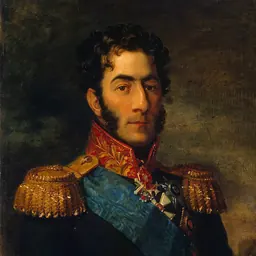
Related people
Same field, nearest in time



Contemporaries
People whose lives overlapped Gabriel Jean Joseph Molitor's




Frequently asked questions
Who was Gabriel Jean Joseph Molitor?
Marshal of France (1770-1849)
When was Gabriel Jean Joseph Molitor born?
Gabriel Jean Joseph Molitor was born on 7 March 1770 in Hayange.
When did Gabriel Jean Joseph Molitor die?
Gabriel Jean Joseph Molitor died on 28 July 1849 in Paris.
What was Gabriel Jean Joseph Molitor's occupation?
Gabriel Jean Joseph Molitor was a politician, military officer, military personnel, governor (Les Invalides and france).
What nationality was Gabriel Jean Joseph Molitor?
Gabriel Jean Joseph Molitor was French.
Sources & further reading
· Wikipedia: Gabriel Jean Joseph Molitor
· DBpedia: Gabriel Jean Joseph Molitor
Cite this page
APA: Biography.guide. (2026). Gabriel Jean Joseph Molitor. https://biography.guide/gabriel-jean-joseph-molitor/
MLA: "Gabriel Jean Joseph Molitor." Biography.guide, https://biography.guide/gabriel-jean-joseph-molitor/.
Chicago: "Gabriel Jean Joseph Molitor." Biography.guide. https://biography.guide/gabriel-jean-joseph-molitor/.
Data last updated: 2026-09-20 · Spot an error? Report a correction.
Page generated 2026-09-27 05:34 UTC