
About Gábor A. Somorjai
Lived 1935 – 2025 (aged 90). Gábor A. Somorjai was an American and Hungarian chemist and university teacher.
Gabor A. Somorjai (May 4, 1935 – July 7, 2025) was a Hungarian-born American professor of chemistry at the University of California, Berkeley, and was a leading researcher in the field of surface chemistry and catalysis, especially the catalytic effects of metal surfaces on gas-phase reactions ("heterogeneous catalysis"). For his contributions to the field, Somorjai won the Wolf Prize in Chemistry in 1998, the Linus Pauling Award in 2000, the National Medal of Science in 2002, the Priestley Medal in 2008, the 2010 BBVA Foundation Frontiers of Knowledge Award in Basic Science and the NAS Award in Chemical Sciences in 2013. In April 2015, Somorjai was awarded the American Chemical Society's William H. Nichols Medal.
Early life Somorjai was born in Budapest in 1935 to Jewish parents. He was saved from the Nazis when his mother sought the assistance of Raoul Wallenberg in 1944 who issued Swedish passports to Somorjai's mother, himself and his sister saving them from the Nazi death camps. While Somorjai's father ended up in the camp system, he was fortunate to survive but many of Somorjai's extended family were killed in the concentration camps.
He was studying chemical engineering at the Budapest University of Technology and Economics in 1956. As a participant in the 1956 Hungarian Revolution, Somorjai left Hungary to go to the US after the Soviet invasion. Along with other Hungarian immigrants, Somorjai enrolled in graduate study at Berkeley and obtained his doctorate in 1960. He joined IBM's Thomas J. Watson Research Center staff in Yorktown Heights, New York for a few years but returned to Berkeley as an assistant professor in 1964.
Chemical research
The introduction of new technology such as low-energy electron diffraction revolutionised the study of surfaces in the 1950s and 1960s. However, early studies were limited to surfaces such as silicon, important for its electrical properties. In contrast, Somorjai was interested in surfaces such as platinum known for its chemical properties.
Somorjai discovered that the defects on surfaces are where catalytic reactions take place. When these defects break, new bonds are formed between atoms leading to complex organic compounds such as naphtha to be converted into gasoline as an example. These findings led to greater understanding of subjects such as adhesion, lubrication, friction and adsorption. His research also has important implications such as nanotechnology.
In the 1990s, Somorjai started working with physicist Y. R. Shen on developing a technique known as Sum Frequency Generation Spectroscopy to study surface reactions without the need for a vacuum chamber. He is also studying surface reactions in nanotechnology at the atomic and molecular level using atomic force microscopy and scanning tunnelling microscopy, both of which can be used without vacuum.
Somorjai's expertise in surfaces was used as a consultant to the 2002 Winter Olympics where he gave advice on how to make ice-skating surfaces as fast as possible. Somorjai's research had shed new light on ice, demonstrating that skaters skated on a top layer of rapidly vibrating molecules, rather than on a layer of liquid water on top of the ice acting as a lubricant, which had previously been the generally accepted explanation for the slipperiness of ice.
During his career, Somorjai published more than one thousand papers and three textbooks on surface chemistry and heterogeneous catalysis. He was the most-often cited person in the fields of surface chemistry and catalysis.
Death Somorjai died on July 7, 2025, at age 90.
Honors and awards Somorjai was elected to the National Academy of Sciences in 1979 and the American Academy of Arts and Sciences in 1983. He was awarded the Wolf Foundation Prize in Chemistry in 1998 for his contribution to chemistry, sharing the honor with Professor Gerhard Ertl of the Fritz-Haber Institute in Berlin. Somorjai was awarded the National Medal of Science for his contribution as a chemist in 2002. The American Chemical Society also awarded him the Peter Debye Award in Physical Chemistry and the Adamson Award in Surface Chemistry. In 2002, he was awarded the status of University Professor across the University of California network, an honor he shares with two dozen other academics. In 2004, he won the F.A. Cotton Medal for Excellence in Chemical Research of the American Chemical Society. In 2008, he received the Priestley Medal, the highest award of the American Chemical Society, for his "extraordinarily creative and original contributions to surface science and catalysis". In 2009, Somorjai was recipient of the Reed M. Izatt and James J. Christensen Lectureship. In 2013, Somorjai was awarded the National Academy of Sciences NAS Award in Chemical Sciences. In April 2015, Somorjai was awarded the American Chemical Society's William H. Nichols Medal.
Previous recipients have been:
1999 – Sir John Meurig Thomas 2000 – Gabor A. Somorjai 2001 – Alexis T. Bell 2002 – Jack H. Lunsford 2003 – Robert H. Grubbs 2004 – Bruce C. Gates 2005 – D. Wayne Goodman 2006 – James A. Dumesic 2007 – Hans-Joachim Freund 2008 – Avelino Corma Canos 2009 – Jens K. Nørskov 2010 – Robert J. Madix 2011 – Harold H. Kung 2012 – Enrique Iglesia 2013 – Tobin J. Marks 2014 – Mark E. Davis 2015 – Maurice Brookhart 2016 – Donna G. Blackmond 2017 – John E. Bercaw 2018 – David W. C. MacMillan 2019 – Manos Mavrikakis 2020 – David Milstein 2021 – Paul J. Chirik 2022 – Jin-Quan Yu 2023 – Suljo Linic 2024 – Charles T. Campbell 2025 – Gregory C. Fu 2026 – Scott Miller
The Gabor A. and Judith K. Somorjai Visiting Miller Professorship Award Established in 2011, the Gabor A. and Judith K. Somorjai Visiting Miller Professorship Award is one of the programs of the Miller Institute for Basic Research in Science at the University of California Berkeley. The Somorjais' wishes in the establishment of this award is to support visiting scientists in the broad field of chemical sciences for a one-month term in the Miller Institute. The first award was granted in 2013 to Angelos Michaelides.
Recipients include :
2013 – Fall: Angelos Michaelides 2015 – Fall: Christophe Coperet 2016 – Spring: Sarah Keller 2017 – Spring: Chuan He 2017 – Fall: Edward Sargent 2017 – Fall: Shana Kelley 2018 – Fall: Bernd Abel 2019 – Fall: Jennifer Schomaker 2021 – Spring: Roland Wester 2021–2022: Yi Cui 2023 – Fall: Alec Wodtke 2024 – Fall: Marina Filip 2026 – Spring: Liviu Mirica
Don’t just read it —
keep it.
Full-length biographies made to live with: read them, listen on the way to work, watch them tonight.
- E-book
- Audio
- Video
Instant download · yours to keep · every purchase keeps this site free
Important facts
People in Gábor A. Somorjai's life
Named in this biography and alive at the same time

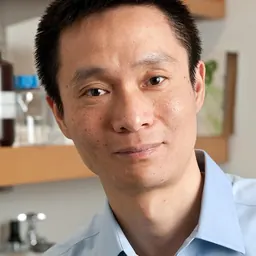

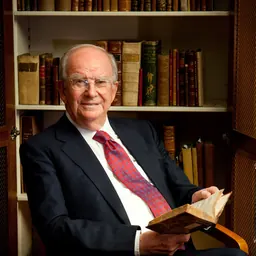




Related people
Same field, nearest in time


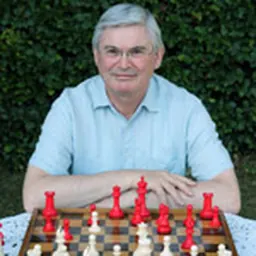
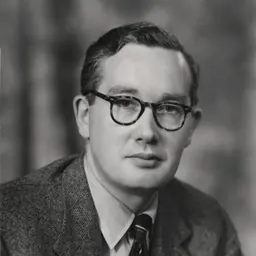
Contemporaries
People whose lives overlapped Gábor A. Somorjai's

Frequently asked questions
Who was Gábor A. Somorjai?
American chemist
When was Gábor A. Somorjai born?
Gábor A. Somorjai was born on 4 May 1935 in Budapest.
When did Gábor A. Somorjai die?
Gábor A. Somorjai died on 7 July 2025 in Palo Alto.
What was Gábor A. Somorjai's occupation?
Gábor A. Somorjai was a chemist and university teacher.
What nationality was Gábor A. Somorjai?
Gábor A. Somorjai was American and Hungarian.
Sources & further reading
· Wikipedia: Gábor A. Somorjai
Cite this page
APA: Biography.guide. (2026). Gábor A. Somorjai. https://biography.guide/gabor-a-somorjai/
MLA: "Gábor A. Somorjai." Biography.guide, https://biography.guide/gabor-a-somorjai/.
Chicago: "Gábor A. Somorjai." Biography.guide. https://biography.guide/gabor-a-somorjai/.
Data last updated: 2026-09-20 · Spot an error? Report a correction.
Page generated 2026-09-27 05:28 UTC