
About Gerhard Ertl
Born 1936. Gerhard Ertl is a German physicist, chemist and university teacher, known for Surface chemistry.
Gerhard Ertl (; born 10 October 1936) is a German physicist and a Professor emeritus at the Department of Physical Chemistry, Fritz-Haber-Institut der Max-Planck-Gesellschaft in Berlin, Germany. Ertl's research laid the foundation of modern surface chemistry, which has helped explain how fuel cells produce energy without pollution, how catalytic converters clean up car exhausts and even why iron rusts, the Royal Swedish Academy of Sciences said.
His work has paved the way for development of cleaner energy sources and will guide the development of fuel cells, said Astrid Graslund, secretary of the Nobel Committee for Chemistry.
He was awarded the 2007 Nobel Prize in Chemistry for his studies of chemical processes on solid surfaces. The Nobel academy said Ertl provided a detailed description of how chemical reactions take place on surfaces. His findings applied in both academic studies and industrial development, the academy said. “Surface chemistry can even explain the destruction of the ozone layer, as vital steps in the reaction actually take place on the surfaces of small crystals of ice in the stratosphere,” the award citation reads.
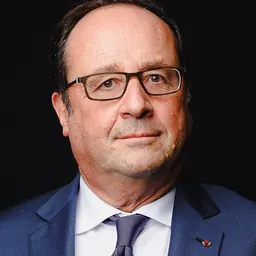
In 2015, Ertl signed the Mainau Declaration 2015 on Climate Change on the final day of the 65th Lindau Nobel Laureate Meeting. The declaration was signed by a total of 76 Nobel Laureates and handed to then-President of the French Republic, François Hollande, as part of the COP21 climate summit in Paris.
Biography Ertl was born in Stuttgart, Germany, where he studied physics from 1955 to 1957 at the Technische Hochschule Stuttgart and then at the University of Paris (1957–1958) and LMU Munich (1958–1959). He completed his Diplom in Physics at the Technische Hochschule Stuttgart in 1961, followed his thesis advisor Heinz Gerischer from the Max Planck Institute for Metals Research in Stuttgart to Munich and received his PhD degree from the Technische Hochschule München in 1965.
Academic career After completing his PhD, he became an assistant and lecturer at Technische Hochschule München (1965–1968). From 1968 to 1973, he was professor and director at Technische Hochschule Hannover; then, he became a professor at Institute for Physical Chemistry, LMU Munich (1973–1986). In 1986, as honors, he was named "Honorary Professor" at the Free University of Berlin and at the Technische Universität Berlin, and in 1996 at the Humboldt University of Berlin.
Research Gerhard Ertl is known for determining the detailed molecular mechanisms of the catalytic synthesis of ammonia over iron (Haber Bosch process) and the catalytic oxidation of carbon monoxide over platinum (catalytic converter). During his research he discovered the important phenomenon of oscillatory reactions on platinum surfaces and, using photoelectron microscopy, was able to image for the first time, the oscillating changes in surface structure and coverage that occur during reaction.
He always used new observation techniques like low-energy electron diffraction (LEED) at the beginning of his career, later ultraviolet photoelectron spectroscopy (UPS) and scanning tunneling microscope (STM) yielding ground breaking results. He won the Wolf Prize in Chemistry in 1998 along with Gabor A. Somorjai of the University of California, Berkeley for "their outstanding contributions to the field of the surface science in general and for their elucidation of fundamental mechanisms of heterogeneous catalytic reactions at single crystal surface in particular."
Gerhard Ertl was awarded the 2007 Nobel Prize in Chemistry for his studies of chemical processes on solid surfaces. The award, worth SEK 10 million (US$1.7 million, £1.15 million), was announced on Ertl's 71st birthday. "I am speechless", Ertl told Associated Press from his office in Berlin. "I was not counting on this."
, Ertl has an h-index of 124 according to Scopus.
Personal life Ertl and his wife Barbara have two children and several grandchildren. His hobbies include playing the piano and also playing with his cats when he is not doing experiments. He identifies as Christian.
Publications e-book: ISBN 978-3-86225-558-0
Ertl is one of the editors of the Handbook of Heterogeneous Catalysis.
Ertl is the co-editor of Engineering Of Chemical Complexity. 2013, World Scientific Publishing.
Don’t just read it —
keep it.
Full-length biographies made to live with: read them, listen on the way to work, watch them tonight.
- E-book
- Audio
- Video
Instant download · yours to keep · every purchase keeps this site free
Important facts
more
G Ertl, Ertl, Ertl G, Ertl G., Ertl G. L., Ertl GLPeople in Gerhard Ertl's life
Named in this biography and alive at the same time




Related people
Same field, nearest in time


Contemporaries
People whose lives overlapped Gerhard Ertl's






Frequently asked questions
Who is Gerhard Ertl?
German physicist
When was Gerhard Ertl born?
Gerhard Ertl was born on 10 October 1936 in Stuttgart.
What is Gerhard Ertl's occupation?
Gerhard Ertl is a physicist, chemist and university teacher.
What is Gerhard Ertl known for?
Gerhard Ertl is known for Surface chemistry.
What nationality is Gerhard Ertl?
Gerhard Ertl is German.
Sources & further reading
Cite this page
APA: Biography.guide. (2026). Gerhard Ertl. https://biography.guide/gerhard-ertl/
MLA: "Gerhard Ertl." Biography.guide, https://biography.guide/gerhard-ertl/.
Chicago: "Gerhard Ertl." Biography.guide. https://biography.guide/gerhard-ertl/.
Data last updated: 2026-09-20 · Spot an error? Report a correction.
Page generated 2026-09-27 05:22 UTC