
About G. Robert Blakey
Lived 1936 – 2026 (aged 90). G. Robert Blakey was an American lawyer, known for Racketeer Influenced and Corrupt Organizations Act.
George Robert Blakey (January 7, 1936 – May 1, 2026) was an American attorney and law professor. He was best known for his work in connection with drafting the Racketeer Influenced and Corrupt Organizations Act and for scholarship on that subject.
Background Blakey, an American Catholic of Irish descent, was born in Burlington, North Carolina. He graduated from the University of Notre Dame in 1957, earning a degree in philosophy with honors, and was elected to Phi Beta Kappa. He then attended Notre Dame Law School, where he was an associate editor of the Notre Dame Law Review and was awarded a J.D. in 1960.
RICO and other legislation Under the close supervision of Senator John Little McClellan, the Chairman of the committee for which he worked, Blakey drafted the "RICO Act," Title IX of the Organized Crime Control Act of 1970, signed into law by Richard M. Nixon, who gifted Blakey the pen with which he signed it. While in law school, Blakey edited a student note on the unsuccessful prosecution of attendees at the Apalachin Meeting, which first sparked his interest in organized crime; he also wrote a note that analyzed civil liberties in the union movement. In 1960, after law school, Blakey joined the United States Department of Justice under its Honor Program, and he became a Special Attorney in the Organized Crime and Racketeering Section of the Criminal Division of the department. After Robert F. Kennedy became Attorney General, the department began a major effort to bring criminal prosecutions against organized crime members, corrupt political figures, and faithless union officials. The Section assigned Blakey to the effort. He remained at Justice until 1964, leaving the summer after the November 1963 assassination of John F. Kennedy.
Assassinations committee Blakey was a Notre Dame law professor from 1964 to 1969, when he returned to Washington as Chief Counsel of Subcommittee on Criminal Laws and Procedures of the Senate Judiciary Committee. John Little McClellan was the Chairman of the Subcommittee. Blakey credits the success of his drafting work to the dedication to needs of law enforcement, the understanding of the drafting and the processing of legislation and basic sense of fairness of McClellan as well as the extraordinary confidence other members of the Senate placed in McClellan. Only he could have seen to the successful completion of Blakey's handiwork so if Blakey was its draftsman, McClellan was its architect and master builder.
During 1967, he was a Consultant on organized crime to the President's Commission on Law Enforcement and the Administration of Justice (also known as the Katzenbach Commission); Lyndon B. Johnson created the commission to examine crime in America. It recommended, among other measures, new racketeering and wiretapping legislation.
Blakey was Chief Counsel and Staff Director to the U.S. House Select Committee on Assassinations from 1977 to 1979, which investigated the assassinations of John F. Kennedy and Martin Luther King Jr. under the direction of Louis Stokes. Blakey also helped Stokes draft the President John F. Kennedy Assassination Records Collection Act of 1992. He and Richard Billings, the editor of the final report of the committee, would later write two books about the assassination.
In 1981 he published the book The Plot to Kill the President, co-authored with Richard N. Billings, wherein they argued that the mafia assassinated President Kennedy. In September 1981 Blakey was featured on William F. Buckley's Firing Line to discuss the Warren Report. In 1992 a revised edition of the book he co-wrote with Billings was released, retitled Fatal Hour: The Assassination of President Kennedy by Organized Crime. He made an appearance in the 1988 Jack Anderson documentary American Expose: Who Killed JFK?. Later he was interviewed for the 1993 documentary Who Was Lee Harvey Oswald? produced by PBS's Frontline. He attended the Assassination Records Review Board's "Review Board Experts' Conference" in May 1995.
Supreme Court appearances In Blakey's first appearance before the United States Supreme Court, he filed a brief on behalf of the Attorneys General of Massachusetts and Oregon and the National District Attorneys Association in the case of Berger v. New York (1967), which dealt with wiretapping. He argued on behalf of the Securities Investor Protection Corporation in what became Holmes v. SIPC (1992); he argued on behalf of anti-abortion activist Joseph Scheidler in what became Scheidler v. National Organization for Women (2006), and he argued on behalf of the beneficiaries of insurance policies in what became Humana, Inc. v. Forsyth (1999).
Teaching Blakey served as a law professor at Notre Dame Law School from 1964 to 1969. From 1973 to 1980, he served as a law professor at Cornell Law School, and was director of the Cornell Institute on Organized Crime. In 1980, Blakey returned to teaching law at Notre Dame, and in 1985 was named the William J. and Dorothy K. O'Neill Professor of Law there.
Whistleblowing and Bar Discipline In fall 2007, Blakey contacted New York Times reporter David Cay Johnston regarding allegations of fraud involving General Electric made by a former student, Adriana Koeck. While the Times declined to publish Johnston's article, he received permission from the Times to publish elsewhere, and the story was published on June 30, 2008, in Tax Notes International. The article outlined allegations against the company's Lighting subsidiary in Brazil of tax fraud through Value-Added Tax (VAT) evasion of potentially up to $19 million.
In October 2015, Blakey was issued an Informal Admonition, the lowest form of discipline possible, by the D.C. Office of Bar Counsel as a result of charges made against him for disclosing confidential documents of the General Electric company to Johnston. In addition to Johnston, these documents were shared by Blakey and Koeck with the United States Department of Justice, federal prosecutors in Brazil, the United States Securities and Exchange Commission. Whistleblower lawyers have drawn parallels between this case and that of Thomas Tamm, a former attorney for the Department of Justice who was charged with calling a reporter from a pay phone to publicize the federal government's program of illegal wiretapping.
The repercussions of the actions of Blakey extend far beyond the initial disclosure. Blakey's work influenced Brazilian Act 12.850 which empowered Brazilian law enforcement to investigate criminal organizations in the country. In his 2018 Notre Dame commencement address, Brazilian Judge Sérgio Moro accentuated the global resonance of Blakey's contributions, highlighting Blakey's influence in prosecuting organized crime and corruption, and shaping Moro's own efforts in leading Operation Car Wash in 2015. Blakey's influence on Brazilian anti-corruption efforts through his RICO legislation have resulted in the implication of former Presidents, cabinet officials, and dozens of members of congress.
Later life and death Blakey retired in 2012. He died at the home of his son in Oak Park, Illinois, where he had resided for several years, on May 1, 2026, at the age of 90.
Selected publications
Don’t just read it —
keep it.
Full-length biographies made to live with: read them, listen on the way to work, watch them tonight.
- E-book
- Audio
- Video
Instant download · yours to keep · every purchase keeps this site free
Important facts
People in G. Robert Blakey's life
Named in this biography and alive at the same time


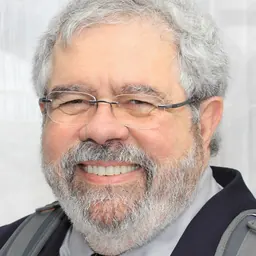
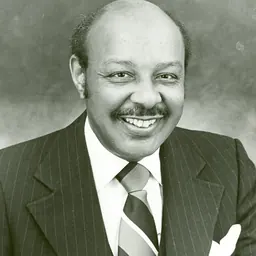
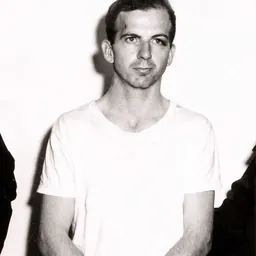

Related people
Same field, nearest in time


Contemporaries
People whose lives overlapped G. Robert Blakey's






Frequently asked questions
Who was G. Robert Blakey?
American attorney and law professor
When was G. Robert Blakey born?
G. Robert Blakey was born on 7 January 1936 in Burlington.
When did G. Robert Blakey die?
G. Robert Blakey died on 1 May 2026.
What was G. Robert Blakey's occupation?
G. Robert Blakey was a lawyer.
What was G. Robert Blakey known for?
G. Robert Blakey was known for Racketeer Influenced and Corrupt Organizations Act.
What nationality was G. Robert Blakey?
G. Robert Blakey was American.
Sources & further reading
Cite this page
APA: Biography.guide. (2026). G. Robert Blakey. https://biography.guide/g-robert-blakey/
MLA: "G. Robert Blakey." Biography.guide, https://biography.guide/g-robert-blakey/.
Chicago: "G. Robert Blakey." Biography.guide. https://biography.guide/g-robert-blakey/.
Data last updated: 2026-09-25 · Spot an error? Report a correction.
Page generated 2026-09-27 05:12 UTC