
Fulton J. Sheen
American catholic bishop and television presenter
About Fulton J. Sheen
Lived 1895 – 1979 (aged 84). Fulton J. Sheen was an American television presenter, radio personality, essayist, writer, catholic priest and catholic bishop.
Early life Fulton Sheen was born on May 8, 1895, in El Paso, Illinois, the oldest of four sons of Newton and Delia Sheen. His parents were of Irish descent, and their own parents were from Croghan, County Roscommon, Connacht. He was baptized as "Peter John" and called "P.J." as a boy. However he came to prefer the name "Fulton", his mother's maiden name.
After the family had moved to nearby Peoria, Illinois, Sheen's first role in the Catholic Church was as an altar boy at Cathedral of Saint Mary of the Immaculate Conception in Peoria. His youthful appearance was still evident on one occasion when a local priest, unaware of his identity, asked Sheen to assist as altar boy during the celebration of the Mass. His doctoral thesis was titled "The Spirit of Contemporary Philosophy and the Finite God". At Leuven, he became the first American to win the Cardinal Mercier Prize for the best philosophical treatise.
Priestly life After Sheen returned to Peoria in 1926, Bishop Dunne assigned him as curate at St. Patrick's, a poor parish in Peoria. At that time, both Columbia University in New York and Oxford University in England wanted Sheen to teach philosophy. However, Sheen took the assignment at St. Patrick's without any complaints and later said that he enjoyed his time there. Nine months later, Dunne summoned Sheen to his office. Dunne told him:I promised you to Catholic University over a year ago. They told me that with all your traipsing around Europe, you'd be so high hat you couldn't take orders. But Father Cullen says you've been a good boy at St. Patrick's. So run along to Washington. However, instead of Catholic University of America, Sheen chose to teach theology at St. Edmund's College in Ware, England, where he met Reverend Ronald Knox. He also assisted the pastor at St. Patrick's Parish in the Soho section of London. In 1928, Sheen finally returned to Catholic University of America, where he would teach philosophy until 1950.
In 1950, Sheen became the national director of the Society for the Propagation of the Faith. During his 16 years as director, Sheen raised millions of dollars for missionary efforts worldwide. He also donated $10 million that he earned from his later television programs. On Ash Wednesday in 1967, Sheen decided to give St. Bridget's Parish building to the federal Housing and Urban Development program. Sheen wanted to let the government use it for black Americans. There was a protest since Sheen acted on his own accord. The pastor disagreed by saying, "There is enough empty property around without taking down the church and the school." The deal fell through.
On October 6, 1969, Sheen resigned as bishop of Rochester. He often commended the Protestant devotion to Bible study:"The first subject of all to be studied is Scripture, and this demands not only the reading of it but the study of commentaries. ... Protestant commentaries, I discovered, were also particularly interesting because Protestants have spent more time on Scripture than most of us." Sheen's autobiography summarized his ecumenical outlook: "The combination of travel, the study of world religions and personal encounter with different nationalities and peoples made me see that the fullness of truth is like a complete circle of 360 degrees. Every religion in the world has a segment of that truth." During one broadcast, Sheen termed World War II as not just a political struggle but also a "theological one". He referred to German Chancellor Adolf Hitler as an example of the "Anti-Christ". Time Magazine referred to Sheen in 1946 as "the golden-voiced Msgr. Fulton J. Sheen, U.S. Catholicism's famed proselytizer", and reported that his radio broadcast received 3,000 to 6,000 letters weekly from listeners. By 1950, The Catholic Hour had a weekly audience of four million listeners.
Television
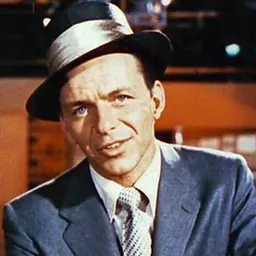
At the Catholic University of America, Sheen in 1940 provided voice-over commentary for an Easter Sunday Mass. Broadcast on the experimental station W2XBS, it was one of the first televised religious services in the United States. During the sermon, Sheen remarked, "This is the first religious television in the history of the world. Let, therefore, its first message be a tribute of thanks to God for giving the minds of our day the inspiration to unravel the secrets of the universe." On February 12, 1952, Sheen began a weekly television program on the DuMont Television Network called Life Is Worth Living. Filmed at the Adelphi Theatre in New York City, the program consisted of Sheen speaking extemporaneously before a live audience. The show did not have a script or cue cards, although Sheen occasionally used a chalkboard. He was not paid for the program. Life is Worth Living was scheduled in a prime time slot on Tuesday nights at 8:00 p.m. Its competition was the Texaco Star Theater on NBC, a variety show starring comedian Milton Berle and the Frank Sinatra Show, another variety program on CBS.
Defying all expectations, Life is Worth Living became very popular. The Frank Sinatra Show was canceled in April 1952, leading to speculation that it was due to the success of Sheen's show.
In 1952, Sheen won an Emmy Award for Most Outstanding personality. In accepting his Emmy, Sheen, "I feel it is time I pay tribute to my four writers – Matthew, Mark, Luke and John." At that time, Berle quipped, "We both work for 'Sky Chief, a reference to God and Berle's sponsor, Texaco. Time called Sheen "the first 'televangelist and the Archdiocese of New York could not meet the demand for tickets. Sheen received a second Emmy nomination in 1953.
Sheen was often quick to rebuke what he considered wrongful conduct. For example, in his televised sermon "False Compassion", he shouted: "There are sob sisters; there are the social slobberers who insist on compassion being shown to the muggers, to the dope fiends, to the throat slashers, to the beatniks, to the prostitutes, to the homosexuals, to the punks, so that today the decent man is practically off the reservation." Sheen then told his viewers to "hate the sin ... and love the sinner."
Life Is Worth Living ran until 1957, drawing as many as 30 million people weekly, mostly non-Catholics. He received his third Emmy nomination in 1957.
Sheen returned to television in 1961 with a nationally syndicated series, The Fulton Sheen Program. Running until 1968, it was broadcast first in black-and-white and later in color. The format of the series was essentially the same as Life Is Worth Living.
International cassette tape ministry In September 1974, Auxiliary Bishop Thomas William Lyons of Washington asked Sheen to speak at a retreat for diocesan priests at the Loyola Retreat House in Faulkner, Maryland. Sheen's talks were recorded on reel-to-reel tape.
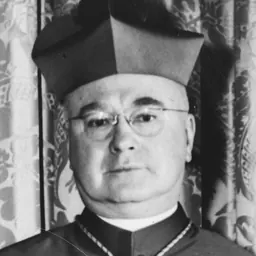
Sheen requested the recorded talks be produced for distribution. This was the first production of a worldwide cassette tape ministry called Ministr-O-Media, a nonprofit company that operated on the grounds of St. Joseph's Parish in Pomfret, Maryland. The retreat album was Renewal and Reconciliation and included nine 60-minute audiotapes. Each conversion process took an average of 25 hours of lessons, and reportedly more than 95% of his students in private instruction were baptized. Arroyo wrote that "It is widely believed that Cardinal Francis Spellman drove Sheen off the air."
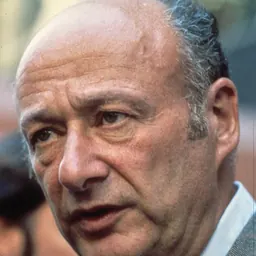
Death and legacy Beginning in 1977, Sheen "underwent a series of surgeries that sapped his strength and even made preaching difficult". Joseph Campanella introduced the reruns of Sheen's various programs that are aired on EWTN. Reruns are also aired on the Trinity Broadcasting Network. The Fulton J. Sheen Museum in Peoria houses the largest set of Sheen's personal items in five collections. It is operated by the Diocese of Peoria. The Archbishop Fulton John Sheen Spiritual Center is located in El Paso, Illinois. The museum contains more Sheen artifacts. The Sheen Center for Thought & Culture in Lower Manhattan is named after him. The actor Ramón Gerard Antonio Estévez adopted the stage name of Martin Sheen partly in admiration of the bishop. Sheen frequently celebrated Mass at Saint Agnes Church, in Midtown Manhattan. On October 7, 1980, New York Mayor Ed Koch renamed East 43rd Street in front of Saint Agnes as "Archbishop Fulton J. Sheen Place".
Cause for canonization The Archbishop Fulton J. Sheen Foundation was formed in 1998 by Gregory J. Ladd and Lawrence F. Hickey to spread information about Sheen's life. The foundation approached Cardinal John O'Connor of the Archdiocese of New York for permission to commence the process of his cause, which was under the authority of the Diocese of Peoria. a major step towards eventual beatification.
On Sunday, September 9, 2012, a Mass of Thanksgiving and a banquet were held at St. Mary's Cathedral and the Spalding Pastoral Center in celebration of the advancement of Sheen's cause. Attendees included Bishop Jenky and his predecessor as Bishop of Peoria, Archbishop John J. Myers, along with many clergy and religious from around the country. Copies of the positio, the book detailing the documentation behind his cause, were presented to Myers and other attendees. According to statements made at the service, the medical and theological study of the possible miracles needed for his beatification and canonization was well underway. At least one miracle was being seriously considered. New procedures under Pope Benedict XVI stated that beatification should ideally occur in the candidate's home diocese. Therefore, Sheen's beatification would likely take place in Peoria, where it would be the first.
Transfer of remains Sheen's tomb at St. Mary's Cathedral in Peoria, Illinois (2023) In September 2014, it was announced that the canonization cause would be suspended because of a disagreement with the Archdiocese of New York concerning the transfer of Sheen's remains to the Diocese of Peoria. In a press release on June 14, 2016, it was announced that Sheen's surviving family petitioned the New York Supreme Court to allow the transfer of Sheen's remains to Peoria. The press release stated that "on several occasions, the Archdiocese [of New York] has declared its desire to cooperate with the wishes of the family."
In an action brought in New York Supreme Court on November 16, 2016, Justice Arlene P. Bluth ordered the Archdiocese of New York to grant permission to disinter Sheen's body. The court ruled that the archdiocese's objection that Sheen would not want the disinterment was without factual basis. Given that his elevation to sainthood was being blocked, the court found the family had sufficient justification for moving his body.
However, on February 6, 2018, the New York State Appellate Division overturned Bluth's decision and ordered an evidentiary hearing be held as to whether moving Sheen's body would be consistent with his wishes. The court noted that,"it is unclear if Archbishop Sheen's direction in his will to be buried in 'Calvary Cemetery, the official cemetery of the Archdiocese of New York' evinces an express intention to remain buried in the Archdiocese of New York, or was merely a descriptive term for Calvary Cemetery." However, after re-examining the case and holding the evidentiary hearing on June 9, 2018, Bluth affirmed her earlier ruling. The archdiocese allowed Peoria to begin the work on his cause for canonization, which eventually would have required at the least a collection of his relics.
The archdiocese announced on June 9, 2019, that it was officially giving up the fight to keep Sheen's remains at St. Patrick's Cathedral. On June 27, 2019, the remains were transferred to St. Mary's Cathedral in Peoria.
Beatification On July 6, 2019, the Congregation for the Causes of Saints promulgated the decree approving Sheen's miracle needed for beatification. The miracle involved the unexplained recovery of James Fulton Engstrom, a boy stillborn in September 2010 to Bonnie and Travis Engstrom of the town of Goodfield, near Peoria. Engstrom's parents prayed for the intercession of Sheen for their son's recovery. Pope Francis approved the miracle, and Sheen was scheduled for beatification on December 21, 2019, at the Cathedral of St. Mary in Peoria.
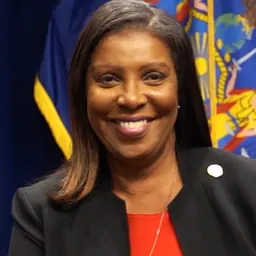
On December 3, 2019, the Diocese of Peoria announced that the Vatican had postponed Sheen's beatification. Salvatore Matano, the bishop of Rochester, had expressed concern that Sheen's alleged posting of a priest who had been named in a 1963 sexual misconduct case might be cited unfavorably in a report from New York State Attorney General Letitia James. The Diocese of Peoria countered that the priest had been assigned not by Sheen but by his successor, and that Sheen's involvement in the matter had already been "thoroughly examined" and that he had been "exonerated" and "never put children in harm's way."
In March 2026, it was announced that his beatification would occur on September 24, 2026, in St. Louis, presided over by Cardinal Luis Antonio Tagle. Three to Get Married (1951, Appleton-Century-Crofts) The World's First Love (1952, McGraw-Hill) Life Is Worth Living Series 1–5 (1953–1957, McGraw–Hill) Way to Happiness (1953, Maco Magazine) Way to Inner Peace (1955, Garden City Books) Life of Christ (1958, McGraw–Hill) Missions and the World Crisis (1963, Bruce Publishing Co.) The Power of Love (1965, Simon & Schuster) Footprints in a Darkened Forest (1967, Meredith Press) Lenten and Easter Inspirations (1967, Maco Ecumenical Books) Treasure in Clay: The Autobiography of Fulton J. Sheen (1980, Doubleday & Co.) Finding True Happiness (2014, Dynamic Catholic) Your Life Is Worth Living: 50 Lessons to Deepen Your Faith, Foreword by Bishop Robert Barron (2019, Image Catholic Books)
Don’t just read it —
keep it.
Full-length biographies made to live with: read them, listen on the way to work, watch them tonight.
- E-book
- Audio
- Video
Instant download · yours to keep · every purchase keeps this site free
Important facts
People in Fulton J. Sheen's life
Named in this biography and alive at the same time


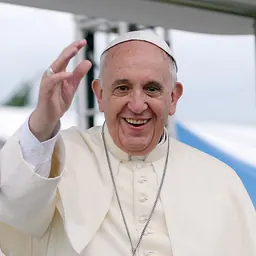
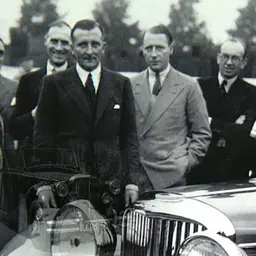
Related people
Same field, nearest in time



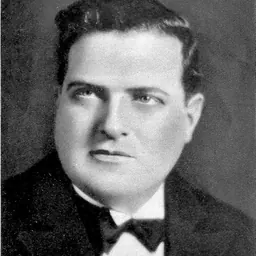

Contemporaries
People whose lives overlapped Fulton J. Sheen's

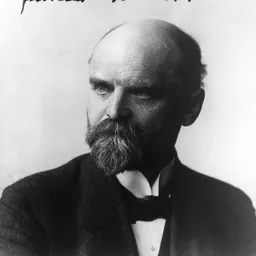

Frequently asked questions
Who was Fulton J. Sheen?
American catholic bishop and television presenter (1895–1979)
When was Fulton J. Sheen born?
Fulton J. Sheen was born on 8 May 1895 in El Paso.
When did Fulton J. Sheen die?
Fulton J. Sheen died on 9 December 1979 in New York City.
What was Fulton J. Sheen's occupation?
Fulton J. Sheen was a television presenter, radio personality, essayist, writer, catholic priest and catholic bishop.
What nationality was Fulton J. Sheen?
Fulton J. Sheen was American.
Sources & further reading
Cite this page
APA: Biography.guide. (2026). Fulton J. Sheen. https://biography.guide/fulton-j-sheen/
MLA: "Fulton J. Sheen." Biography.guide, https://biography.guide/fulton-j-sheen/.
Chicago: "Fulton J. Sheen." Biography.guide. https://biography.guide/fulton-j-sheen/.
Data last updated: 2026-09-20 · Spot an error? Report a correction.
Page generated 2026-09-27 05:32 UTC