
About Fritz Werner
Lived 1898 – 1977 (aged 79). Fritz Werner was a German choir director, conductor, kirchenmusikdirektor, composer, organist and church musician.
Fritz Werner (15 December 1898 – 22 December 1977) was a German choral conductor, church music director, conductor, organist and composer. He founded the Heinrich-Schütz-Chor Heilbronn in 1947 and conducted it until 1973.
Career Born in Berlin, Werner studied at the Berliner Akademie für Kirchen- und Schulmusik, the University in Berlin and at the Preußische Akademie der Künste. His teachers were Wolfgang Reimann, Arthur Egidi, Fritz Heitmann, Richard Münnich, Carl Stumpf and Georg Schumann (composition, organ), Kurt Schubert (piano), Max Seiffert and Johannes Wolf (history of music), Richard Hagel (conducting). In 1935 he became organist at the Bethlehem Church in Potsdam-Babelsberg and a school teacher. In 1936 he became organist and cantor at St. Nicholas' Church in Potsdam, promoted to Kirchenmusikdirektor (director of church music) in 1938. In 1939 he became music director at Radio Paris. After World War II he was organist and cantor at St. Kilian's Church in Heilbronn from 1946 until 1964. In 1966 he left his collection of music to the town of Heilbronn.
Heinrich-Schütz-Chor Heilbronn Fritz Werner founded the Heinrich-Schütz-Chor Heilbronn in 1947 and conducted it until 1973. First they concentrated on the music of Heinrich Schütz and made it known in Heilbronn and the region. Orchestras for the recordings have included the Pforzheim Chamber Orchestra, the Württembergisches Kammerorchester Heilbronn and the Südwestfunk Orchester. Werner's Bach recordings were compared to those of his contemporary Karl Richter. A reviewer wrote about his cantata recordings: "... this wise, discerning and humane Bach conductor has much to teach us, even (perhaps especially) in an age when we are so used to performances of Bach in period style and by small or smallish forces. But the other thing that listening to all these performances has reinforced for me is how endlessly inventive, how eloquent and how moving is the music of Bach. I suspect that Fritz Werner would regard that as the best possible testament to his work." The same reviewer stated about a recording of the St Matthew Passion with Helmut Krebs as the Evangelist: "Werner's pacing of the whole work and his vision of it is compelling. The drama moves inexorably forward and the entire story is most movingly related."
In 1998 the choir celebrated his 100th birthday with a performance of his motets Die Botschaft on Bible words for mixed choir a cappella with soprano, baritone and oboe soloists in the Nikolaikirche Heilbronn, conducted by Michael Böttcher.
Composer His compositions of more than 50 opus-numbers have included the cantata Trauermusik (1935), Apfelkantate (1939), Symphonie in d (1954), Suite Concertante (1969), Psalmen-Triptychon (1972), a collection of motets Die Botschaft (1973), and concertos for trumpet, horn, piano and violin. In 1964 he wrote as his op. 44 an oratorio for Pentecost Veni, sancte spiritus (Come, Holy Spirit) on the sequence Veni sancte spiritus. The Oratorium nach Worten der Heiligen Schrift (oratorio after Bible words) for mixed choir, two solo voices and orchestra was first performed on 16 May 1971. The music for string orchestra was premiered by the Württembergisches Kammerorchester Heilbronn on 31 January 1968. His Suite Concertante for high trumpet, string orchestra and percussion op. 48 was recorded right after its premiere on 23 September 1971 with Maurice André and the same chamber orchestra. His Trumpet and Organ Duo op. 53 was recorded several times, for example with Michael Feldner and Petra Morath-Pusinelli or with Malte Burba and Johannes von Erdmann.
Fritz Werner contributed to a revitalisation of church music in Germany in the 20th century, as also Rudolf Mauersberger, Günther Ramin and Johann Nepomuk David. 1974 Chevalier de l’Ordre des Arts et des Lettres
Don’t just read it —
keep it.
Full-length biographies made to live with: read them, listen on the way to work, watch them tonight.
- E-book
- Audio
- Video
Instant download · yours to keep · every purchase keeps this site free
Important facts
People in Fritz Werner's life
Named in this biography and alive at the same time
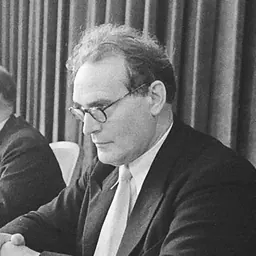


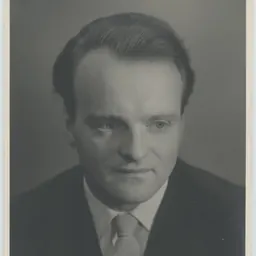


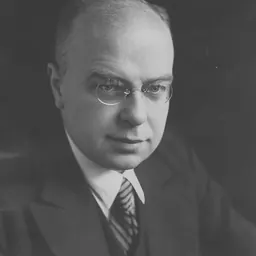
Related people
Same field, nearest in time

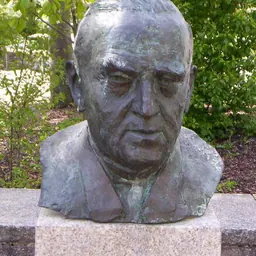


Contemporaries
People whose lives overlapped Fritz Werner's

Frequently asked questions
Who was Fritz Werner?
German conductor (1898–1977)
When was Fritz Werner born?
Fritz Werner was born on 15 December 1898 in Berlin.
When did Fritz Werner die?
Fritz Werner died on 22 December 1977 in Heilbronn.
What was Fritz Werner's occupation?
Fritz Werner was a choir director, conductor, kirchenmusikdirektor, composer, organist and church musician.
What nationality was Fritz Werner?
Fritz Werner was German.
Sources & further reading
Cite this page
APA: Biography.guide. (2026). Fritz Werner. https://biography.guide/fritz-werner/
MLA: "Fritz Werner." Biography.guide, https://biography.guide/fritz-werner/.
Chicago: "Fritz Werner." Biography.guide. https://biography.guide/fritz-werner/.
Data last updated: 2026-09-20 · Spot an error? Report a correction.
Page generated 2026-09-27 05:28 UTC