
About Fritz Stege
Lived 1896 – 1967 (aged 70–71). Fritz Stege was a German composer, non-fiction writer, journalist, music critic and writer.
Fritz Stege (11 April 1896 – 31 March 1967) was a German music journalist in the era of National Socialism and composer of accordion music.
Life Born in , Stege attended a Realgymnasium in Berlin and was drafted at the beginning of the First World War, in the war where he lost his father who had also been drafted. From 1919 to 1923 he studied musicology with Jean Paul Ertel and Johannes Wolf at the University of Berlin and was awarded a doctorate with a dissertation on Constantin Christian Dedekind. During his student days, Stege composed Schlager, which he had to dismiss as a youthful sin during the period of National Socialism when he was a victim of intrigue. Stege worked as a freelance music critic and music writer. He published his own "Kulturkorrespondenz für Musik" (cultural correspondence for music) and worked as an editor for various specialist journals.
In the Weimar Republic, Stege had been a follower of radical right-wing groups since the early 1920s For political reasons, he prevented a concert tour of Felix Weingartner through the Palatinate in 1928 "by initiating a general press offensive". He joined the NSDAP in 1930 with membership number 410.480 and became "Fachspartenleiter Schrifttum" in 1932 in the Kampfbund für deutsche Kultur.
After the Machtergreifung, Stege became head of the "Arbeitsgemeinschaft Deutscher Musikkritiker" (Association of German Music Critics) and was commissioned by the party to "clean up the German music critic scene" In March 1933, he denounced Fritz Jöde to Hans Hinkel and protected in his place Otto Jochum, who applied to educate the misguided youth with a new kind of folk music education in order to build up the service of the fatherland. Stege became press officer of the Reichsmusikkammer and press officer of the Reichs-Rundfunk-Gesellschaft. As a film editor he published the foreign press service of the Tobis and joined the picture editorial department of the UFA. In May 1933, Stege demanded in an article in the Neue Zeitschrift für Musik, of which he had become editor-in-chief, Stege also demanded "the exclusion of foreign dance bands". He boasted in his Zeitschrift für Musik that his influence had replaced Hans Mersmann as editor of the magazine Melos, that he had contributed to the dismissals of Carl Ebert and Otto Klemperer, and that he had helped the National Socialists Richard Trunk and Otto Krauß to find new jobs.
In the Völkischer Beobachter he called for the exclusion of Jews from German musical life. In a report on the German Composers' Day 1934, at which Richard Strauss spoke, Stege formulated his folk concept of art:
In keeping with this, he went under the censorship of jazz music and accused a composer like Boris Blacher of being close to jazz music.
For the Austrian composer Roderich Mojsisovics he wrote the libretto for his Nordic folk opera in 3 acts Norden in Not, which premiered in 1936.
Nothing more is known about Steg's "superficial denazification". Stege's book Bilder aus der deutschen Musikkritik (1936) was added to the . His novel Aber abseits, wer ist's?, which was still published in 1944, was included in the GDR List of literature to be discarded in 1952/3. In 1951, Stege founded a private music school in Wiesbaden and worked there as a course instructor at the Volkshochschule, the Humboldt-Institut and the Jugendmusikschule. As a music critic, he now wrote for the Wiesbadener Kurier. For his services to the promotion of folk music the Hessischer Sängerbund awarded him the silver honorary pin, the , and the golden honorary pin.
Books Constantin Christian Dedekind, ein Dichter und Musiker des 17. Jhs. Diss. Berlin 1922 Das Okkulte in der Musik. Beiträge zu einer Metaphysik der Musik. E. Bisping, Münster i. W. 1925. Bilder aus der deutschen Musikkritik. Kritische Kämpfe in 2 Jh. Regensburg: Bosse 1936 Tönendes Licht. In Zeitschrift für Musik. Vol. 103, Nr. 10, October 1936,. Aber abseits, wer ist's? Ein Musikroman. Stolle, Freital 1/Dresden/Leipzig/Berlin 1944. Ernst Bücken: Wörterbuch der Musik Überarb. u. erg. v. Fritz Stege. Dieterich, Wiesbaden 1953 Musik, Magie, Mystik. Verl. Der Leuchter Reichl, Remagen 1961. Musik hören, verstehen, erleben. Eine Einführung. Wancura, Wien/Köln 1962.
Essays Auszugsweise wiedergegeben bei Joseph Wulf: Musik im Dritten Reich. 1963 Randglossen zum Musikleben. In Zeitschrift für Musik, 1933 Aufruf an die deutsche Musikkritik. In Zeitschrift für Musik, May 1933 Erfüllte Anregungen und Wünsche. In Zeitschrift für Musik, May 1933 Zukunftsaufgaben der Musikwissenschaft. In Zeitschrift für Musik, May 1933 Der „privilegierte Irrtum“ H.H. Stuckenschmidt – Eine Abrechnung. In Deutsche Kultur-Wacht, 1933 Städtische Musikpreise. In Zeitschrift für Musik, August 1933 Geige und Saxophon. In Deutsche Kultur-Wacht, December 1933 Deutsche und nordische Musik. In Zeitschrift für Musik, December 1934 Berliner Musik. In Zeitschrift für Musik, January 1935
Compositions Nordische Tanzfolge, 1936 Nordlandsklänge, 1937 Nordische Volkstänze, 1938 Heidebilder. Bauernwalzer. Hohner, Trossingen/Württ. 1944. Vogelstimmen. Kleine Spielstücke. Hohner, Trossingen/Württ. 1955. Kasperlespiele. Kleine Spielstücke. Hohner, Trossingen/Württ. 1955. Aus den vier Winden. Konzert-Suite. Preissler, München 1957.
Don’t just read it —
keep it.
Full-length biographies made to live with: read them, listen on the way to work, watch them tonight.
- E-book
- Audio
- Video
Instant download · yours to keep · every purchase keeps this site free
Important facts
People in Fritz Stege's life
Named in this biography and alive at the same time
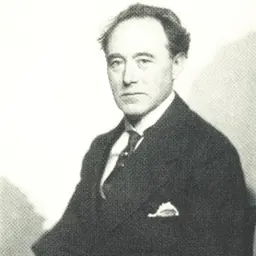




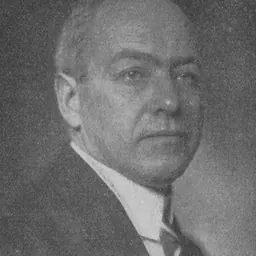

Related people
Same field, nearest in time



Contemporaries
People whose lives overlapped Fritz Stege's

Frequently asked questions
Who was Fritz Stege?
German composer
When was Fritz Stege born?
Fritz Stege was born in 1896 in Witterschlick.
When did Fritz Stege die?
Fritz Stege died on 31 March 1967 in Wiesbaden.
What was Fritz Stege's occupation?
Fritz Stege was a composer, non-fiction writer, journalist, music critic and writer.
What nationality was Fritz Stege?
Fritz Stege was German.
Sources & further reading
Cite this page
APA: Biography.guide. (2026). Fritz Stege. https://biography.guide/fritz-stege/
MLA: "Fritz Stege." Biography.guide, https://biography.guide/fritz-stege/.
Chicago: "Fritz Stege." Biography.guide. https://biography.guide/fritz-stege/.
Data last updated: 2026-09-20 · Spot an error? Report a correction.
Page generated 2026-09-27 05:04 UTC