
About Friedrich Trendelenburg
Lived 1844 – 1924 (aged 80). Friedrich Trendelenburg was a German surgeon, physician and university teacher.
Friedrich Trendelenburg (; ; 24 May 184415 December 1924) was a German surgeon. He was son of the philosopher Friedrich Adolf Trendelenburg, father of the pharmacologist Paul Trendelenburg, the physiologist Wilhelm Trendelenburg and of the politician Ernst Trendelenburg and grandfather of the pharmacologist Ullrich Georg Trendelenburg.
Trendelenburg was born in Berlin and studied medicine at the University of Glasgow and the University of Edinburgh. He completed his studies at the Charité - Universitätsmedizin Berlin under Bernhard von Langenbeck, receiving his doctorate in 1866. He practiced medicine at the University of Rostock and the University of Bonn. In 1895 he became surgeon-in-chief at the University of Leipzig.
Trendelenburg was interested in the history of surgery. He founded the German Surgical Society in 1872. Trendelenburg was also interested in the surgical removal of pulmonary emboli. His student Martin Kirschner performed the first successful pulmonary embolectomy in 1924, shortly before Trendelenburg's death. He died in 1924 of cancer of the mandible, aged 80.
Named after Friedrich Trendelenburg A number of medical treatments and terminologies have been named after Friedrich Trendelenburg, including: Brodie–Trendelenburg percussion test (also accredited to Sir Benjamin Collins Brodie) is a test for incompetent valves in superficial veins. Trendelenburg's cannula: a cannula used during surgery of the larynx to prevent the patient from swallowing blood during surgery involving the head and neck. Trendelenburg gait: an abnormal gait caused by weakness of the abductor muscles of the lower limb, including the gluteus medius muscle and gluteus minimus muscle. Trendelenburg operation: ligation of the great saphenous vein, for the treatment of varicose veins. This term may also apply to pulmonary thrombectomy. Trendelenburg position, in which the patient is placed on a bed which is put into incline such that the patient's head is lower than his feet. Reverse Trendelenburg position, in which the patient is placed on a bed which is put into incline such that the patient's feet is lower than his head. Trendelenburg's sign: a sign of congenital dislocation of the hip. Trendelenburg's test: a test for varicose veins as well as a test to assess hip mobility.
Don’t just read it —
keep it.
Full-length biographies made to live with: read them, listen on the way to work, watch them tonight.
- E-book
- Audio
- Video
Instant download · yours to keep · every purchase keeps this site free
Important facts
People in Friedrich Trendelenburg's life
Named in this biography and alive at the same time
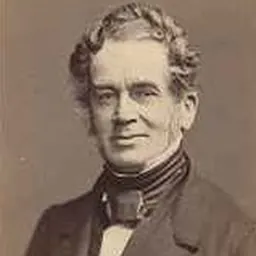
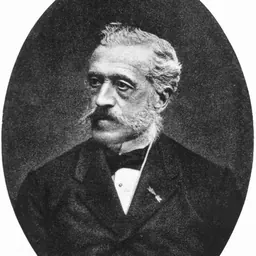






Related people
Same field, nearest in time

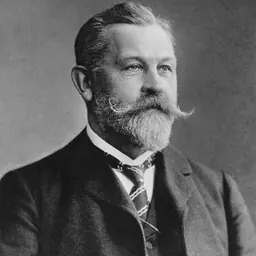
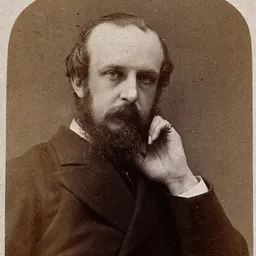

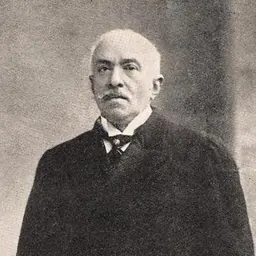
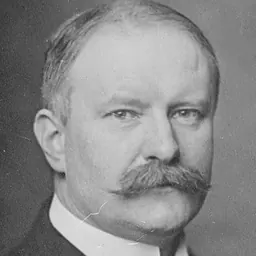
Contemporaries
People whose lives overlapped Friedrich Trendelenburg's
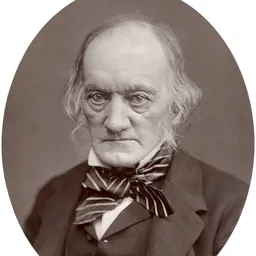
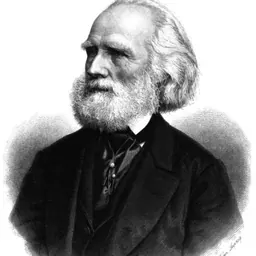

Frequently asked questions
Who was Friedrich Trendelenburg?
German surgeon (1844–1924)
When was Friedrich Trendelenburg born?
Friedrich Trendelenburg was born on 24 May 1844 in Berlin.
When did Friedrich Trendelenburg die?
Friedrich Trendelenburg died on 15 December 1924 in Nikolassee.
What was Friedrich Trendelenburg's occupation?
Friedrich Trendelenburg was a surgeon, physician and university teacher.
What nationality was Friedrich Trendelenburg?
Friedrich Trendelenburg was German.
Sources & further reading
· Wikipedia: Friedrich Trendelenburg
· DBpedia: Friedrich Trendelenburg
Cite this page
APA: Biography.guide. (2026). Friedrich Trendelenburg. https://biography.guide/friedrich-trendelenburg/
MLA: "Friedrich Trendelenburg." Biography.guide, https://biography.guide/friedrich-trendelenburg/.
Chicago: "Friedrich Trendelenburg." Biography.guide. https://biography.guide/friedrich-trendelenburg/.
Data last updated: 2026-09-25 · Spot an error? Report a correction.
Page generated 2026-09-27 05:13 UTC