
About Friedrich Karl Wilhelm, Fürst zu Hohenlohe
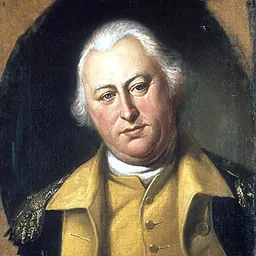
Lived 1752 – 1815 (aged 63). Friedrich Karl Wilhelm, Fürst zu Hohenlohe was a military officer.
Friedrich Karl Wilhelm, Fürst (prince) zu Hohenlohe-Ingelfingen (February 16, 1752 – January 16, 1814) was a general in the military service of the House of Habsburg during the French Revolutionary Wars and the Napoleonic Wars. He was born in Ingelfingen, in southwest Germany, on 16 February 1752.
Family The Family of Hohenlohe-Ingelfingen descended from Christian Kraft, Graf v. Hohenlohe-Ingelfingen, whose four sons held the title concurrently. Christian Kraft was a younger son of the Count of Hohenlohe-Langenburg und Gleichen. He married circa 1700 to Maria Katharina Sophia v. Hohenlohe-Waldenburg, a cousin, and they had seventeen children, ten of which survived past adolescence. Heinrich August zu Hohenlohe-Ingelfingen (1715–1796), the twelfth child, married circa 1750 to Wilhelmine Eleonore zu Hohenlohe-Neuenstein-Oehringen (1714–1794); among their children were Friedrich Karl Wilhelm, and Frederick Louis.
Early military career Friedrich Karl Wilhelm entered Habsburg military as a Cuirassier in 1772. He commanded the Dragoon regiment Waldeck in Austria's wars with the Ottoman Empire in 1788–1789. During the French Revolutionary Wars, he served in the Imperial Army of the Upper Rhine, under command of General of Cavalry Dagobert Sigmund von Wurmser. In 1781, he was a major in 39th Dragoon Regiment Waldeck, which he commanded as Colonel in Austria's wars against the Turks in 1788–89. He also received the Bavarian Order of Saint Hubert.
Action in the French Revolutionary Wars
In 1793 he served in the Army of the Upper Rhine, under General of Cavalry Graf Wurmser. In 1794 he fought on the Rhine, under Feldzeugmeister (General of Infantry) Friedrich Wilhelm, Fürst zu Hohenlohe-Kirchberg and was distinguished in the actions near Kaiserslautern (20 September) and Oggersheim (9 October). On 11 October of that year Prince Friedrich was promoted to Major General. In 1795, the prince took part in the successful assault on Mainz (29 October) and was victorious in the action at Bacharach (17 December). In 1796 he served in Germany under Archduke Charles and was present at the Battle of Würzburg as a cavalry brigade commander. On 5 November, he commanded an Austrian cavalry column at the Battle of Dürenstein and a few weeks later, he commanded the Austrian cavalry at the Allied defeat at the Battle of Austerlitz.
The decisive French victory at the Battle of Austerlitz over the combined Russian and Austrian armies forced the Austrian withdrawal from the Coalition. The subsequent Peace of Pressburg, signed on 26 December 1805, reinforced the earlier treaties of Campo Formio and Lunéville. Furthermore, Austria ceded land to Napoleon's German allies, and paid an indemnity of 40 million francs. Victory at Austerlitz also gave Napoleon the latitude to create a buffer zone of German states between France and Prussia, Russia, and Austria. These measures did not establish a lasting peace on the continent. Prussian worries about growing French influence in Central Europe sparked the War of the Fourth Coalition in 1806, in which Austria did not participate.
Austria did not return to active war against France until the Danube Campaign of 1809. Although the Habsburgs eked out a victory at Aspern and Essling, the campaign resulted in yet another decisive defeat at Wagram. In this campaign, the prince saw no active service, although for nine months in 1809, he served as Adlatus (noble adjutant and mentor) of the Commanding General in Galicia. In December, he retired to his estates in Hungary, where he died on 16 June 1815 in Kaschau, today Košice, in Slovakia.
Promotions Major: 9 November 1781 Oberstleutnant: 1 May 1784 Oberst: 11 February 1790 Generalmajor (Major General: 11 October 1794 '(effective 1 May 1794) Feldmarschalleutnant (Lieutenant Field Marshal): 6 March 1800 (effective 9 September 1799) Retired: 26 December 1809
Don’t just read it —
keep it.
Full-length biographies made to live with: read them, listen on the way to work, watch them tonight.
- E-book
- Audio
- Video
Instant download · yours to keep · every purchase keeps this site free
Important facts
People in Friedrich Karl Wilhelm, Fürst zu Hohenlohe's life
Named in this biography and alive at the same time

Related people
Same field, nearest in time

Contemporaries
People whose lives overlapped Friedrich Karl Wilhelm, Fürst zu Hohenlohe's






Frequently asked questions
Who was Friedrich Karl Wilhelm, Fürst zu Hohenlohe?
Austrian general
When was Friedrich Karl Wilhelm, Fürst zu Hohenlohe born?
Friedrich Karl Wilhelm, Fürst zu Hohenlohe was born on 26 February 1752 in Ingelfingen.
When did Friedrich Karl Wilhelm, Fürst zu Hohenlohe die?
Friedrich Karl Wilhelm, Fürst zu Hohenlohe died on 16 June 1815 in Košice.
What was Friedrich Karl Wilhelm, Fürst zu Hohenlohe's occupation?
Friedrich Karl Wilhelm, Fürst zu Hohenlohe was a military officer.
Sources & further reading
· Wikipedia: Friedrich Karl Wilhelm, Fürst zu Hohenlohe
· DBpedia: Friedrich Karl Wilhelm, Fürst zu Hohenlohe
Cite this page
APA: Biography.guide. (2026). Friedrich Karl Wilhelm, Fürst zu Hohenlohe. https://biography.guide/friedrich-karl-wilhelm-furst-zu-hohenlohe/
MLA: "Friedrich Karl Wilhelm, Fürst zu Hohenlohe." Biography.guide, https://biography.guide/friedrich-karl-wilhelm-furst-zu-hohenlohe/.
Chicago: "Friedrich Karl Wilhelm, Fürst zu Hohenlohe." Biography.guide. https://biography.guide/friedrich-karl-wilhelm-furst-zu-hohenlohe/.
Data last updated: 2026-09-20 · Spot an error? Report a correction.
Page generated 2026-09-27 05:25 UTC