
Friedrich Blass
German classical scholar
About Friedrich Blass
Lived 1843 – 1907 (aged 64). Friedrich Blass was a German linguist, classical philologist, university teacher, secondary school teacher, pedagogue and oberlehrer.
Friedrich Blass (22 January 1843, Osnabrück5 March 1907, Halle) was a German classical scholar.
Biography After studying at Göttingen and Bonn from 1860 to 1863, Blass lectured at several gymnasia and at the University of Königsberg. In 1876 he was appointed extraordinary professor of classical philology at Kiel, and ordinary professor in 1881. In 1892 he accepted a professorship at Halle, where he later died.
He frequently visited England, and was intimately acquainted with leading British scholars. He received an honorary degree from Dublin University in 1892, and his readiness to place the results of his labours at the disposal of others, together with the courtesy and kindliness of his disposition, won the respect of all who knew him. Hypereides (1881, 1894), Demosthenes (Dindorf's ed., 1885), Isocrates (1886), Dinarchus (1888), Demosthenes (Rehdantz ed., 1893), Aeschines (1896), Lycurgus, Leocrates (1902); Die Rhythmen der attischen Kunstprosa (1901); Die Rhythmen der asianischen und römischen Kunstprosa (1905).
Among his other works are editions of Eudoxus of Cnidus (1887), the Ἀθηναίων πολιτεία (4th ed., 1903), a work of great importance, and Bacchylides (3rd. ed., 1904); Grammatik des neutestamentlichen Griechisch (1902; Eng. trans. by H St John Thackeray, 1905); Hermeneutik und Kritik and Paläographie, Buchwesen, und Handschriftenkunde (vol. i. of Müller's Handbuch der klassischen Altertumswissenschaft, 1891); Über die Aussprache des Griechischen (1888; Eng. trans. by W. J. Purton, 1890); Die Interpolationen in der Odyssee (1904); contributions to Collitz's Sammlung der griechischen Dialektinschriften; editions of the texts of certain portions of the New Testament (Gospels and Acts). His last work was an edition of the Choephori (1906).
See notices in the Academy, 16 March 1907 (JP Mahaffy); Classical Review, May 1907 (JE Sandys), which contains also a review of Die Rhythmen der asianischen und römischen Kunstprosa.
Don’t just read it —
keep it.
Full-length biographies made to live with: read them, listen on the way to work, watch them tonight.
- E-book
- Audio
- Video
Instant download · yours to keep · every purchase keeps this site free
Important facts
People in Friedrich Blass's life
Named in this biography and alive at the same time

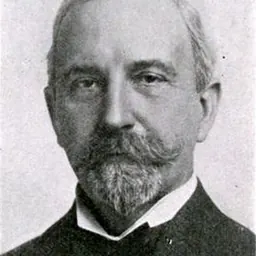
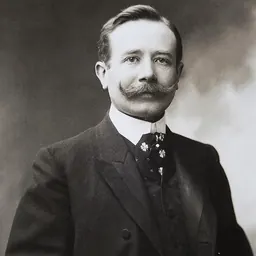
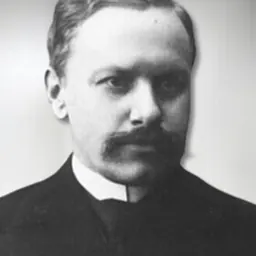
Related people
Same field, nearest in time


Contemporaries
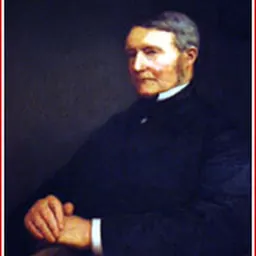
People whose lives overlapped Friedrich Blass's

Frequently asked questions
Who was Friedrich Blass?
German classical scholar (1843-1907)
When was Friedrich Blass born?
Friedrich Blass was born on 22 January 1843 in Osnabrück.
When did Friedrich Blass die?
Friedrich Blass died on 5 March 1907 in Halle (Saale).
What was Friedrich Blass's occupation?
Friedrich Blass was a linguist, classical philologist, university teacher, secondary school teacher, pedagogue and oberlehrer.
What nationality was Friedrich Blass?
Friedrich Blass was German.
Sources & further reading
Cite this page
APA: Biography.guide. (2026). Friedrich Blass. https://biography.guide/friedrich-blass/
MLA: "Friedrich Blass." Biography.guide, https://biography.guide/friedrich-blass/.
Chicago: "Friedrich Blass." Biography.guide. https://biography.guide/friedrich-blass/.
Data last updated: 2026-09-20 · Spot an error? Report a correction.
Page generated 2026-09-27 05:18 UTC