
About Friedrich August Marschall von Bieberstein
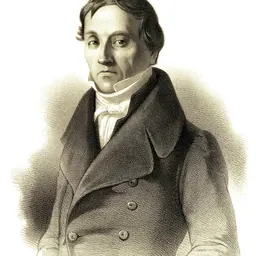
Lived 1768 – 1826 (aged 57). Friedrich August Marschall von Bieberstein was a German explorer, botanist, archaeologist, entomologist, botanical collector and scientific collector, known for Botany and Linnaean taxonomy.
Baron Friedrich August Marschall von Bieberstein (30 July 1768 – 28 June 1826) was an early explorer of the flora and archeology of the southern portion of Imperial Russia, including the Caucasus and Novorossiya. He compiled the first comprehensive flora catalogue of the Crimeo-Caucasian region.
Origin Friedrich Marschall von Bieberstein was the son of a Colonel from Württemberg 'Conrad Otto Christoph Freiherr Marschall von Bieberstein' (17 March 1726 – 25 May 1796), and his wife 'Johanna Theresia Henriette' née Wolf from Ludwigsburg (21 December 1738 – 1783). They married on 21 September 1761. He had three brothers, Carl Wilhelm Marschall von Bieberstein (1764–1817), who was from 1792 worked in Baden, then in 1800 became President of the Privy Councillor, then 1806 part of the Privy Council (known as the Geheimrat in Germany) and in 1809, Baden Minister of the Interior and finally in 1811, an Envoy in Stuttgart, and 'Ernst Franz Ludwig Marschall von Bieberstein (1770–1834), Chief Minister (Staatsminister) of the Duchy of Nassau between 1806 and 1834. All three brothers were graduates of 'Carl's High School' (Hohe Carls-Schule) in Stuttgart.
Biography Friedrich August began a career in the military, but then worked for Prince Kraft Ernest of Oettingen-Wallerstein in Vienna. He then moved to Iași where he served as secretary to Count Mikhail Kakhovsky.
In 1793, von Bieberstein became aide-de-camp to Kakhovsky and was sent to Crimea. Soon afterwards, he met fellow German naturalist, Peter Simon Pallas, who encouraged his interest in natural history and botany. He then to collect specimens as he travelled around the Caucasus. In the spring of 1794, he collected specimens around Sevastopol.
In 1795, he travelled to St. Petersburg, sent (by Empress Catherine II the Great) with the invading Russian forces into Persia. He explored the western shore of the Caspian Sea. He collected many herbarium specimens all along the way, he published an account of his journey in French in 1798 "Tableau des provinces situées sur la côte occidentale de la mer Caspienne entre les fleuves Terek et Kour" which contained a great deal of botanical information, including 74 new species descriptions. The sudden death of Empress Catherine ended the Persian campaign in 1796 and von Bieberstein went to Moscow. giving him a plenty of ideal chances to travel around the region and continue his botanical studies and add to his collection.
Later in 1804, Von Bieberstein married a Finnish woman named Miss Maria Kristina Klick (1785- ) and together they moved to Marefa (also known as Marfopol'ye).
Very soon afterwards he began to publish the 'Flora Taurico Caucasica' (from 1808 to 1819). The two volumes of books contain the descriptions of 2,322 Spermatophyte species of the caucasus region, from his various trips. In 1819, he published a supplementary volume, covering his later discovered specimens of the regions. The books use the new Linnaean classification system.
After his death, his approximately 10,000 specimens of his comprehensive plant collection was donated in 1828 to the Russian Academy of Sciences. It was housed in St. Petersburg. It is currently in the possession of the Komarov Botanical Institute. The important collection was preserved for more than a hundred years in an unavailable condition, and then in the late 60's, it was curated and made accessible to botanical scholars.
Honours Bieberstein has received many honours, including belonging to the Order of St. Vladimir.
The botanical epithets, 'biebersteinii' are named after him. This includes Achillea biebersteinii, published by Huber-Morath in 1975. and Biebersteinia.
Bieberstein is recognised as the scientific authority for 1,695 plant taxa.
Don’t just read it —
keep it.
Full-length biographies made to live with: read them, listen on the way to work, watch them tonight.
- E-book
- Audio
- Video
Instant download · yours to keep · every purchase keeps this site free
Important facts
People in Friedrich August Marschall von Bieberstein's life
Named in this biography and alive at the same time


Related people
Same field, nearest in time


Contemporaries
People whose lives overlapped Friedrich August Marschall von Bieberstein's





Frequently asked questions
Who was Friedrich August Marschall von Bieberstein?
botanist
When was Friedrich August Marschall von Bieberstein born?
Friedrich August Marschall von Bieberstein was born on 30 July 1768 in Stuttgart.
When did Friedrich August Marschall von Bieberstein die?
Friedrich August Marschall von Bieberstein died on 16 June 1826 in Merefa.
What was Friedrich August Marschall von Bieberstein's occupation?
Friedrich August Marschall von Bieberstein was an explorer, botanist, archaeologist, entomologist, botanical collector and scientific collector.
What was Friedrich August Marschall von Bieberstein known for?
Friedrich August Marschall von Bieberstein was known for Botany and Linnaean taxonomy.
What nationality was Friedrich August Marschall von Bieberstein?
Friedrich August Marschall von Bieberstein was German.
Sources & further reading
· Wikipedia: Friedrich August Marschall von Bieberstein
· DBpedia: Friedrich August Marschall von Bieberstein
Cite this page
APA: Biography.guide. (2026). Friedrich August Marschall von Bieberstein. https://biography.guide/friedrich-august-marschall-von-bieberstein/
MLA: "Friedrich August Marschall von Bieberstein." Biography.guide, https://biography.guide/friedrich-august-marschall-von-bieberstein/.
Chicago: "Friedrich August Marschall von Bieberstein." Biography.guide. https://biography.guide/friedrich-august-marschall-von-bieberstein/.
Data last updated: 2026-09-20 · Spot an error? Report a correction.
Page generated 2026-09-27 05:03 UTC