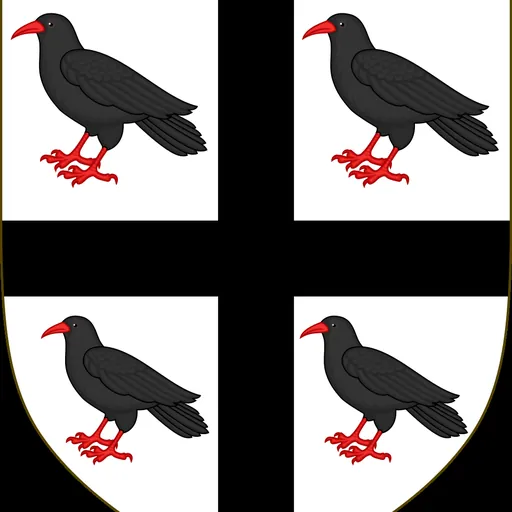
Frederick Whitworth Aylmer, 6th Baron Aylmer
British peer and Royal Navy admiral
About Frederick Whitworth Aylmer, 6th Baron Aylmer
Lived 1777 – 1858 (aged 80). Frederick Whitworth Aylmer, 6th Baron Aylmer was a naval officer.
Admiral Frederick Whitworth Aylmer, 6th Baron Aylmer (12 October 1777 – 5 March 1858) was a British Royal Navy officer who fought in the French Revolutionary Wars and the Napoleonic Wars, eventually rising to the rank of admiral. He was born on 12 October 1777 in Twyford, Hampshire, into a naval family which included his great-great-grandfather, Admiral Matthew Aylmer.
Aylmer went to sea at thirteen years of age, and in 1798, as a lieutenant, served aboard HMS Swiftsure at the Battle of the Nile. In 1805, he made post and in 1809 was appointed to a frigate in the channel, where he took part in raids on the north coast of Spain.
Aylmer is primarily known as the commander of the force that penetrated the Gironde in July 1815, as part of a wider British strategy to rally French royalists against Napoleon. In 1816, commanding the heavy frigate HMS Severn, Aylmer took part in the Bombardment of Algiers, and was subsequently awarded the Companion of the Order of the Bath, the royal order of St Ferdinand and of Merit and the royal military order of St Fernando.
Personal life Born in Twyford, near Winchester in Hampshire on 12 October 1777, Fredrick Whitworth Aylmer was the great-great-grandson of Admiral Matthew Aylmer, the grandson of Captain Henry Aylmer and cousin to Admiral John Aylmer. Fredrick's father was Sir Henry Aylmer, 4th Lord Aylmer and his mother was Catharine Whitworth.
In January 1802, following a protracted period of shore leave, Aylmer returned to the Mediterranean, joining Lord Keith's squadron as commander of the 18-gun sloop Delight. In 1803, he returned to home waters, serving in the Channel and off Cádiz under Sir John Orde, in another 18-gun sloop, Wasp.
Aylmer had an important role in a combined operation against Santoña the following July.
North America In September 1813, Aylmer was appointed to the newly constructed HMS Pactolus, and in August 1814 was part of a small squadron under Sir Thomas Masterman Hardy comprising Ramillies, Dispatch, Terror and herself, which took part in the bombardment of Stonington, Connecticut. On 9 August, after the town was shown to be manufacturing arms and assisting in the destruction of British ships off the coast of New London, the brig, Dispatch anchored close to a shore battery and opened fire. The water was too shallow for the other ships to lend their support, and the brig was recalled after two men were killed and twelve more injured. On 11 August, Ramillies and Pactolus came inshore as close as the depth of water would allow and discharged their guns. The town was forced to evacuate, and after inflicting much damage the British squadron sailed off. Aylmer's ship, Pactolus, arrived at the mouth of the estuary on 3 July and immediately an Aide-de-Camp was despatched under a flag of truce, to open a dialogue with General Bertrand Clausel, who was commanding the armies in the area. Shortly after, the 36-gun , under Captain Edmund Palmer, arrived with arms and supplies for the Royalists Although the fort at Verdon did open fire, the British did not retaliate and after anchoring, a delegation, headed by the Comte de Lasteur, was sent to once again try and establish contact with Clausel while Falmouth was sent home with dispatches for Lord Keith. A British fleet under Edward Pellew, comprising six line-of-battle ships, four frigates, nine smaller warships, a naval transport, a sloop and a despatch-vessel, left Plymouth at 12.00 on 28 July. On 9 August they arrived off Gibraltar where they joined a Dutch squadron of five frigates and a corvette. The city was shown to be heavily defended with more than 1,000 guns. The harbour wall alone was mounting more than 220 guns, the vast majority being between 18 and 32-pounders. The harbour entrance was guarded by another three batteries to the southwest, the largest being the Fish Market battery of 15 guns in three tiers, and it was this battery that Aylmer in Severn was charged with destroying. Spreading south, along the coast, were a number of other batteries and, on the opposite side of the bay, facing the harbour entrance, a fort. These coastal defences mounted a further 60 to 70 guns. Inland, on the areas of higher ground stood various other batteries and a further fort.
Late morning, the following day, the wind was favourable and the Anglo-Dutch force, minus the 10-gun Jasper which was sent off with despatches, set sail for the port of Algiers. In the evening of 16 August 200 miles from its destination, the fleet encountered HMS Prometheus, whose captain, William Dashwood, was able to confirm that Pellew's intelligence was accurate. The smaller vessels were expected to take up position where convenient, except the bomb ketches which targeted the harbour and town from some 2,000 yards out. The Dutch squadron was sent against the batteries to the south of the city. By 19:00, HMS Leander had been so badly shot up, she was unable to keep station and only by running a cable to Severn, could she bring her guns to bear. The bombardment continued until 22:00 when Pellew ordered a withdrawal which, owing to the light winds and damage incurred by much of the fleet, took almost four hours to complete. By this time, most of the Algerian guns had been silenced, parts of the city were in flame and much of the shipping in the harbour was destroyed. Total British losses were 128 killed and 690 wounded. The Dutch had 13 killed and 52 wounded. Accounts of the Algerian losses vary between 4,000 and 7,000 dead and wounded.
At dawn, Burgess was sent back to repeat the demands. He was met by an Algerian frigate captain who claimed that an answer had been sent the previous day but no one was found to receive it, and that the dey was ready to agree terms. On the afternoon of 29 August the first of several meetings took place which culminated in the dey agreeing to the release of 1200 Christian slaves into British custody, an undertaking to abolish the practice of slavery, the repayment of 382,500 dollars to Naples and Sicily, peace with the king of the Netherlands, compensation amounting to 30,000 dollars for the destruction of the British consul's property, together with a public apology for detaining him.
For his services, Aylmer was made a Companion of the Order of the Bath. He was also awarded the royal order of St Ferdinand and of Merit for transporting freed Italian slaves to Naples together with the sum of money repaid by the Algerians. Spain also honoured him as a knight of the royal military order of St Fernando.
Don’t just read it —
keep it.
Full-length biographies made to live with: read them, listen on the way to work, watch them tonight.
- E-book
- Audio
- Video
Instant download · yours to keep · every purchase keeps this site free
Important facts
People in Frederick Whitworth Aylmer, 6th Baron Aylmer's life
Named in this biography and alive at the same time

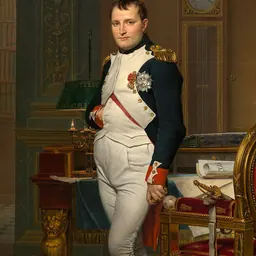
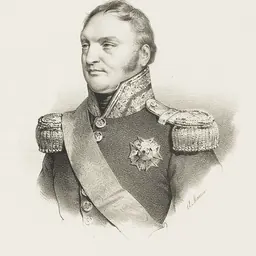

Related people
Same field, nearest in time

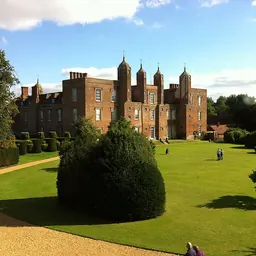



Contemporaries
People whose lives overlapped Frederick Whitworth Aylmer, 6th Baron Aylmer's





Frequently asked questions
Who was Frederick Whitworth Aylmer, 6th Baron Aylmer?
British peer and Royal Navy admiral (1777-1858)
When was Frederick Whitworth Aylmer, 6th Baron Aylmer born?
Frederick Whitworth Aylmer, 6th Baron Aylmer was born on 12 October 1777 in Twyford.
When did Frederick Whitworth Aylmer, 6th Baron Aylmer die?
Frederick Whitworth Aylmer, 6th Baron Aylmer died on 5 March 1858 in Westbourne Grove.
What was Frederick Whitworth Aylmer, 6th Baron Aylmer's occupation?
Frederick Whitworth Aylmer, 6th Baron Aylmer was a naval officer.
Sources & further reading
· Wikipedia: Frederick Whitworth Aylmer, 6th Baron Aylmer
· DBpedia: Frederick Whitworth Aylmer, 6th Baron Aylmer
Cite this page
APA: Biography.guide. (2026). Frederick Whitworth Aylmer, 6th Baron Aylmer. https://biography.guide/frederick-whitworth-aylmer-6th-baron-aylmer/
MLA: "Frederick Whitworth Aylmer, 6th Baron Aylmer." Biography.guide, https://biography.guide/frederick-whitworth-aylmer-6th-baron-aylmer/.
Chicago: "Frederick Whitworth Aylmer, 6th Baron Aylmer." Biography.guide. https://biography.guide/frederick-whitworth-aylmer-6th-baron-aylmer/.
Data last updated: 2026-09-20 · Spot an error? Report a correction.
Portrait: Wikimedia Commons · author & licence
Page generated 2026-09-27 04:57 UTC