
About Bertrand Clausel
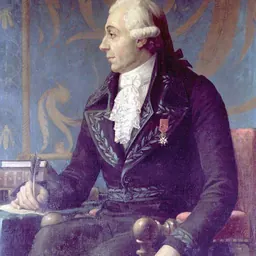
Lived 1772 – 1842 (aged 69). Bertrand Clausel was a French politician, writer, military officer, governor, count and military personnel.
Bertrand, Comte Clauzel (; 12 December 1772 – 21 April 1842), was a French soldier who served in the Revolutionary and Napoleonic wars. He saw service in the Low Countries, the Italian Peninsula, Haiti, and the Iberian Peninsula, where he achieved short periods of independent command.
Clauzel spent the years 1815–1820 in exile in the United States before returning to France and becoming politically active in the republican and liberal opposition to the absolutist governments of Charles X.
Clauzel would later become a Marshal of France under the Orléans monarchy, following the July Revolution. Clauzel would return to active service in the French conquest of Algeria, first during the initial French expedition and later as governor. Napoleon listed Clauzel amongst his most skilful generals.
Early life and family Bertrand Clauzel was born on the 12 of December 1772 in Mirepoix, in the County of Foix. was a bankrupt wholesale merchant who had been disinherited by his own father. Gabriel had embraced the Revolution and served as a member of the Committee of Surveillance of Mirepoix. A deputy to the National Convention would later write that "his presence alone frightens the enemies of the new regime."
Bertrand joined the Mirepoix National Guard at the end of July 1789;
Military career (1791–1809) Early military career alt=Clauzel shown here in a plain white uniform typical of junior officer, compared to other images he does not yet have a sash or large medals.
Clauzel enlisted in the 43rd Infantry as one of the volunteers of 1791. He saw service in the first campaign of the French Revolutionary Wars. Having distinguished himself repeatedly on the northern frontier with the 43rd Line Infantry Regiment (1792–1793) and then in the eastern Pyrénées (1793–1794), Clauzel was made a chef de bataillon. Clauzel would also be given the honour of bringing twenty four flags taken from the Spanish back to Paris to present to the National Convention.
As part of the negotiations, Clauzel sought noble hostages, to ensure the terms of the abdication were honoured. Clauzel did not succeed instead, returning with the Woman with Dropsy, a painting by the Dutch master Gerard Dou. Clauzel would donate it to the Louvre where it remains today.
Clauzel's efforts were well regarded by his superiors, with Grouchy writing to General Barthélemy Catherine Joubert, then chief of the Army of Italy that:
Clauzel was rewarded in 1799 with a promotion to général de brigade on 5 February. In this rank, he continued to serve in Italy, where he won great distinction
Expedition to Saint-Domingue and return to Europe The Treaty of Amiens enabled Napoleon to organise the Leclerc expedition to reassert French control in the lucrative colony of Saint-Domingue following the Haitian Revolution. Clauzel seized Fort-Dauphin in December 1802, and became commander at Cap Français with a promotion to . The frigate La Surveillante, carrying Clauzel was shipwrecked off the coast of Florida. He survived the wreck and made his way to New York, where he obtained passage to France. During the Siege of Aslorga, he defeated and drove back the Spanish corps positioned at Villa Franca into Galicia. Then at the Battle of Subiaco, he resisted a vastly superior enemy.
Burgos was besieged by Wellington before Clauzel could regroup his forces. With reinforcements from General Joseph Souham, Clauzel spent some time recovering from a gunshot wound to his right foot. Clauzel later resumed divisional command in the subsequent campaign, which saw Wellington retreat back to Ciudad Rodrigo.
The rest of the War of the Sixth Coalition In early 1813, Clauzel assumed command of the Army of the North in Spain. During the Battle of Vitoria, Clauzel and the bulk of his army were a day's march away and unable to aid Jean-Baptiste Jourdan, contributing to the latter's defeat. In the days after Vitoria, Clauzel's army was separated from Jourdan's retreating army and risked being cut off, but Clauzel conducted a skilful retreat through Jaca to concentrate French forces.
Clauzel was amongst those who settled in the Vine and Olive Colony in modern-day Alabama.
alt=A map showing how French control over Algeria changed. Starting in 1830, France held very little land, only controlling a few major ports; by 1834, the ports were connected. By 1848, all of Algeria's major cities were under French control. However, the Sahara Desert was controlled; this was slowly brought under full control in the 20th century.
Given his experience fighting during the insurgency in Spain, and mindful of the numerous grievances of Algerians against Ottoman rule, Clauzel attempted to steer French policy away from the likelihood of a protracted engagement. Clauzel's approach involved a political settlement between the French, who would take over as suzerain over the Husaynid rulers of Tunis, who would rule much of Algeria beyond some major ports left to the French. This was done in a system similar to that of the status of Algeria under the Ottoman Empire, but with France as overlord.
Political activity (1831–1835) Simultaneous with his removal, Clauzel was appointed a Marshal of France in February 1831. Amongst these suggestions was support to allow Jews to hold positions in local governance and the judiciary, which they had been excluded from under Deylical rule.
His first posting to Algeria would also seem Clauzel embroiled in a controversy over property rights over a number of properties in Algeria including the Maison-Carrée and the Ferme de l’Agha, a property that before the conquest had belonged to the Agha of a company of Janissary cavalry. The farm was seized by French forces under General Loverdo [ Fr] immediately after the fall of Algiers, it was converted into a military hospital. Yet later Clauzel would purchase the farm, despite the fact that as commander of French forces he had forbid the purchase of any “corporation property” (biens de corporation) - that is land belonging to the Deylick, waqf endowments for mosques or religious schools or a military estate.
Critics accused Clauzel of abusing his position to enrich himself with property. Investigations into the legality of property transactions made during and just after the conquest including Clauzel's were undertaken by the National Assembly. Clauzel defended himself publicly, relying upon his extensive military record such as his time in Italy (refusing gifts from the King of Sardinia beyond a painting he donated. As well as the expedition to Saint-Domingue, where he was offered houses and plantations as well as local funding for entertainment expenses at his residence by civic organisations, but refused them all instead advocating the need for funding new defences for the town. However, due to adverse weather and determined resistance from Ahmad Bey, the 1836 attempt to seize Constantine failed. Clauzel's successor was General Charles Marie Denys de Damrémont, who would die during the ultimately successful siege of Constantine later in 1837.
Because Clauzel donated the Woman with Dropsy, the first painting to be donated to the Louvre, Clauzel's name is at the top of the list on the plaque visible in the rotunda of Apollo.
There is a statue of Clauzel amongst the Crossroads of the Marshals located at the foot of the walls, of the fortifications at the . His statue stands amongst 15 other Marshalls of various periods.
Honours Legion of Honour, chevalier on 25 March 1804, commander on 14 June 1804, grand officer on 17 July 1809 and grand cross on 14 February 1815. Order of the Reunion grand cross on 3 April 1813. Order of Saint Louis chevalier. 1 June 1815.
Don’t just read it —
keep it.
Full-length biographies made to live with: read them, listen on the way to work, watch them tonight.
- E-book
- Audio
- Video
Instant download · yours to keep · every purchase keeps this site free
Important facts
People in Bertrand Clausel's life
Named in this biography and alive at the same time

Related people
Same field, nearest in time



Contemporaries
People whose lives overlapped Bertrand Clausel's



Frequently asked questions
Who was Bertrand Clausel?
Marshal of France (1772-1842)
When was Bertrand Clausel born?
Bertrand Clausel was born on 12 December 1772 in Mirepoix.
When did Bertrand Clausel die?
Bertrand Clausel died on 21 April 1842 in Cintegabelle.
What was Bertrand Clausel's occupation?
Bertrand Clausel was a politician, writer, military officer, governor, count and military personnel.
What nationality was Bertrand Clausel?
Bertrand Clausel was French.
Sources & further reading
Cite this page
APA: Biography.guide. (2026). Bertrand Clausel. https://biography.guide/bertrand-clausel/
MLA: "Bertrand Clausel." Biography.guide, https://biography.guide/bertrand-clausel/.
Chicago: "Bertrand Clausel." Biography.guide. https://biography.guide/bertrand-clausel/.
Data last updated: 2026-09-25 · Spot an error? Report a correction.
Page generated 2026-09-27 05:12 UTC