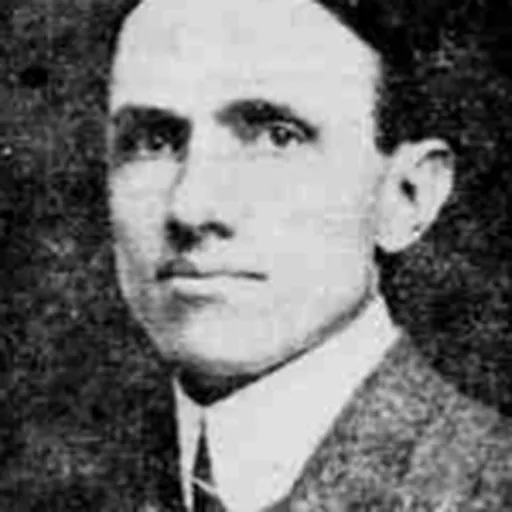
About Frederick S. Nave
Lived 1873 – 1912 (aged 39). Frederick S. Nave was an American judge.
Frederick Solomon Nave (January 7, 1873 – September 27, 1912) was an American jurist. Shortly after graduation from law school, he moved to Arizona Territory for health reasons. There he was appointed to serve on a committee created to overhaul the territorial legal code. Nave then served as a county attorney and United States Attorney before being appointed an associate justice of the Arizona Territorial Supreme Court. His health problems prompted an early resignation from the territorial bench and he practiced law for several years before his death at age 39.
Biography Nave was born to Orville James and Anna Eliza (Semans) Nave in Lewis Center, Ohio, on January 7, 1873. He graduated from Ohio Wesleyan University in 1895 and was elected to Phi Beta Kappa society. Nave then completed a law degree at Northwestern University in 1897 and was a member of the Delta Chi fraternity. While studying law, he taught Greek and Latin at an academy affiliated with the university. Following graduation, Nave accepted a promising position with a law firm in Chicago.
Suffering from tuberculosis, Nave moved to Arizona Territory in 1898 for health reasons. Settling initially in the Phoenix area, he was admitted to the Arizona bar on February 23, 1898. In March 1899, Nave was appointed as the clerk for a committee created to overhaul the territorial legal code.
Nave married Elise Wheaton (Gill) Jones in Nogales on March 26, 1901. The couple had a son and an adopted daughter.
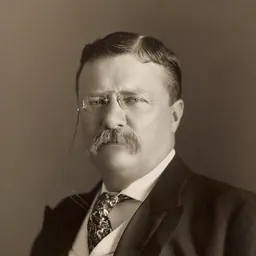
President Theodore Roosevelt appointed Nave to replace Eugene A. Tucker as Associate Justice of the Arizona Territorial Supreme Court on November 8, 1905. He took his oath of office on November 17. As a justice, Nave wrote several opinions with significant impact. In addition to multiple cases dealing with mining concerns, Nave's opinion in Territory of Arizona v. Ruval, 9 Arizona 415 (1906) dealt with the issue of double jeopardy while Maxwell v. Territory of Arizona, 10 Arizona 1 (1906) considered degrees of a crime with respect to a convicted cattle rustler. Ford v. United States, 12 Arizona 23 (1908) was concerned with charges of conspiracy to commit adultery within a brothel. Eytinge v. Territory of Arizona, 12 Arizona 131 (1909) dealt with murder by chloroform while Molina v. Territory of Arizona, 12 Arizona 14 (1908) involved a murder charge reduced to manslaughter.
Among his more unusual cases were Duffield v. Ashurst, 12 Arizona 360 (1909) which dealt with Ralph H. Cameron's right to collect tolls for use of the Bright Angel Trail. Nave found the court had no jurisdiction to determine which printing company would receive a contract from a county board of supervisors in Hammer v. Smith, 11 Arizona 420 (1908). The dual cases of Leatherwood c. Hill, 10 Arizona 16 (1906) and 10 Arizona 243 (1906) dealt with the Arizona Pioneer's Historical Society's efforts to compel the territorial auditor to release funds allocated by the territorial legislature of the society. The case of In Re By-a-lil-le, 12 Arizona 150 (1909) was a habeas corpus case dealing with an incident where the Federal government had rounded up a group of suspected troublemakers from the Navajo reservation and were holding them at Fort Huachuca. Nave also ruled that a municipal water supply could be established despite the protests of a private water company in Phoenix Water Company v. The Common Council of Phoenix, 9 Arizona 430 (1906).
Health concerns prompted Nave to resign from the bench. The resignation was effective April 1, 1909. After leaving the bench, Nave opened a legal practice in Globe. From 1908 till 1909 he was an executive committee member for the National Irrigation Company. He served as president of the Arizona Bar Association from 1911 till 1912. Shortly thereafter, Nave's health took a significant downturn and he spent the summer of 1912 in Los Angeles trying to recover. Nave died at his home in Globe on September 27, 1912, as a result of his tuberculosis. He was buried in Glendale, California's Forest Lawn Cemetery. His widow married John H. Campbell, Nave's former law partner, on March 30, 1916.
Don’t just read it —
keep it.
Full-length biographies made to live with: read them, listen on the way to work, watch them tonight.
- E-book
- Audio
- Video
Instant download · yours to keep · every purchase keeps this site free
Important facts
People in Frederick S. Nave's life
Named in this biography and alive at the same time

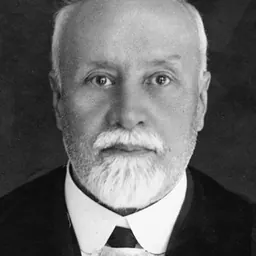
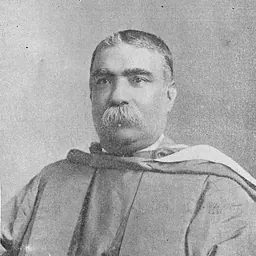
Related people
Same field, nearest in time


Contemporaries
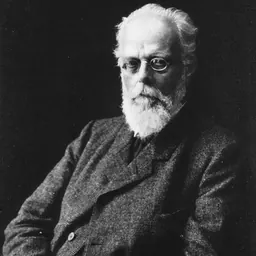
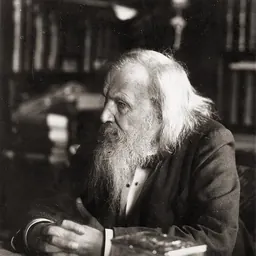
People whose lives overlapped Frederick S. Nave's


Frequently asked questions
Who was Frederick S. Nave?
American jurist (1873–1912)
When was Frederick S. Nave born?
Frederick S. Nave was born on 7 January 1873 in Lewis Center.
When did Frederick S. Nave die?
Frederick S. Nave died on 27 September 1912 in Globe.
What was Frederick S. Nave's occupation?
Frederick S. Nave was a judge.
What nationality was Frederick S. Nave?
Frederick S. Nave was American.
Sources & further reading
· Wikipedia: Frederick S. Nave
Cite this page
APA: Biography.guide. (2026). Frederick S. Nave. https://biography.guide/frederick-s-nave/
MLA: "Frederick S. Nave." Biography.guide, https://biography.guide/frederick-s-nave/.
Chicago: "Frederick S. Nave." Biography.guide. https://biography.guide/frederick-s-nave/.
Data last updated: 2026-09-20 · Spot an error? Report a correction.
Page generated 2026-09-27 05:09 UTC