
About Frederick Philipse III
Lived 1720 – 1786 (aged 65–66). Frederick Philipse III was a politician.
Frederick Philipse III (September 20, 1720 – April 30, 1785) was the third and last Lord of Philipsburg Manor, a hereditary estate in lower Westchester County, New York, and a Loyalist during the Revolutionary War.
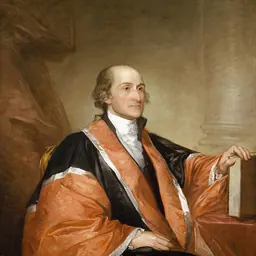
John Jay, a Founding Father of the United States who was the co-author of the Treaty of Paris and the Federalist Papers, as well as the first Chief Justice of the Supreme Court and second American Governor of New York, was a cousin, on his maternal side.
Family inheritance
When his father died in 1751, he inherited Philipsburg Manor, a hereditary estate comprising much of southern Westchester County, the accompanying title, and commercial interests, including the share of family holdings his father had received from Adolphus Philipse, a bachelor uncle and son of Frederick I, the first Lord of Philipsborough (this is how Philipsburg was spelled originally, in the royal charter granted to Frederick I.)
Philipsburg Manor that he inherited consisted of two segments, each with a manor house: the Upper Mills, with Philipsburg Manor House, and the Lower Mills, with Philipse Manor Hall. Frederick Philipse III did not live at the modest Upper Mills house; he chose the manor house at the Lower Mills, which was much closer to New York City, as his primary country estate, developing it into a grand Georgian-style mansion suitable for a man of his status. Near the manor, he built a church, which would later become St. John's Protestant Episcopal Church of Yonkers, New York.
He did not receive his uncle's “Highland Patent”, a tract later known as the Philipse Patent, which became New York state's Putnam County and part of Dutchess County. It was divided among three of his siblings: Philip, Susannah (wife of Beverley Robinson), and Mary (wife of Col. Roger Morris).
According to historical research, Philipse III owned dozens of slaves.
Career Philipse was a member of the Assembly of the colonial Province of New York, and a Colonel in the militia.
American Revolution Like the rest of his family, Philipse was a Loyalist during the American Revolution. He was arrested and imprisoned by Colonial authorities on August 9, 1776, on order of George Washington. After numerous charges and many travails he was paroled on December 23 by Governor Trumbull of Connecticut, where he had been held. Several months later their sale was ordered.
Philipse family holdings belonging to other members, principally the Highland Patent, were also seized by the Commissioners of Forfeitures. Sale was withheld during the war, as its outcome was uncertain, confiscated lands had been pledged as collateral against monies borrowed by the provisional government to finance the conflict, and tenants lobbied for the right of preemptive purchase of leased land.
Sale proceeded after the Revolution ended. In spite of assurances of restitution in the 1783 Treaty of Paris signed with the British, and the enormous sum raised – the better part of a quarter of a million pounds Sterling – New York's Provisional Congress reneged and no payment from them was forthcoming. Later, it is claimed by Bielinski, Philipse was "compensated handsomely by the crown" for his loss. No amount was specified, only a prior reference by him to a royal pension granted Philipse for his "attachment to his majesty's government" that only reached 200 pounds by 1782, a minute fraction of the over 220,000 pound loss he had suffered via attainder. who had previously worked their parcels, which averaged 170 acres apiece. In all, there were 286 new properties owners, 16 of which could be characterized as outside speculators, who acquired some six percent of the land. Two of these, however, acquired prime parcels, Cornelius Low the Manor Hall
Historian Beatrice G. Reubens argues that the confiscation of Loyalist estates was a major reform for social and economic equality upstate New York. The state law of 1779 permitted attainted as well as patriot tenants on confiscatory lands to have the first right to purchase farms on which they resided. About 80 percent of the new owners of Philipsburgh Manor (Philipse Manor) were small farmers, most of whom had been tenants.
Personal life
In 1764, Philipse was married to Elizabeth (née Williams) Rutgers, the 24-year-old widow of Anthony Rutgers. Together, Elizabeth and Frederick were the parents of:
On April 30, 1785, at the age of 65, Frederick Philipse III died in St. Oswald's Parish in Chester, England, three years after the Treaty of Paris in 1783. After losing his New York holdings due to his loyalist stance during the American Revolution, Frederick III and his family relocated to the area, where he spent the remainder of his life. On May 2, 1786, he was buried in Chester Cathedral (most likely in the South transept, which was the parish church during that period). His memorial tablet in the transept reads, in part: Firmly attached to his Sovereign and the British Constitution, he opposed at the Hazard to his Life, the late Rebellion in North America; and for this Faithful Discharge of his Duty to his King and Country, he was Proscribed,—and his Estate, one of the largest in New York, was Confiscated by the Usurped Legislature of that Province. In 1787, a British court decided that the inheritance rights of heirs to property that was confiscated by the Americans during the American Revolution was recoverable.
Don’t just read it —
keep it.
Full-length biographies made to live with: read them, listen on the way to work, watch them tonight.
- E-book
- Audio
- Video
Instant download · yours to keep · every purchase keeps this site free
Important facts
Family & relationships
People in Frederick Philipse III's life
Named in this biography and alive at the same time


Related people
Same field, nearest in time




Contemporaries
People whose lives overlapped Frederick Philipse III's



Frequently asked questions
Who was Frederick Philipse III?
(1720-1786)
When was Frederick Philipse III born?
Frederick Philipse III was born on 20 September 1720 in New York City.
When did Frederick Philipse III die?
Frederick Philipse III died in 1786 in Wervin.
What was Frederick Philipse III's occupation?
Frederick Philipse III was a politician.
Sources & further reading
· Wikipedia: Frederick Philipse III
· DBpedia: Frederick Philipse III
Cite this page
APA: Biography.guide. (2026). Frederick Philipse III. https://biography.guide/frederick-philipse-iii/
MLA: "Frederick Philipse III." Biography.guide, https://biography.guide/frederick-philipse-iii/.
Chicago: "Frederick Philipse III." Biography.guide. https://biography.guide/frederick-philipse-iii/.
Data last updated: 2026-09-20 · Spot an error? Report a correction.
Page generated 2026-09-27 05:33 UTC