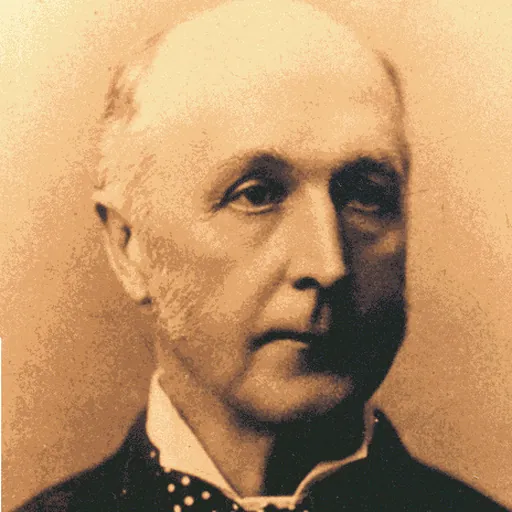
About Frederick Norton Manning
Lived 1839 – 1903 (aged 64). Frederick Norton Manning was an Australian physician, known for Colony of New South Wales.
Frederick Norton Manning (25 February 1839 – 18 June 1903), (M.R.C.S., L.S.A., 1860) and the University of St Andrews (M.D., 1862). After joining the navy as a surgeon
Tarban Creek On a visit to Sydney in 1867 Manning was invited by Henry Parkes to become medical superintendent of the Tarban Creek Lunatic Asylum. Before accepting, Manning went overseas and studied methods of patient care and administration of asylums; on his return to Sydney he submitted a notable report. He was appointed to Tarban Creek on 15 October 1868 and immediately reported on the isolation of patients from their relations in accommodation best described as 'prison-like and gloomy', the inadequate facilities for their gainful employment and recreation and the monotonous diets deficient in both quantity and quality. In January 1869 the asylum's name was changed to the Hospital for the Insane, Gladesville, wherein patients were to receive treatment rather than be confined in a 'cemetery for diseased intellects'. By 1879 radical changes in patient care and accommodation had been made. Gladesville was extended and modernised and an asylum for imbeciles set up in Newcastle and a temporary asylum at Cooma. Manning minimised the use of restraint and provided for patient activities. Manning also established a vineyard at Tarban Creek in 1870.
Inspector General On 1 July 1876 Manning was appointed Inspector General of the Insane with responsibility for all mental institutions except the Parramatta asylum for criminals. After much agitation by Manning, new hospitals were opened at Callan Park and Goulburn, and additions made to the Darlinghurst reception house. Manning believed that staff should be competent and encouraged in-service training for nurses and attendants. He often criticised the accommodation and low wages. He supported the creation of the Australasian Trained Nurses' Association and in 1899–1902 was its first president.
Other duties Manning had become a trustee of Royal Prince Alfred Hospital in 1873 and was a member of the New South Wales branch of the British Medical Association. In 1876, he was elected to the Royal Society of New South Wales and in 1883–84 was chairman of its medical section. In 1883–96 he was an examiner and in 1886–88 the first lecturer in psychological medicine at the University of Sydney. In 1882 he had been appointed to the Board of Health and in 1889–92 was medical advisor to the government, president of the Board of Health and health and emigration officer for Port Jackson. He was prominent in the proceedings of the second (1889) and third (1892) sessions of the Intercolonial Medical Congress of Australasia. Manning had served on an inquiry into the Hospital for the Insane at New Norfolk, Tasmania, in 1884 and on another at the Bay View Lunatic Asylum in 1894. In 1895 he served on the Royal Commission on the notorious poisoner, George Dean. He agreed with Dr P. S. Jones that the evidence was compatible with attempted suicide and secured Dean's release.
Final years On 12 February 1898, ill health forced Manning to retire as Inspector General. In February 1899, he was appointed to the Royal Commission on public charities. In 1901 he became a trustee of the National Art Gallery of New South Wales. Unmarried, he died from a stomach ulcer on 18 June 1903 at his rooms in Phillip Street, and at his request was buried in the cemetery at Gladesville Mental Hospital. His grave can still be seen in a grove adjacent to Victoria Road. Some of his papers are in the National Library of Australia.
In Memoriam The two main roads of the Macquarie Hospital, North Ryde, (formerly the North Ryde Psychiatric Centre and Gladesville Macquarie Hospital) are Norton Road and Manning Road, are named after Frederick Norton Manning.
Don’t just read it —
keep it.
Full-length biographies made to live with: read them, listen on the way to work, watch them tonight.
- E-book
- Audio
- Video
Instant download · yours to keep · every purchase keeps this site free
Important facts
People in Frederick Norton Manning's life
Named in this biography and alive at the same time

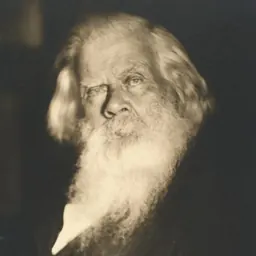

Related people
Same field, nearest in time

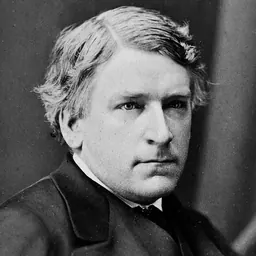
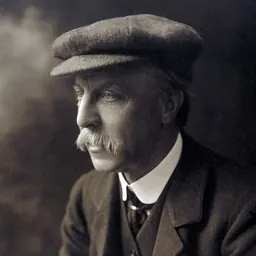


Contemporaries
People whose lives overlapped Frederick Norton Manning's


Frequently asked questions
Who was Frederick Norton Manning?
Australian doctor
When was Frederick Norton Manning born?
Frederick Norton Manning was born on 25 February 1839 in Rothersthorpe.
When did Frederick Norton Manning die?
Frederick Norton Manning died on 18 June 1903 in Sydney.
What was Frederick Norton Manning's occupation?
Frederick Norton Manning was a physician.
What was Frederick Norton Manning known for?
Frederick Norton Manning was known for Colony of New South Wales.
What nationality was Frederick Norton Manning?
Frederick Norton Manning was Australian.
Sources & further reading
· Wikipedia: Frederick Norton Manning
· DBpedia: Frederick Norton Manning
Cite this page
APA: Biography.guide. (2026). Frederick Norton Manning. https://biography.guide/frederick-norton-manning/
MLA: "Frederick Norton Manning." Biography.guide, https://biography.guide/frederick-norton-manning/.
Chicago: "Frederick Norton Manning." Biography.guide. https://biography.guide/frederick-norton-manning/.
Data last updated: 2026-09-23 · Spot an error? Report a correction.
Portrait: Wikimedia Commons · author & licence
Page generated 2026-09-27 05:06 UTC